
UN General Assembly 2026: Guterres warns of widening fault lines as Trump threatens Iran and US imposes aviation blockade
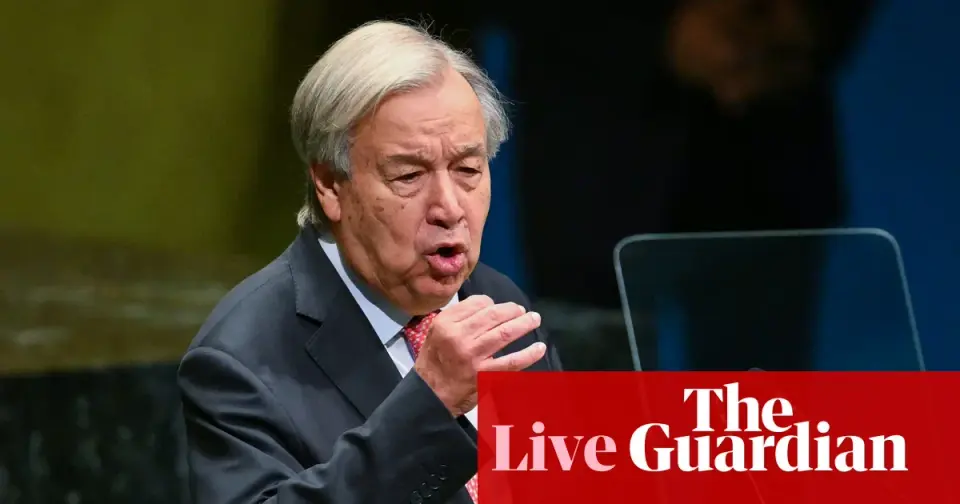
UN Secretary-General António Guterres warned that global 'fault lines are widening' due to geopolitical conflict, climate crisis, and unregulated AI, urging a shift toward interdependence. His address coincided with US President Donald Trump’s speech, where he threatened to 'annihilate' Iran if it does not capitulate. The US Treasury announced a total shutdown of Iranian airlines from September 23, while the UK pledged air support to Saudi Arabia against Houthi forces in Yemen. Meanwhile, Gaza’s death toll from Israeli attacks reached 73,919, and Brazil’s president criticized the UN Security Council’s paralysis.
Key points
- António Guterres, in his final UN General Assembly address, called for a world based on 'interdependence' to counter fragmentation, citing geopolitical wars, climate change, and AI risks.
- Guterres warned against 'killer robots' and 'technology without accountability,' stating that the US and China bear the greatest responsibility for establishing AI safeguards.
- Donald Trump addressed the assembly, framing his Iran war as a necessary action to prevent a nuclear threat, and threatened to 'annihilate' the Islamic Republic if no deal is reached.
- US Treasury Secretary Scott Bessent announced that all Iranian airlines will be shut down from September 23 by cutting off fuel, landing services, and ticket sales, threatening non-compliant nations with removal from the dollar system.
- The UK confirmed it will provide air-to-air refueling support to Saudi jets to counter Houthi fighters in Yemen, a move following Trump’s cancellation of planned US airstrikes.
- Gaza’s health ministry reported that 73,919 people have been killed by Israeli attacks since October 2023, with 1,399 killed since the October 2025 ceasefire, amid accusations of violations by both sides.
Background
This assembly follows a period of intense US-Iran hostility, including US strikes in the Strait of Hormuz and the granting of restricted visas for Iranian leaders to attend the UN. Previous coverage noted Trump pausing airstrikes on Yemen’s Houthis to pursue diplomacy, while Iran warned of deploying new weapons. The current escalation includes US sanctions on Iranian aviation and Russian-Saudi discussions on keeping waterways open.
How outlets are covering it
The Guardian emphasizes Guterres’s call for multilateral interdependence and highlights the UN’s weakened state under US pressure. CNBC focuses on the economic enforcement mechanisms, detailing how the US will cut off Iranian airlines through fuel and financial restrictions, and notes the UK’s military support for Saudi Arabia. The Telegraph source was inaccessible due to a security block, so its perspective cannot be synthesized. Outlets differ in emphasis: The Guardian frames the event as a diplomatic crisis for the UN, while CNBC frames it as a financial and military enforcement action against Iran and its proxies.
Why it matters
The convergence of high-level UN rhetoric, direct US threats to Iran, and new economic sanctions signals a deepening fragmentation of the international order. The US strategy of isolating Iran through aviation and financial controls, combined with UK military support for Saudi Arabia, risks further destabilizing the Middle East. Simultaneously, Guterres’s warnings on AI and climate highlight the urgent need for global cooperation, which is currently undermined by unilateral actions and Security Council paralysis.
What to watch
The US aviation blockade on Iran takes effect on September 23, potentially triggering further economic isolation. Trump’s threat to 'annihilate' Iran may lead to a diplomatic standoff or escalation, depending on Iran’s response. The UK’s support for Saudi Arabia against the Houthis could intensify the conflict in Yemen, while the UN General Assembly will continue with speeches from other world leaders, including potential discussions on AI regulation and Gaza reconstruction.
- ‘The fault lines in our world are widening’, António Guterres warns as world leaders gather for UN General Assembly – live updates The Guardian
- Iran reportedly says it can reopen Strait of Hormuz within 7 days if U.S. eases military pressure CNBC
- Iran offers to reopen Hormuz within seven days The Telegraph
- Iran ready to reopen Strait of Hormuz if US eases military pressure and lifts blockade Reuters
- UN latest: Iran teases chance of Hormuz deal at UN - as outgoing leader delivers warning to superpowers Sky News
Want the full story? Read the original reporting
Read on The Guardian