
U.S. Embassy Accuses Canada of Election Meddling Amid Trade War Escalation
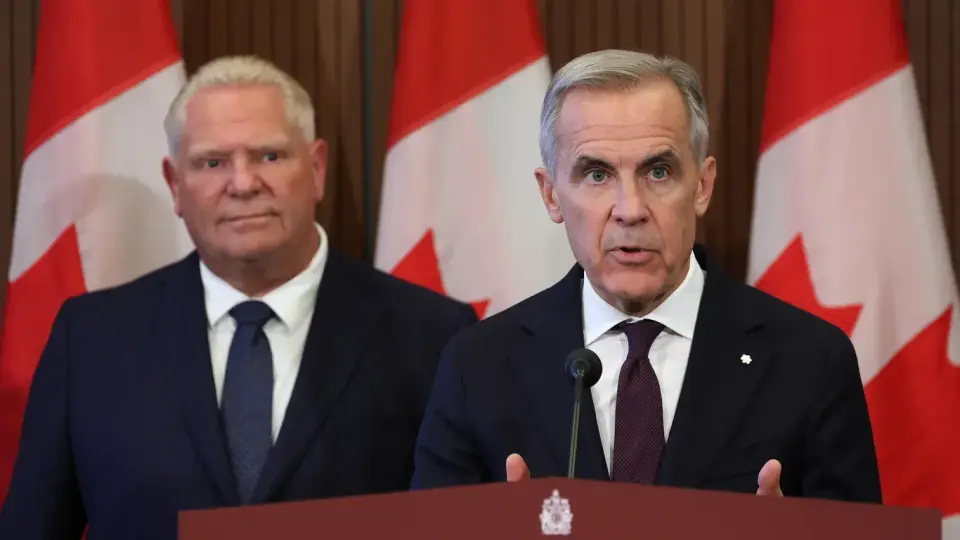
The U.S. Embassy in Canada released a fact sheet on October 21 accusing Canadian officials of attempting to influence the upcoming U.S. midterm elections. The document cites targeted retaliatory tariffs, meetings with Democratic leaders, and advertising campaigns as evidence of interference. Canadian Prime Minister Mark Carney and Ontario Premier Doug Ford rejected the claims, framing their actions as necessary economic defenses against U.S. tariffs. Simultaneously, Canada announced an 8.7 billion CAD plan to support its manufacturing sector, signaling a permanent shift in bilateral trade relations.
Key points
- The U.S. Embassy issued a nine-point fact sheet on October 21, labeling Canadian actions as 'openly' describing plans to influence American politics.
- The U.S. cited Industry Minister Mélanie Joly’s meetings with Democratic governors and her comments on targeting tariffs to Republican states as evidence of interference.
- Canada announced a C$8.7 billion ($6.2 billion) support package for steel, auto, and critical mineral industries in Ontario to counter U.S. trade measures.
- Prime Minister Mark Carney stated that Canada’s actions are in the interest of its workers and economy, while Ontario Premier Doug Ford denied any intent to interfere in U.S. elections.
- The U.S. Embassy also referenced 11 Canadians charged with illegal voting in U.S. elections between 2012 and 2026, though experts note these cases are distinct from government interference.
Background
This escalation follows months of deteriorating U.S.-Canada relations under President Trump’s second term. In August 2026, trade negotiations collapsed, leading to 50% U.S. tariffs on approximately $20 billion in Canadian goods. Canada responded with retaliatory tariffs, which U.S. officials argue were strategically aimed at politically sensitive states ahead of the midterms. Previous coverage noted that Republican candidates in border states like Michigan and Maine faced pressure to distance themselves from the trade war due to economic fallout. The current dispute adds a new dimension to the conflict, with Washington accusing Ottawa of political meddling rather than just economic retaliation.
How outlets are covering it
Axios and BBC emphasize the diplomatic rupture, highlighting the U.S. Embassy’s aggressive language and the Canadian government’s dismissal of the accusations as absurd. AP News focuses on the economic dimension, detailing Carney’s new support package and noting that U.S. auto exports to Canada have dropped by more than 20%. Yahoo/Newsweek provides additional context by noting former President Bill Clinton’s public defense of Carney, contrasting with the current administration’s antagonistic stance. While all sources agree on the facts of the fact sheet, they differ in emphasis: Axios and BBC frame it as a diplomatic crisis, while AP frames it as a consequence of a deeper structural trade shift. Experts cited by AP argue that the U.S. definition of interference is overly broad, conflating lobbying with unlawful meddling.
Why it matters
The accusation of election interference marks a significant escalation in U.S.-Canada relations, potentially affecting the political landscape of the 2026 midterms. If the U.S. administration successfully frames Canadian trade policies as foreign interference, it could influence voter sentiment in key swing states. Conversely, the Canadian response signals a long-term strategic pivot away from reliance on the U.S. market, which could reshape North American supply chains and diplomatic alliances for years to come.
What to watch
The U.S. midterm elections are scheduled for November 3, 2026. Analysts will watch for any further U.S. actions regarding Canadian citizens or businesses in the lead-up to the vote. Canada is expected to continue its diversification strategy, aiming to double exports to non-U.S. markets over the next decade. The outcome of the midterms will determine whether the current trade policies and diplomatic tensions persist or shift with a change in congressional control.
- Canada hit back at Trump tariffs. Now the U.S. alleges possible election interference. Axios
- US accuses Canada of meddling in elections Yahoo
- Carney says Trump’s tariffs hurt Americans as US Embassy alleges Canadian interference AP News
- US embassy accuses Canada of brushing off allegations of election interference BBC
- Canadians caught up in Trump voter fraud crackdown as U.S. accuses Canada of election interference CBC
Want the full story? Read the original reporting
Read on Axios