
Venezuela's Interim Leader Promises Elections but Defers Date Amid US Oil Deal
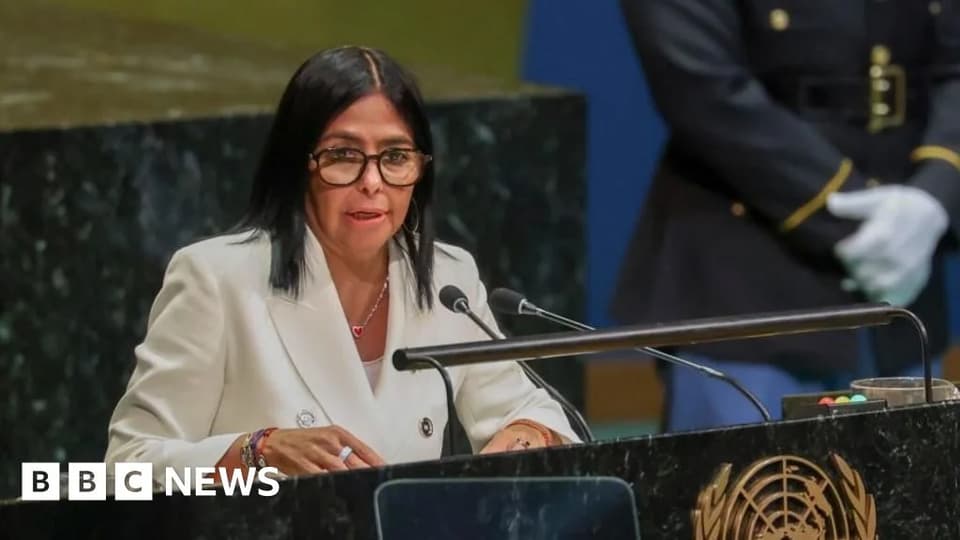
Venezuela’s interim president Delcy Rodríguez addressed the UN General Assembly, promising future elections without setting a date, while thanking the US for diplomatic cooperation. This follows the US seizure of Nicolás Maduro in January and a recent 65-billion-barrel oil deal. Critics and opposition figures, including María Corina Machado, have condemned the lack of a timeline and the US-backed transition as illegitimate.
Key points
- Delcy Rodríguez, sworn in after the US seizure of Nicolás Maduro, stated at the UN that elections will occur but left the timing to the Venezuelan people, drawing criticism for not setting a tentative date.
- Rodríguez thanked President Trump for diplomatic cooperation, contrasting sharply with her 2019 stance against US sanctions, while Trump highlighted a 65-billion-barrel oil deal as a strategic victory.
- US Secretary of State Marco Rubio urged patience, arguing that a political transition is necessary before free elections can occur, and noted ongoing negotiations with some opposition members.
- Prominent opposition leader María Corina Machado remains barred from returning to Venezuela and is excluded from current talks, with critics noting her absence undermines the legitimacy of the transition.
- Maduro, seized by US forces in January, faces trial in June 2027, while the US has lifted many economic sanctions against Venezuela in exchange for the oil agreement.
Background
This development follows the US military operation in January 2026 that removed Nicolás Maduro from power, resulting in approximately 100 deaths. In the interim, Rodríguez has signed a 100-year oil concession granting US access to over 65 billion barrels of Venezuelan reserves. Previous coverage highlighted the transactional nature of the US-Venezuela relationship, with Washington controlling oil revenues while critics questioned Rodríguez’s legitimacy as an unelected leader. The current UN speeches mark the first public diplomatic engagement between the two leaders since the transition.
How outlets are covering it
BBC reports that Rodríguez promised elections but did not specify a date, while Trump celebrated the oil deal and threatened military force if necessary. Al Jazeera frames the event as a 'about-face' by Rodríguez, contrasting her current cooperation with her 2019 denunciation of US 'economic terrorism,' and criticizes the US for trading sanctions for de facto colonialism. The Guardian notes broader UN tensions, including Paraguay’s call for Venezuela’s reintegration into Mercosur, highlighting the regional diplomatic fallout. Critics across outlets emphasize the exclusion of María Corina Machado from negotiations and the lack of a clear electoral timeline, while US officials argue that institutional rebuilding must precede voting.
Why it matters
The delay in setting an election date and the focus on oil concessions raise concerns about the erosion of Venezuelan sovereignty and democratic processes. The US lifting of sanctions in exchange for resource access sets a precedent for transactional diplomacy in Latin America, potentially influencing regional stability and international norms regarding regime change and resource extraction.
What to watch
Observers will watch for any tentative election dates announced by Rodríguez’s government and the outcome of negotiations between the interim government and opposition members. The trial of Nicolás Maduro in June 2027 and the implementation of the oil deal will also be key indicators of the transition’s trajectory. Additionally, the return of María Corina Machado to Venezuela remains a critical unresolved issue.
- Venezuela‘s interim president Delcy Rodríguez promises election after Maduro ousted BBC
- From ‘Dictator’ Deputy to Trump Ally, Venezuela’s Leader Takes World Stage WSJ
- Venezuela's Rodriguez promises elections in transition to 'full democracy' Reuters
- To the victor belong Venezuela’s spoils: Delcy Rodriguez’s UNGA about-face Al Jazeera
- Venezuela being ‘reborn’, Rodríguez tells UN – as it happened The Guardian
Want the full story? Read the original reporting
Read on BBC