
Kansas City Council Finalizes $1.4B Financing for Royals’ Crown Center Stadium
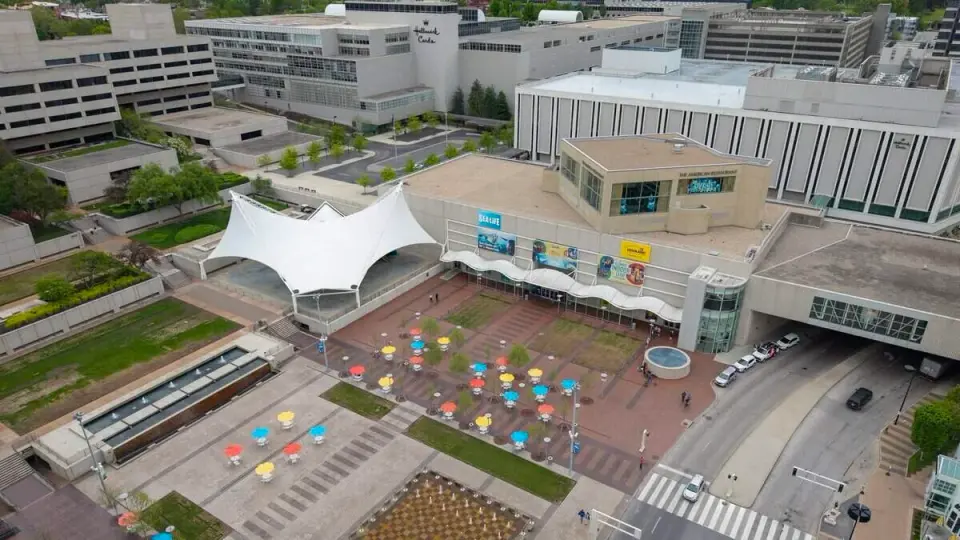
Kansas City’s City Council approved three ordinances on October 8, 2026, finalizing the local legislative steps for a new downtown Royals stadium. The package includes a rezoning of 68 acres, authorization for $615.2 million in bonds, and a tax increment financing (TIF) plan. The city’s $600 million contribution is expected to cost taxpayers $1.39 billion over 30 years, funded by redirected taxes from a broad 'stadium impact area.' A recent report labeled parts of Crown Center 'blighted' to justify the TIF, though the project faces state funding hurdles and legal challenges.
Key points
- The Kansas City City Council passed three ordinances on October 8, 2026, approving the rezoning of the Crown Center area, authorizing $615.2 million in bonds, and establishing a TIF plan to fund the Royals' new stadium.
- The city’s $600 million commitment is projected to cost $1.39 billion over 30 years, including interest and fees, with repayment coming from redirected tax revenues in a designated 'stadium impact area.'
- A report by Partner Valuation Advisors found nine buildings in the redevelopment zone to be 'blighted' and one 'unsafe,' citing structural issues like 'chronic heaving' in the Hallmark headquarters, which is slated for demolition.
- The stadium is scheduled to open for the 2030 season, with demolition of the Hallmark building potentially beginning in early 2027. The project is part of a $1.9 billion development, with the team contributing $760 million and $1 billion in private investment.
- The plan faces opposition from some council members who argue the bond interest is excessive, and it awaits state funding approval, which is currently subject to a lawsuit in the Missouri Supreme Court.
Background
This development follows the Royals' April 2026 announcement of a partnership with Hallmark Cards to build a new stadium in the 85-acre Crown Center district. The project replaces previous plans for a Crossroads stadium, which were rejected by Jackson County voters in 2024. The current financing structure relies on a public-private partnership, with the city covering $600 million of the $1.9 billion total cost, while the team and private investors cover the remainder. The TIF plan is designed to offset the city's bond payments by capturing incremental tax growth in the surrounding area over three decades.
How outlets are covering it
Supporters, including Mayor Quinton Lucas and City Manager Mario Vasquez, describe the deal as a 'robust public-private partnership' that will transform the area into a 'live-work-play neighborhood' and generate significant economic activity. Lucas emphasized that the financing structure protects taxpayers by relying on incremental tax growth rather than direct appropriations. However, critics, including Council members Johnathan Duncan and Nathan Willet, argue that the city is taking on excessive debt, with Duncan noting that the $1.39 billion total cost is 'twice what taxpayers were told we’re actually investing.' Kennesaw State University economist J.C. Bradbury criticized the financial estimates as unclear and 'reckless.' Additionally, while the Kansas City Star highlighted the 'blight' findings to justify the TIF, Crown Center spokesperson Tina McGuire described the report as a 'normal step' in the process, emphasizing the district's continued value as an event venue.
Why it matters
The approval of these ordinances marks a critical milestone in the multi-billion-dollar transformation of Kansas City’s downtown, potentially reshaping the city’s economic landscape and tax structure. The success of the project hinges on the ability to generate sufficient tax revenue from the 'stadium impact area' to cover the $1.39 billion debt, a goal that remains uncertain given the broad scope of the area and the legal challenges to state funding. The outcome will set a precedent for future large-scale public-private infrastructure projects in Missouri and influence how cities approach the financing of major sports venues.
What to watch
The next major hurdle is securing state funding, as the Missouri Development Finance Board must issue the bonds, and the state’s contribution of roughly $540 million is subject to a lawsuit challenging the legality of the Show-Me Sports Investment Act. Demolition of the Hallmark headquarters is expected to begin in early 2027, with the stadium opening for the 2030 season. In April 2027, Kansas City voters will decide whether to require citywide approval for future entertainment venue projects, a measure that could impact the stadium’s ongoing operations and maintenance.
- ‘Unsafe’: Report for Royals TIF plan finds Crown Center buildings to be blighted Kansas City Star
- Kansas City will tap 30 years of tax growth to repay Royals stadium construction KCUR
- Kansas City Royals news: City Council approves downtown ballpark TIF Royals Review
- Crown Center area deemed ‘blighted’ as Council prepares to vote on stadium funding FOX4KC.com
- KCMO City Council approves rezoning, financing details for new Royals stadium downtown KSHB 41 Kansas City
Want the full story? Read the original reporting
Read on Kansas City Star