local-government4.725 min read
FBI joins state probes into Charlotte-Mecklenburg Schools finances
4 days ago•Source: WSOC TV

The latest local government stories, each synthesized from multiple sources with added background and context.

Wake County and Catawba County are initiating the 2027 property revaluation process, with Wake County shifting to a two-year cycle to smooth tax impacts and Catawba County preparing to appraise 95,000 parcels.

Block Club Chicago•14 days ago
thestranger.com•15 days ago

St. Paul Police Chief Axel Henry has filed a 73-page civil lawsuit against Mayor Kaohly Her and the city, alleging sexual harassment and retaliation. The suit details specific incidents, including physical contact during a budget meeting and altered photographs, following an independent investigation that found Her’s behavior inappropriate but did not substantiate harassment claims. Her’s office maintains the investigation cleared her of serious misconduct, while Henry argues the city withheld the full report to minimize his complaints.

Seattle Mayor Katie Wilson proposed a $9.1 billion two-year budget that prioritizes public safety and aims to eliminate the city's structural deficit by 2030 without introducing new taxes. The plan increases police funding by 14% while cutting 128 jobs, mostly vacant positions, and establishes a cross-departmental work group to improve operational efficiency. Wilson emphasized balancing fiscal responsibility with progressive service delivery, though the budget faces scrutiny from the City Council and critics regarding its long-term sustainability.

The Arlington County Board voted to discontinue the county’s use of 41 Flock Safety cameras (26 license plate readers and 15 pan-tilt-zoom units), directing removal within 14 business days and ordering deletion of data not needed for active investigations; private-property cameras remain unaffected, and a public update is set for Sept. 22 as residents push for stronger privacy safeguards.
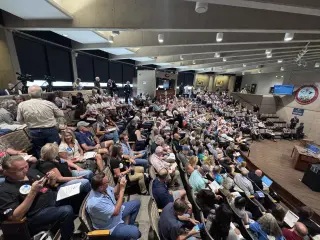
El Paso County commissioners voted 4-1 to approve Buc-ee’s zoning appeal, allowing the Texas travel center to be considered an allowed use in the C-1 commercial district at the County Line Road and Interstate 25 site. With the zoning hurdle cleared, all remaining approvals will be handled administratively, including traffic, lighting, landscaping, parking, and roadway plans, after Buc-ee’s submitted its site development plan; the hearing drew hundreds of speakers, with most opposition, and Commissioner Bill Wysong casting the lone vote against.
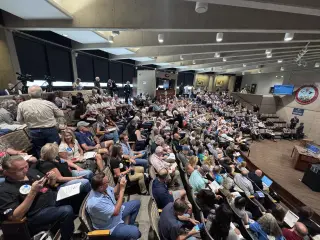
El Paso County commissioners voted 4-1 to approve Buc-ee’s as an allowed use in the C-1 commercial district at the County Line Road and I-25 site. The decision, which followed a daylong, highly publicized hearing with opposition to Buc-ee’s, means the project can move forward with administrative approvals for site development, including traffic, lighting, landscaping and parking requirements, rather than further public votes.

Tampa City Council member Lynn Hurtak released a six-minute video arguing the Rays stadium proposal would burden taxpayers, pointing to an $80 million city contribution via a loan or line of credit with no guaranteed repayment and possible funding from higher property taxes. The council is set to vote on the deal Thursday, followed by a Friday county vote. The Rays have issued non-binding commitments on transportation, affordable housing and minority-owned businesses, and Hillsborough College released new renderings for a reimagined campus.
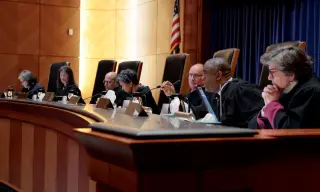
Massachusetts’ Supreme Judicial Court ruled that Boston’s $325 million White Stadium renovation, done in partnership with a women’s soccer team, complies with state law, ending a years-long lawsuit and allowing work to proceed to create a new hub for Boston Public Schools Athletics and serve as home to the NWSL team Boston Legacy FC.

NYC Council members blasted Mayor Mamdani's administration at a City Hall hearing on the pied-à-terre tax after the administration skipped the session. The hearing highlighted a botched rollout: the city has sent notices to about 17,000 households, with exemptions applications swelling from 4,290 to 9,884, and mis-targeted properties rising to 2,318. Lawmakers demanded in-person explanations as lawsuits—led by Randy Mastro—mount against the surcharge on vacant luxury homes. The tax, meant to help close a $5.4 billion budget gap, has drawn criticism over transparency and homework, while Mamdani was reportedly vacationing upstate.

The Vineland Planning Board approved Phase 2 of the data center project, adding 600,000 square feet to reach an eventual 2.6 million, after a lengthy public comment period. Residents have raised worries about water and power usage and a persistent humming noise. Data One says the site complies with noise limits and has addressed complaints, and officials will continue to monitor the expansion as Phase 1 remains under construction.

Multnomah County approved a term sheet committing up to $101 million toward renovating the Moda Center as part of a roughly $600 million public funding package for the Portland Trail Blazers’ arena. The 4-1 vote starts negotiations with the City of Portland, which must contribute about $120 million, while Oregon’s $365 million state funding is already approved but contingent on local contributions, with a December vote to finalize the deal.