
Harvard Stadium’s Concrete Walls Accidentally Birthed the Modern Forward Pass
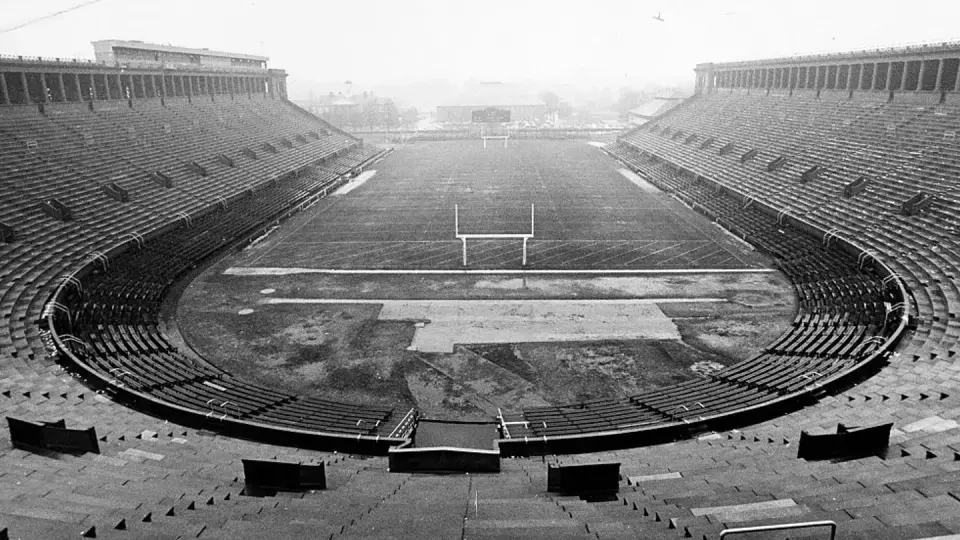
The legalization of the forward pass in 1906 was directly caused by Harvard’s refusal to widen its playing field to fit inside its newly built concrete stadium, forcing rulemakers to open up the game instead.
Key points
- In 1905, at least 18 football players died from on-field injuries, prompting President Theodore Roosevelt to convene a meeting that led to the formation of the Intercollegiate Athletic Association, later the NCAA.
- Walter Camp proposed widening the field by 40 feet to reduce dangerous gang tackles, but Harvard rejected the idea because the new dimensions would not fit inside Harvard Stadium, built just three years prior.
- With the field-widening proposal blocked, the committee legalized the forward pass as an alternative way to spread players out and reduce violence, a change first executed by Bradbury Robinson in 1906.
- Harvard Stadium, the world’s first vertical reinforced concrete structure, is the second-oldest Division I football stadium and one of only four to be designated a National Historic Landmark.
- The venue has hosted diverse events including the 1984 Olympics soccer matches, concerts by Janis Joplin and Bob Marley, and games for the Boston Patriots, in addition to its long-standing role in the Harvard-Yale rivalry.
Background
This story highlights how architectural constraints in early 20th-century sports facilities can drive major rule changes. While recent news focuses on modern stadium renovations and revenue impacts, such as the KU stadium rebuild or the UNC-TCU opener in Dublin, the Harvard Stadium narrative underscores that the fundamental structure of American football was shaped by physical limitations rather than just strategic intent. The stadium’s status as a historic landmark contrasts with contemporary debates over stadium nicknames and legacy exhibits, such as the new Paterno room at Penn State, showing how venues serve as both active sports arenas and cultural archives.
Why it matters
Understanding that the forward pass was a compromise born from a stadium’s physical limits reveals how infrastructure decisions can fundamentally alter the trajectory of a major sport. It connects the brutal early era of football to its modern popularity, showing that safety reforms were often driven by logistical impossibilities rather than just medical concerns.
What to watch
There are no immediate future developments reported for Harvard Stadium in the source, but it continues to host the biennial Harvard-Yale rivalry and serves as a National Historic Landmark. The stadium remains a central part of the Harvard athletic program, which has secured 20 Ivy League championships.
Want the full story? Read the original reporting
Read on si.com