
Sue Bird defends WNBA against right-wing media saturation, citing historical necessity for player activism
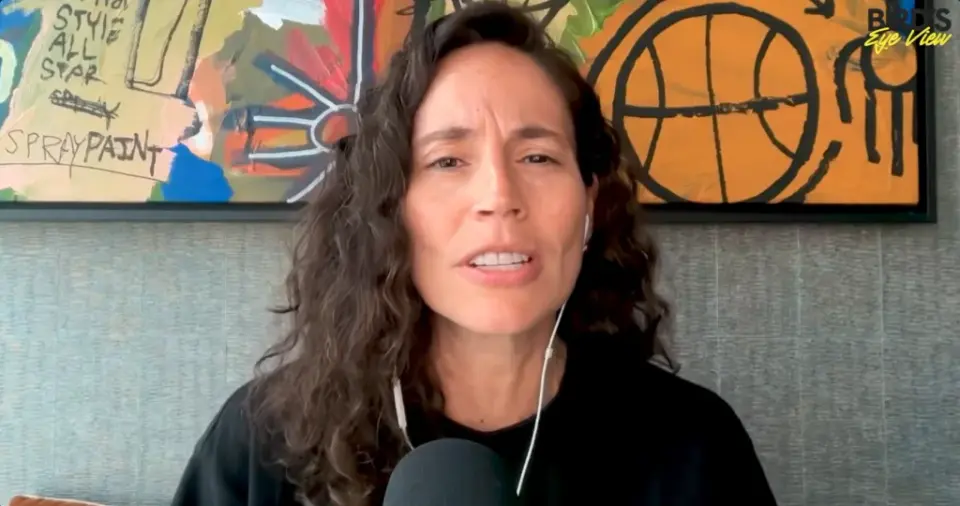
Hall of Famer Sue Bird defended the WNBA’s handling of recent controversies, arguing that the league is unfairly held to a higher standard than political parties in navigating right-wing media cycles. While the league faces intense scrutiny over player statements and on-court incidents, Bird noted that players historically had to speak out to defend their existence as athletes. The WNBA continues to grow financially and in viewership despite these distractions.
Key points
- Sue Bird stated that the WNBA is expected to solve media manipulation issues that even Democratic politicians cannot handle, calling the expectation unrealistic.
- Bird explained that players became outspoken because they were previously forced to defend themselves against 'shut up and dribble' rhetoric, creating a cycle of necessary activism.
- The WNBA has seen a 400% average increase in player salaries and a 59% rise in franchise valuation, with the Golden State Valkyries appraised at $850 million.
- Recent controversies include a letter from 11 Republican lawmakers demanding an investigation into alleged racial hostility against Caitlin Clark and Sophie Cunningham’s comments on biological men in locker rooms.
- Coaches like Becky Hammon and Jose Fernandez have stated they do not monitor social media, focusing instead on game performance to avoid the noise of online parasocial interactions.
Background
The WNBA has faced increasing political scrutiny since 2026, with right-wing figures leveraging player statements to advance anti-transgender narratives. Previous coverage highlighted how Sophie Cunningham became a symbol in these debates, while the league struggled to balance inclusivity with mainstream appeal. This current situation follows a period of rapid expansion, including new teams in Cleveland, Detroit, and Philadelphia, and record-breaking viewership at the All-Star Game.
How outlets are covering it
Sue Bird, via Awful Announcing, argues that the WNBA is unfairly blamed for failing to tame right-wing media cycles, a task no political party has mastered. She emphasizes that player activism is a legacy of past struggles for recognition. In contrast, The Atlantic’s Jemele Hill frames the current situation as 'unprecedented controversy' that threatens the league’s normalcy, highlighting the tension between financial success and public backlash. High Post Hoops offers a different angle, noting that coaches are actively ignoring social media to maintain focus, suggesting that the intense online discourse is a parasocial phenomenon rather than a direct reflection of league operations. While Bird defends the league’s inability to control external narratives, Hill focuses on the need for structural change to manage the fallout from player statements and on-court incidents.
Why it matters
The WNBA’s financial growth and record viewership are being tested by its ability to manage political and social controversies. If the league cannot navigate the current media environment, it risks alienating mainstream audiences despite its economic success. The debate over player activism versus league management highlights the broader challenge of sports organizations engaging with social issues in a polarized media landscape.
What to watch
The WNBA will likely continue to face scrutiny over player statements and on-court incidents as it expands with three new teams by 2030. The league may need to develop new strategies for managing media narratives, potentially involving more direct engagement with political figures or a shift in how player activism is framed. Coaches and players may continue to distance themselves from social media to focus on performance, but the league office will remain under pressure to address the 'minefield' of 24/7 right-wing coverage.
- Sue Bird defends WNBA response to right-wing news cycles: 'For a very long time, it was never about basketball' Awful Announcing
- What’s Happening to the WNBA Isn’t Normal The Atlantic
- Why conservatives can’t stop talking about women’s basketball The Economist
- WNBA's culture wars descend on Dallas as basketball talk rides the bench Dallas News
- Jose Fernandez comment proves one fan misconception just isn't true High Post Hoops
Want the full story? Read the original reporting
Read on Awful Announcing