
Afghan cyclist Fariba Hashimi wins Asian Games silver after years of disguising as a man
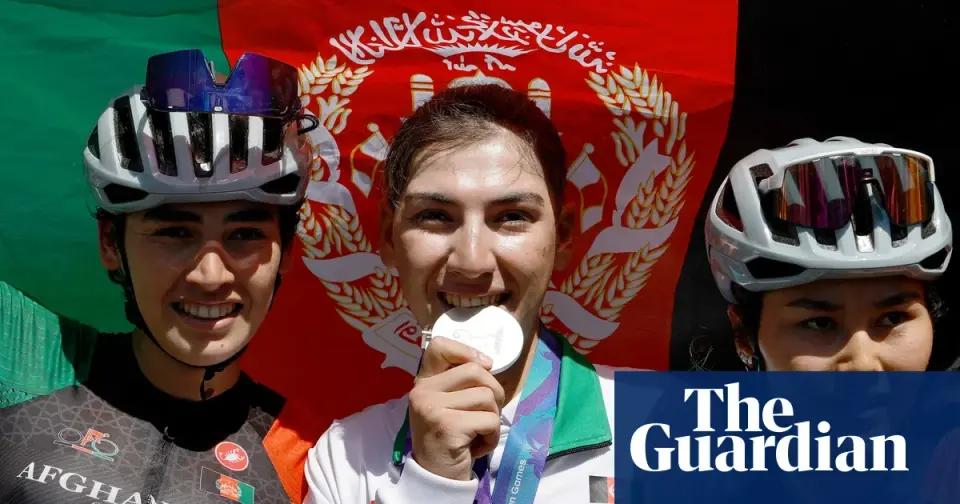
Fariba Hashimi, an Afghan cyclist living in Italy, won a silver medal in the women's road race at the Asian Games in Japan. Hashimi, who fled Afghanistan after the Taliban took power in 2021, previously disguised herself as a man to train and compete in her home country. She credited the Japanese team for assisting with her bike maintenance during the race. Hashimi expressed hope that her achievement would inspire other women in Afghanistan to pursue sports without fear, despite the severe restrictions on women's freedoms under Taliban rule.
Key points
- Fariba Hashimi finished second in the women's road race at the Asian Games in Nagoya, Japan, behind China's Guo Li.
- Hashimi, 23, is based in Italy and fled Afghanistan after the Taliban seized power in 2021.
- She previously disguised herself as a man, using multiple masks, to avoid attacks and stone-throwing while training in Faryab province.
- Hashimi credited the Japanese team for fixing her bike during the race, as her delegation lacked a mechanic.
- She and her sister Yulduz competed at the 2024 Paris Olympics and are now targeting the 2028 Los Angeles Games.
Background
This achievement occurs against a backdrop of severe restrictions on Afghan women under Taliban rule, which has curtailed access to education, work, and public life since 2021. Recent reports highlight the ongoing humanitarian crisis and the daily struggles of Afghan women attempting to maintain agency and hope amidst eroded freedoms and travel restrictions.
How outlets are covering it
The Guardian and BBC both report on Hashimi's silver medal and her background of disguising herself as a man to train. The Guardian emphasizes her lack of mechanical support and gratitude toward the Japanese team, while the BBC highlights the specific danger of stone-throwing and the use of multiple masks to avoid recognition. Both outlets agree on her motivation to inspire future generations and her focus on the 2028 Olympics.
Why it matters
Hashimi's success highlights the resilience of Afghan women in the face of systemic oppression and the international community's role in supporting athletes who flee restrictive regimes. It underscores the ongoing struggle for women's rights in Afghanistan and the importance of international sporting platforms in providing visibility and opportunity.
What to watch
Hashimi and her sister Yulduz are now training for the 2028 Los Angeles Olympics. The broader situation for Afghan women remains constrained by Taliban policies, with ongoing challenges in education and public participation.
- Afghan cyclist who disguised herself as a man to evade Taliban wins Asian Games silver The Guardian
- Fariba Hashimi: Afghanistan cyclist who dressed as man to avoid Taliban wins Asian Games silver medal BBC
- From dressing as a man to competing with the elite, no backpedalling for Afghan Hashimi Reuters
- Fariba Hashimi: From fleeing Afghanistan to an Asian Games 2026 podium – “I came here dreaming” olympics.com
- Fariba Hashimi wins silver in Asian Games road race Amu TV
Want the full story? Read the original reporting
Read on The Guardian