
Hidden texts and weapons photos resurface in Karmelo Anthony murder case
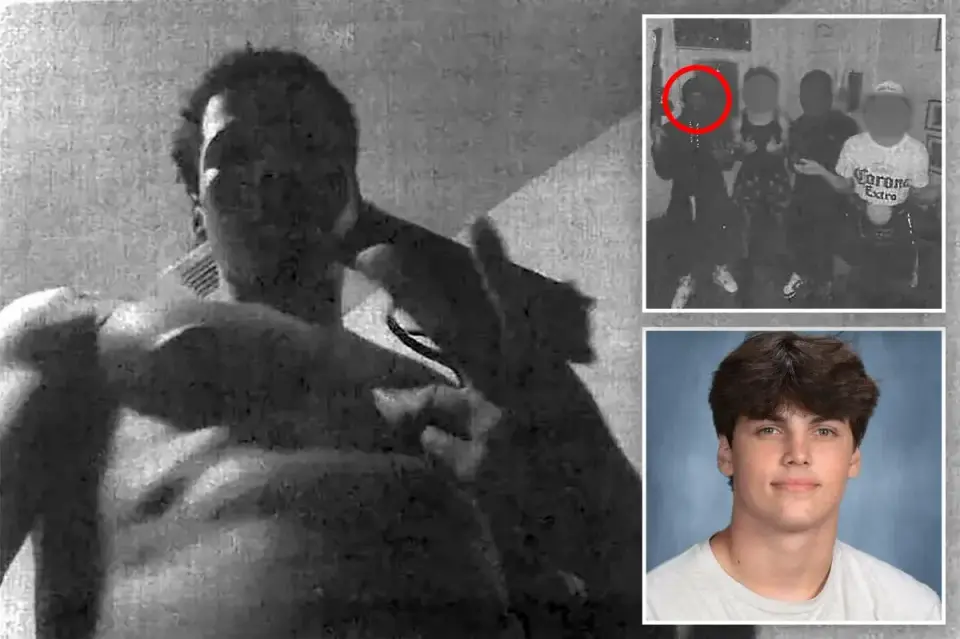
A 75-page dossier of text messages and photos, withheld from the jury during the trial of Karmelo Anthony, reveals the teen held guns and expressed hateful views toward Black and gay people before fatally stabbing Austin Metcalf in 2025. The documents, obtained by the Daily Mail, were excluded under a 'gentleman's agreement' between prosecutors and defense. Anthony, who was sentenced to 35 years, had his retrial request denied in August 2026, and his family is now seeking $250,000 for an appeal. The revelation has fractured support from Black women who previously organized rallies and fundraisers for his defense.
Key points
- A 75-page dossier of text messages and photos, obtained by the Daily Mail, was never shown to jurors during Karmelo Anthony's murder trial due to a 'gentleman's agreement' between prosecutors and his defense team.
- The documents include photos of Anthony holding a handgun in November 2024 and an AK-47-style rifle in May 2024, as well as a video of him aiming a gun at a residence in January 2025.
- Text messages reveal Anthony expressed hatred for Black women and gay people, including a June 2021 message about President Joe Biden and a March 2025 message to his girlfriend, Valeria Perez.
- Anthony was convicted of fatally stabbing Austin Metcalf on May 2, 2025, at a high school track meet in Frisco, Texas, and sentenced to 35 years in prison.
- A Texas judge denied Anthony's request for a new trial in August 2026, and his family is now seeking $250,000 to fund an appeal.
- Black women who organized rallies and raised over $400,000 for Anthony's defense have distanced themselves from the case after the hateful texts were made public.
Background
Karmelo Anthony, a 17-year-old student in Frisco, Texas, was convicted in June 2026 of fatally stabbing Austin Metcalf, a 17-year-old high school senior, during a track meet on May 2, 2025. Anthony was sentenced to 35 years in prison. In August 2026, a Texas judge denied his request for a new trial, citing an unwritten agreement between prosecutors and defense to exclude certain evidence. The family subsequently launched a $250,000 fundraiser for an appeal, following questions about a previous $634,000 fundraiser.
How outlets are covering it
The New York Post and Daily Mail emphasize the newly revealed documents as evidence of Anthony's violent and hateful behavior prior to the stabbing, highlighting the 'gentleman's agreement' that kept this evidence from the jury. The Emerald Book frames the case as a complex issue of race, justice, and community solidarity, arguing that Anthony's internalized racism and the hidden history of Austin Metcalf's racism both compromised the fairness of the trial. TMZ was inaccessible, so no perspective could be extracted. The outlets differ in emphasis: the Post and Daily Mail focus on the new evidence and its impact on the legal case, while the Emerald Book focuses on the social and cultural implications for Black women who supported Anthony's defense.
Why it matters
The case highlights the tension between legal fairness and community solidarity, as the 'gentleman's agreement' to exclude evidence from the trial has raised questions about the transparency of the judicial process. The revelation of Anthony's hateful texts has fractured support from Black women who previously organized rallies and fundraisers for his defense, forcing a national conversation about the limits of unconditional community support. The case also underscores the role of algorithmic radicalization in shaping the worldview of isolated teenagers, as Anthony's rhetoric was described as a product of online subcultures.
What to watch
Karmelo Anthony's family is seeking $250,000 to fund an appeal of his 35-year sentence. The appeal process is expected to take more than a year. The case may also prompt further scrutiny of the 'gentleman's agreement' between prosecutors and defense, and its impact on the fairness of the trial. The social and cultural implications of the case, particularly for Black women who supported Anthony's defense, may continue to be debated in public and private forums.
- Karmelo Anthony seen holding guns, spewing hateful rants in newly revealed documents New York Post
- Karmelo Anthony Seen Posing With Weapons in Newly Released Photos After Austin Metcalf Murder Yahoo
- How Karmelo Anthony’s Internalized Racism Hurt Black Women the Most Emerald Book
- Karmelo Anthony's Alleged Racist, Homophobic Texts Released tmz.com
- Graphic Karmelo Anthony Texts Reveal Violent Rants Months Before Metcalf Murder The Daily Wire
Want the full story? Read the original reporting
Read on New York Post