
New Composite Cow Breed Developed to Safely Graze Solar Farms
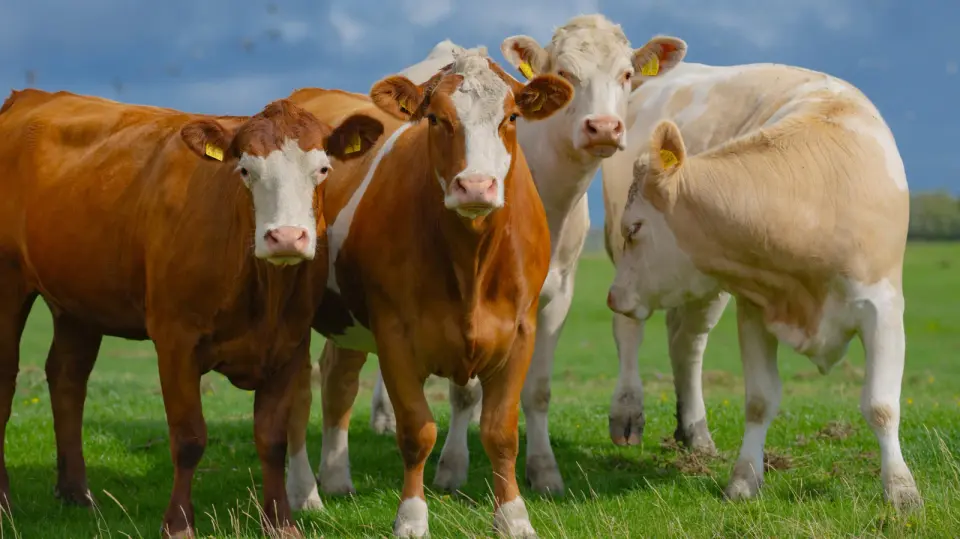
Farmers Jess and Marcus Gray have developed a new composite cow breed specifically designed to graze on solar farms. This initiative aims to resolve safety concerns that previously hindered the integration of cattle into agrivoltaic projects, offering a dual benefit of land maintenance and animal welfare.
Key points
- The Grays, owners of Gray's LAMBscaping, selectively bred a new composite cow using genetics from Dexter, Belted Galloway, Piney Woods, and American Milking Devon breeds.
- The new breed is engineered to be approximately 1,000 pounds, hornless, docile, and resistant to heat and disease, addressing safety concerns among solar facility workers.
- This development facilitates agrivoltaics, a practice combining solar energy generation with agriculture, by making it easier for solar companies to accept cattle on their land.
- Grazing cattle on solar farms provides farmers with additional revenue through lawn maintenance services while allowing animals to thrive under the shade of panels, which protects them from extreme temperatures.
- The next phase of the project involves co-grazing cattle and sheep in the same fields to improve pasture utilization, control parasites, and manage predators.
Background
This development follows broader trends in sustainable agriculture and land use. Recent coverage highlighted how farmers are adapting to economic pressures and policy uncertainties, seeking new revenue streams and efficient land management strategies. Additionally, the growing interest in local food sources and the environmental benefits of diverse land use, such as the 'farm effect' on health, underscore the importance of innovative agricultural practices like agrivoltaics.
Why it matters
This innovation addresses a key barrier to the expansion of agrivoltaics by creating a livestock breed that is safe and practical for solar farm environments. It demonstrates how agricultural and energy sectors can collaborate to maximize land utility, providing economic benefits for farmers and environmental benefits through efficient land use and animal welfare.
What to watch
The Grays plan to implement co-grazing of cattle and sheep in solar farm fields to enhance ecological benefits and operational efficiency. This could lead to wider adoption of cattle grazing in agrivoltaic projects, potentially influencing industry standards and policies for land use in renewable energy sectors.
Want the full story? Read the original reporting
Read on bgr.com