
1979 Mustang Pace Car Revived Brand After Mustang II Slump
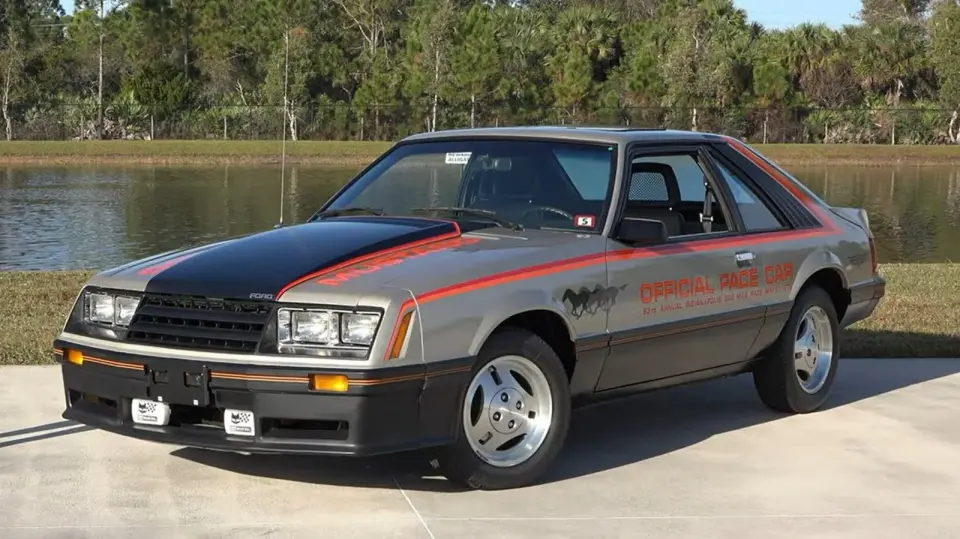
The 1979 Ford Mustang Indy 500 Pace Car served as a critical marketing tool to revive the Mustang brand after the poorly received Mustang II. By showcasing the new Fox Body platform at the Indianapolis 500, Ford successfully shifted public perception, leading to strong sales of nearly 370,000 units in the first year. The pace cars featured enhanced 302 V8 engines built by Jack Roush, while replica models became valuable collector items today.
Key points
- The 1979 Fox Body Mustang replaced the criticized Mustang II, which had suffered from Pinto-based underpinnings and poor market share.
- Three pace cars led the 63rd Indianapolis 500 on May 27, 1979, showcasing the new angular design and aerodynamic shape to a large audience.
- The Fox Body platform reduced weight by 200 pounds compared to the Mustang II while adding length and space, utilizing a MacPherson strut front suspension.
- Jack Roush built the pace car engines from scratch, boosting output to 270 horsepower and 260 pound-feet of torque using a Boss 302 camshaft and 600 CFM carburetor.
- Ford sold 369,936 Fox Body Mustangs in the first year, validating the 'Win on Sunday, Sell on Monday' marketing strategy.
- Fewer than 10,500 replica pace cars were produced, with an average current sales price of $37,180 on Classic.com.
Background
This historical analysis highlights how Ford used motorsport visibility to recover brand equity. While recent Ford news focuses on electric vehicle performance at Pike’s Peak and European manufacturing joint ventures, the 1979 pace car remains a foundational moment for the Mustang nameplate. It demonstrates the long-term impact of strategic marketing on a legacy model that continues to influence modern designs, such as the recent Mustang FX throwback.
Why it matters
The 1979 pace car illustrates how a single high-visibility event can reverse a brand’s decline. By leveraging the Indianapolis 500, Ford transformed a struggling product line into a market leader, proving that technical improvements and public relations can outweigh past failures. This historical precedent remains relevant as Ford continues to use racing and performance showcases to drive sales in the modern era.
What to watch
The Fox Body Mustang generation continued for over a decade, cementing the Mustang’s status as a cultural icon. The enduring value of the 1979 pace car replicas, with average prices exceeding $37,000, shows the lasting impact of this marketing campaign on collector markets and brand loyalty.
Want the full story? Read the original reporting
Read on Jalopnik