
Five Naturally Aspirated Performance Cars Defy the Turbocharger Trend
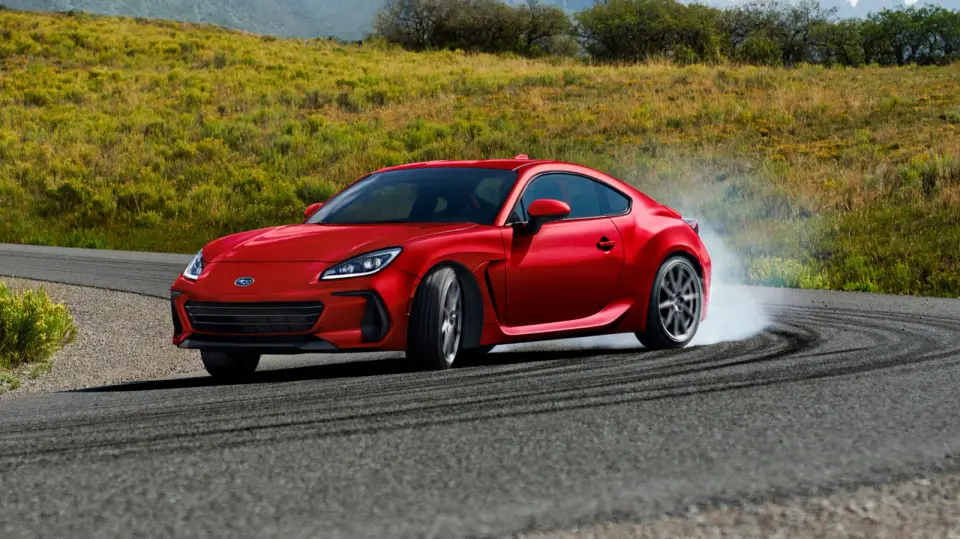
Turbocharging now dominates nearly half of new U.S. car sales, but five modern performance vehicles still rely on naturally aspirated engines for superior sound and linear power delivery. These models range from the affordable Subaru BRZ to the high-end Ferrari 12Cilindri, offering distinct advantages in driving feel and acoustic experience despite the industry's shift toward forced induction.
Key points
- Turbocharged engines are present in approximately 50% of new U.S. cars in 2025, up from just 1% in 2000, according to U.S. Department of Energy data and The New York Times.
- The Subaru BRZ offers a 2.4-liter Boxer 4-cylinder engine producing 228 horsepower, achieving 0-60 mph in 5.5 seconds for a starting price of $35,860.
- The Ford Mustang Dark Horse features a 5.0-liter Coyote V8 with 500 horsepower, priced at $64,080, while the top-tier Dark Horse SC uses a supercharger and is excluded from this naturally aspirated list.
- The Chevrolet Corvette Z06 utilizes a 5.5-liter flat-plane crank V8 producing 670 horsepower, reaching 8,600 rpm, with a starting price of $121,500.
- The Porsche 911 GT3 employs a 4-liter flat-six engine generating 502 horsepower and 331 pound-feet of torque, capable of 0-60 mph in 3.2 seconds, starting near $236,000.
- The Ferrari 12Cilindri features a 6.5-liter V12 engine with 819 horsepower, reaching 9,500 rpm, with a starting price of $465,994 and an estimated 0-60 mph time of 2.9 seconds.
Background
This discussion follows previous coverage of performance benchmarks, such as the 2026 analysis of four-door cars outpacing the C8 Corvette, which highlighted how electric and hybrid technologies are reshaping acceleration metrics. While those comparisons focused on drag times, the current focus is on the mechanical and auditory characteristics of internal combustion engines that avoid forced induction.
Why it matters
As turbocharging becomes the industry standard for balancing power, efficiency, and emissions, the availability of naturally aspirated options provides a niche for enthusiasts who prioritize linear power delivery, high-revving engine notes, and mechanical simplicity over the efficiency gains of forced induction.
What to watch
Automakers continue to phase out naturally aspirated engines in favor of turbocharged or electrified powertrains to meet stricter emissions standards, but high-performance divisions retain these engines to preserve brand identity and driving dynamics for dedicated buyers.
Want the full story? Read the original reporting
Read on SlashGear