
2026 Porsche 911 Turbo S Cabriolet Interior Reveals Digital Shift and Practical Luxury
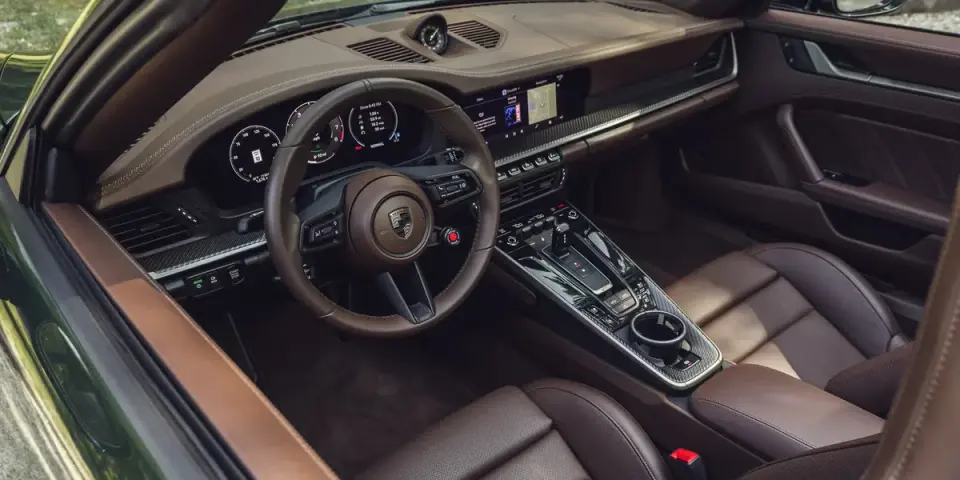
The 2026 Porsche 911 Turbo S Cabriolet features a spacious interior with digital gauges, a 200 mph top speed, and a hard button for exhaust sound, while retaining usable rear seats.
Key points
- The interior design remains similar to lesser 911 Cabriolets, emphasizing purposeful layout and surprising capacity.
- Rear seats are described as actually usable, though the front seats are highlighted as the primary focus.
- The vehicle features a digital instrument cluster, replacing the traditional analog gauges, which some reviewers feel may not age well.
- A hard button is included to make the exhaust louder, and the front-end lift system operates extremely quickly.
- The car has a claimed top speed of 200 mph, with a speedometer marked up to 225 mph.
- Manual transmission is not available in this model, but is still offered in the 911 T Cabriolet.
Background
Recent automotive trends show a shift toward digital interfaces and high-performance electric alternatives. For instance, BYD's Denza Z electric supercar, announced in August 2026, offers 1,580–1,604 hp and a 217 mph top speed, undercutting the Porsche 911 Turbo S in price and performance. Additionally, bespoke restomods like the Louis Vuitton and Singer collaboration, and the Marisen GT, highlight continued demand for high-performance 911 variants, though these are niche, high-cost modifications rather than production models.
Why it matters
The 2026 911 Turbo S Cabriolet represents a balance between performance and practicality in a convertible, with digital technology and quick mechanical responses. Its 200 mph top speed and usable rear seats make it a notable option in the high-performance segment, despite the loss of manual transmission and analog gauges.
What to watch
Porsche may continue to refine digital interfaces and performance features in future 911 models. The availability of manual transmissions in other 911 variants, like the 911 T Cabriolet, suggests a segmented approach to transmission options. Market response to the digital gauge transition and the hard exhaust button will likely influence future design choices.
Want the full story? Read the original reporting
Read on Car and Driver