
Seven Four-Cylinder Vehicles Outperform the 2026 Ford Mustang EcoBoost
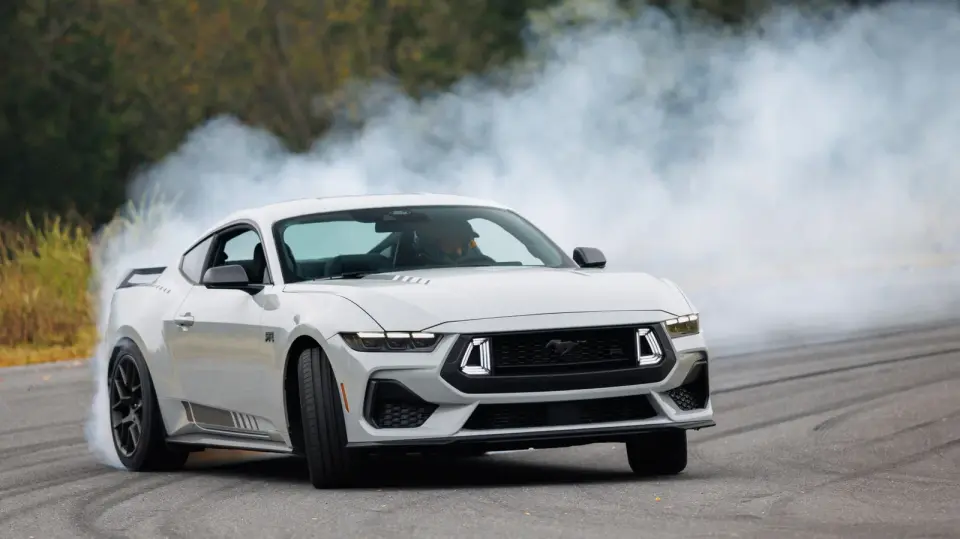
The 2026 Ford Mustang EcoBoost produces 315 horsepower, a figure that matches the 2010 V8 Mustang GT but is surpassed by several modern four-cylinder vehicles. Seven cars, including the Acura Integra Type S, Cadillac CT4-V, Volkswagen Golf R, Audi S3, Porsche 718 Cayman/Boxster S, and Toyota RAV4 Plug-In Hybrid, exceed this output. These vehicles utilize turbocharging or hybrid electrification to achieve higher power ratings, demonstrating that four-cylinder performance has advanced significantly since the Mustang's 2015 redesign. The Porsche 718 leads the group with 350 horsepower, while the Toyota RAV4 PHEV achieves 324 horsepower without a turbocharger. The Cadillac CT4-V is set to be discontinued at the end of 2026, potentially returning the four-cylinder horsepower lead to Ford until General Motors releases new rear-drive models.
Key points
- The 2026 Ford Mustang EcoBoost base engine is rated at 315 horsepower, matching the 2010 V8 Mustang GT and outperforming previous V8 models from the 1990s and 2000s.
- The Acura Integra Type S produces 320 horsepower, five more than the Mustang, due to a more aggressive exhaust system on the same 2.0-liter turbocharged engine used in the Honda Civic Type R.
- The Cadillac CT4-V utilizes General Motors' 2.7-liter L3B turbocharged four-cylinder engine, tuned to 325 horsepower, and can accelerate from 0 to 60 mph in under five seconds.
- The Volkswagen Golf R and Audi S3 both feature 328 horsepower from a 2.0-liter turbocharged four-cylinder engine, with the Golf R achieving 0-60 mph in the low four-second range.
- The Porsche 718 Cayman S and Boxster S use a 2.5-liter flat-four engine rated at 350 horsepower, achieving 0-60 mph in 3.6 seconds according to 2017 testing.
- The 2026 Toyota RAV4 Plug-In Hybrid combines a 2.5-liter four-cylinder engine with three electric motors to produce 324 horsepower without turbocharging.
Background
Ford introduced the turbocharged 2.3-liter EcoBoost engine as the Mustang's volume option in 2015, replacing the V6 and becoming the base engine after the V6 was dropped. Recent developments include the 2026 Mustang RTR package, which retains the 315-horsepower EcoBoost engine but adds drifting-focused features. Meanwhile, high-performance Mustang variants like the Dark Horse SC and GTD continue to compete in the supercar segment, but the base EcoBoost remains the standard powertrain for the majority of buyers.
Why it matters
The comparison highlights the evolution of four-cylinder engine technology, showing that modern turbocharged and hybrid systems can outperform the iconic Mustang EcoBoost. This shift challenges traditional perceptions of engine displacement and performance, offering buyers more options for high-output, smaller-displacement vehicles across various body styles, including hot hatches, sport sedans, and crossovers.
What to watch
General Motors is expected to release new rear-drive models, potentially including a revived Chevrolet Camaro, which may feature a turbocharged four-cylinder engine comparable to or exceeding the current L3B. Until then, Ford may hold the four-cylinder horsepower lead following the discontinuation of the Cadillac CT4.
Want the full story? Read the original reporting
Read on SlashGear