
TIME Awards Fujifilm’s Retro Video-Print Hybrid as a 2026 Best Invention
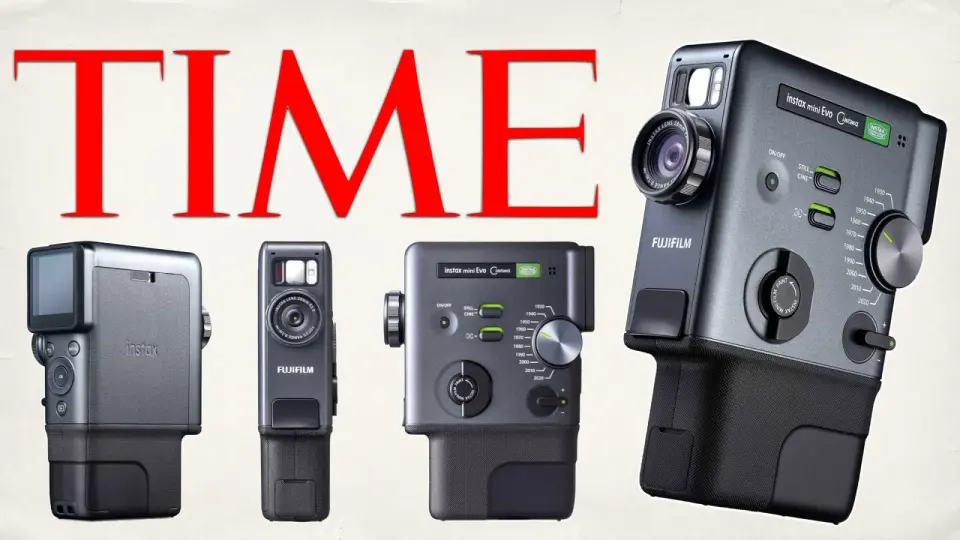
Fujifilm’s Instax Mini Evo Cinema, a $410 hybrid device combining digital video recording with instant film printing, was selected for TIME’s 2026 Best Inventions list. The camera features a Super 8-inspired design, a 'Gen Dial' for decade-specific visual effects, and the ability to print QR codes linking to short video clips. Despite modest technical specifications, including a 5-megapixel sensor and 15-second video limits, the device was recognized for its originality and nostalgic user experience rather than raw performance.
Key points
- The Instax Mini Evo Cinema was named one of TIME’s 300 Best Inventions of 2026 in the Consumer Electronics category.
- The device combines a digital still camera, a short-form video camera, and an Instax mini printer in a single unit.
- It features a 'Gen Dial' offering 100 combinations of visual effects inspired by decades from the 1930s to the 2020s.
- Video clips are limited to 15 seconds, with standard resolution at 600x800 pixels and a higher 1080x1440 mode available only with specific effects.
- Users can print physical photos containing QR codes that link to the recorded video, stored for two years via Fujifilm’s servers.
- The camera is currently available on Amazon for $378.99, an 8% discount from its $409.95 list price.
Background
Fujifilm has recently expanded its retro-inspired product line, including the launch of the Instax Pal 2, a pocket-sized camera with animation modes. The company has also seen a surge in camera shipments, overtaking competitors like Nikon, and has raised prices on several professional models. TIME’s 2026 Best Inventions list emphasizes originality and impact over technical superiority, highlighting products that offer unique user experiences in a digital market.
How outlets are covering it
Y.M.Cinema Magazine emphasizes the camera’s modest technical specifications, noting the small sensor and limited video resolution, while highlighting the unique QR-code printing feature and the two-year data storage limitation. TIME Magazine focuses on the device’s 'analog charm' and tactile experience, quoting Fujifilm’s VP of Marketing on how the design encourages users to step back from digital distractions. Both sources agree on the price point and the award’s significance, but Y.M.Cinema provides more detail on the technical constraints, whereas TIME highlights the cultural and experiential appeal.
Why it matters
The recognition underscores a growing market demand for hybrid devices that blend digital functionality with physical, nostalgic experiences. Fujifilm’s success with the Instax Mini Evo Cinema demonstrates that consumer electronics can thrive by prioritizing unique user interactions and aesthetic design over raw technical performance, appealing to users seeking a break from conventional smartphone photography.
What to watch
Fujifilm may expand its hybrid camera lineup with similar retro-inspired designs, potentially integrating more advanced video features or longer data storage solutions. The company’s continued presence on TIME’s Best Inventions list suggests a strategic focus on maintaining interest in physical photography products, which could influence future product development and marketing efforts in the consumer electronics sector.
- TIME Names Fujifilm’s $410 Retro Video Camera One of 2026’s Best Inventions Y.M.Cinema
- Fujifilm Instax Mini Evo Cinema: The Best Inventions of 2026 Time Magazine
- TIME Best Inventions of 2026 NASA Science (.gov)
- Five cameras make TIME’s 300 Best Inventions of 2026 list Red Shark News
- Bees, batteries, and a clever knife: Canadian inventions among the best of 2026 Daily Hive
Want the full story? Read the original reporting
Read on Y.M.Cinema