
Writers Adopt Deliberate Imperfections to Signal Human Authorship in AI Era
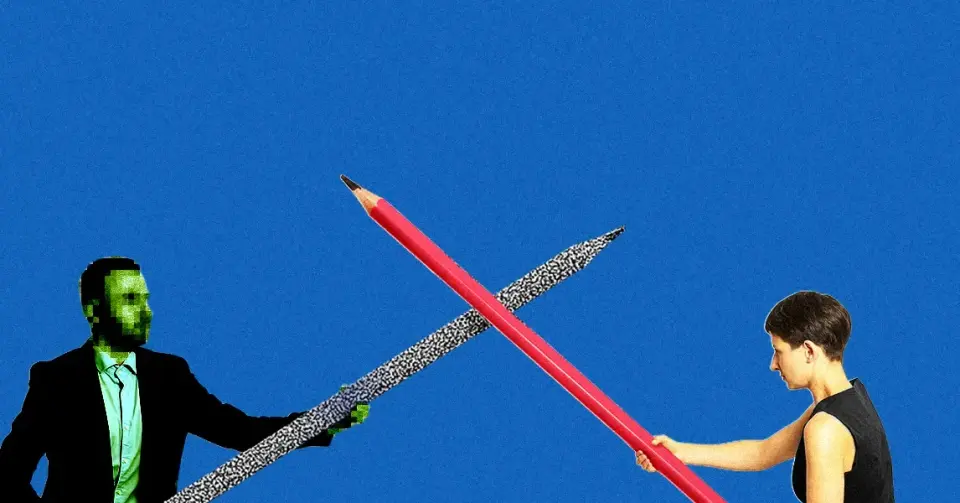
A growing literary counter-movement is emerging as writers and editors reject standard AI writing patterns. By intentionally introducing typos, avoiding em dashes, and prioritizing first-person anecdotes, authors aim to distinguish human work from algorithmic output. This shift is influencing editorial policies at major publications and prompting a broader re-evaluation of writing authenticity.
Key points
- Novelist Laura Brooke Robson and others are deliberately avoiding 'AI tells' such as tripartite lists and passive voice to maintain a distinct human voice.
- Publishers like Hachette and editors at Playboy and Pitchfork are enforcing stricter policies, requiring first-person perspectives and banning AI-generated review copy.
- The trend has extended to professional networking, with LinkedIn users and marketing agencies adopting 'anti-AI' styles that include intentional errors to appear more authentic.
- Some tools, like the app 'Sinceerly,' are designed to mimic human imperfection, leaving typos in emails to bypass AI detection filters.
- Critics warn that this counter-style is temporary, as AI models may eventually learn to mimic these new human-like idiosyncrasies.
Background
This development follows a period of increased scrutiny regarding AI-generated content in publishing. In March 2026, Hachette pulled Mia Ballard’s horror novel 'Shy Girl' due to online speculation about AI usage, a claim Ballard rejected. Similarly, Steven Rosenbaum admitted his book 'The Future of Truth' contained fabricated AI-generated quotations. These incidents highlighted the vulnerability of authors to false accusations and the difficulty of proving human authorship in a digital landscape where AI detection tools are prevalent but unreliable.
How outlets are covering it
WIRED frames the shift as a 'literary counterculture' driven by a desire for idiosyncrasy and human connection, citing specific examples from novelists and editors who are actively resisting AI norms. In contrast, LAmag takes a more procedural and defensive stance, focusing on how individuals can prove their work is human-written. LAmag emphasizes the limitations of AI detection tools like ZeroGPT, arguing that detection scores are not definitive proof. Instead, it advises writers to maintain records of their drafting process, such as version histories and research notes, to substantiate their claims of authorship. While WIRED highlights the creative and stylistic rebellion against AI, LAmag focuses on the practical and legal implications of being falsely accused of using AI, suggesting that documentation is a more reliable defense than stylistic choices alone.
Why it matters
The rise of anti-AI writing styles signals a fundamental shift in how authenticity is perceived in digital communication. As AI becomes more capable of mimicking human language, the value of 'flawed' or idiosyncratic writing increases. This trend could lead to a new standard in professional and creative writing, where imperfection is seen as a marker of human effort. Additionally, it highlights the growing tension between AI detection technology and the reality of human writing, potentially leading to more rigorous editorial policies and a renewed focus on the process of writing rather than just the final product.
What to watch
The next phase of this trend will likely involve AI models adapting to these new human-like styles. As AI systems are trained on larger datasets, they may learn to mimic the intentional errors and idiosyncrasies that writers are currently using to distinguish themselves. This could lead to a cycle of 'anti-anti-AI' styles, where writers must continually evolve their techniques to stay ahead of AI capabilities. Additionally, as AI detection tools become more sophisticated, the reliance on stylistic markers may decrease in favor of more robust verification methods, such as blockchain-based authorship tracking or AI-assisted drafting logs.
- More Typos, Fewer Em Dashes: Writers Are Creating an Anti-AI ‘Literary Counterculture’ WIRED
- AI is getting better at writing. Humans must get better at editing The Economist
- When Human Writing Is Mistaken for AI-Generated TextImage credit: ZeroGPT LAmag
- Best AI Writing Courses and Tools in 2026 The Good Men Project
Want the full story? Read the original reporting
Read on WIRED