
Aonuma Drops Fast Travel to Preserve Discovery in Ocarina Remake
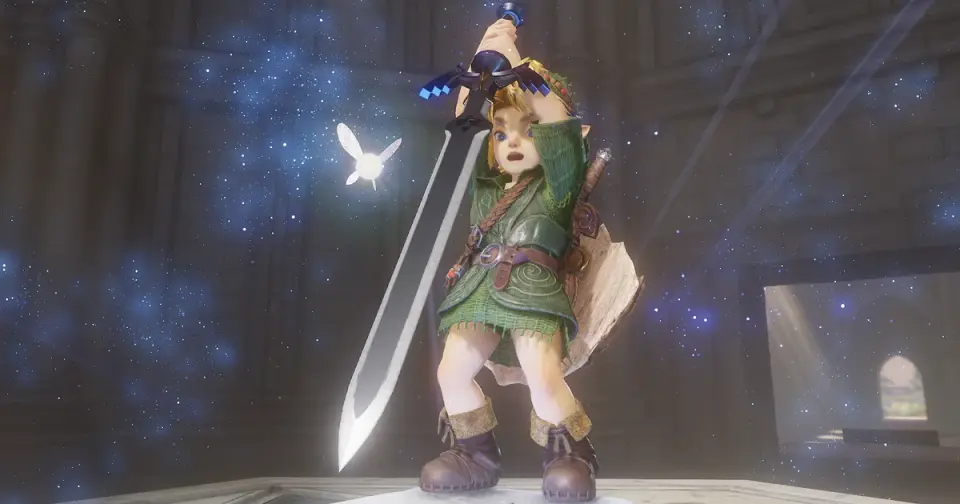
Nintendo removed fast-travel warp points from the upcoming Legend of Zelda: Ocarina of Time remake after testing revealed they undermined the game's core exploration mechanics. Producer Eiji Aonuma initially requested the feature to modernize movement but reverted the decision to preserve 'moments of discovery.' The title launches on November 5 for the Nintendo Switch 2, featuring a stylized 'puppet-show' art direction and updated quality-of-life tweaks, though it retains the original's traversal challenges.
Key points
- Eiji Aonuma proposed adding warp points to the Ocarina of Time remake to replace the original's forward-roll traversal mechanic.
- The development team removed the warp points after playtesting showed they eliminated the serendipitous discoveries inherent to the game's structure.
- Art director Aya Shida described the visual style as inspired by puppet shows and practical effects, aiming for a convincing fantasy presence rather than photorealism.
- The remake launches on November 5, 2026, for the Nintendo Switch 2, coinciding with the 40th anniversary of the Zelda series.
- Aonuma noted that younger developers who had not played the 1998 original brought fresh insights to the modernization process.
Background
This release follows recent industry debates regarding the balance between nostalgia and modernization in remakes, as noted in earlier coverage. The game's launch is also entangled with supply chain issues, including stock shortages for the 40th Anniversary Switch 2 console and delayed shipments for the limited-edition Pro Controller. Previous reports highlighted that the digital file size was compressed to 24.54GB, and retailers offered $10 discounts to manage overselling risks.
How outlets are covering it
Eurogamer focuses on the specific design decision regarding fast travel, highlighting Aonuma's admission that the feature was removed to maintain the game's structural integrity. Japan Today emphasizes the personal and professional stakes for Aonuma, describing him as 'nervous' about player reception and noting his recent recognition as a Knight of the Order of Arts and Letters in France. While Eurogamer frames the decision as a preservation of gameplay philosophy, Japan Today contextualizes it within Aonuma's long tenure and his mentorship of younger staff who lack experience with the original 1998 title.
Why it matters
The decision to exclude fast travel signals Nintendo's commitment to preserving the original game's exploratory rhythm despite modern expectations for convenience. It highlights a broader trend in high-profile remakes where developers prioritize authentic experience over quality-of-life additions, potentially influencing how other studios approach classic titles. The success of this approach will define the benchmark for future Zelda remakes and similar nostalgia-driven projects.
What to watch
The game is scheduled for release on November 5, 2026. Players can expect to encounter the updated art style and the absence of fast-travel mechanics. Nintendo will likely monitor player feedback closely, given Aonuma's expressed anxiety about the reception. Future Zelda titles may continue to balance modern controls with the series' traditional emphasis on spatial discovery.
- Nintendo tried adding fast travel to The Legend of Zelda: Ocarina of Time remake, before devs realised "we were missing out on the moments of discovery" Eurogamer.net
- Ask the Developer Vol. 24: The Legend of Zelda: Ocarina of Time — Part 1 Nintendo
- Nintendo producer 'nervous' as Zelda classic remake about to hit shelves Japan Today
- Zelda Producer 'Nervous' About Fan Reception to Ocarina of Time Remake IGN
- Nintendo announces Zelda: Ocarina of Time UK midnight launch, with free N64 boxes up for grabs Video Games Chronicle
Want the full story? Read the original reporting
Read on Eurogamer.net