
Star Wars: Galactic Racer's Success Driven by Small Core Team and Distributed Development Model
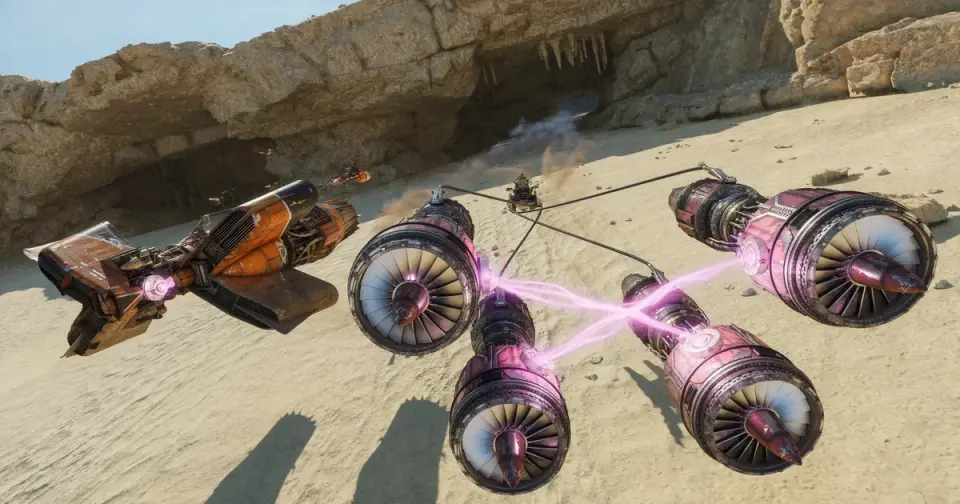
Star Wars: Galactic Racer has achieved critical success with an 88 Metacritic score, largely due to Fuse Games' innovative 'distributed development' model. Instead of a massive in-house team, the studio utilized a core group of fewer than 75 people, supplemented by external partners for specific tasks. This approach allowed for sustainable scaling without the traditional costs of large AAA teams, while the game's roguelike structure and off-track narrative, inspired by 'Drive to Survive,' have resonated with players.
Key points
- Fuse Games CEO Matt Webster confirmed the core team averaged fewer than 75 members during development, relying on a three-tier distributed model: outsourcing, external development, and co-development.
- The game has received an 88 Metacritic score for the PS5 version, with Webster noting that the roguelike structure makes even low placements feel rewarding, contrasting with traditional racing games.
- Post-launch support is prioritized, with four patches already released and plans for further content updates based on community feedback, including doubling the party limit.
- The narrative and pacing were heavily influenced by the Netflix series 'Drive to Survive,' focusing on off-track rivalries and paddock intrigue to balance high-intensity racing segments.
- Webster emphasized that the distributed model requires careful configuration from the start, as adding partners increases management complexity, and co-development partners were selected based on shared values and time zone alignment.
Background
Star Wars: Galactic Racer launched on October 6, 2026, on PC, PS5, Xbox Series X|S, and Amazon Luna. Developed by Fuse Games and published by Secret Mode, the game marked the first major Star Wars racing title since 2002. Early coverage highlighted its roguelite mechanics and 'game feel,' while subsequent updates focused on stability patches and keybinding promises. The current focus is on long-term support and community-driven content expansion.
How outlets are covering it
GamesIndustry.biz highlights the structural innovation of Fuse's distributed development model, emphasizing the sustainability and knowledge retention benefits of a small core team. Bespin Bulletin focuses on the studio's commitment to post-launch support, noting that community feedback will directly influence future content and updates. GameDev.net analyzes the design inspiration from 'Drive to Survive,' framing the off-track sequences as a crucial pacing tool for high-intensity gameplay. Cosmic Circus provides a player-centric review, praising the racing mechanics and vehicle customization while noting that the narrative may lack the depth of other Star Wars titles. All sources agree on the game's strong critical reception and the importance of the roguelike structure in redefining the racing genre.
Why it matters
The success of Star Wars: Galactic Racer demonstrates that high-quality AAA games can be produced with smaller, more agile teams through distributed development. This model offers a sustainable alternative to the traditional large-scale hiring practices, potentially influencing future studio structures. Additionally, the game's strong reception validates the integration of sports-doc storytelling into racing games, showing that off-track narrative can enhance player engagement and pacing in high-intensity titles.
What to watch
Fuse Games plans to announce new content and updates within weeks and months, driven by community feedback. The party limit is set to double soon, and further patches are expected to address player concerns. The studio will continue to prioritize post-launch support, using player data to inform future development decisions and ensure the game remains relevant and engaging.
- How Star Wars: Galactic Racer kept the core team small and sustainable through "distributed development" GamesIndustry.biz
- Star Wars Galactic Racer Devs Reveal They Have Big Plans For More Content Bespin Bulletin
- The Netflix series Drive to Survive inspired Star Wars: Galactic Racer GameDev.net
- ‘Star Wars: Galactic Racer’ Game Review: Thoroughly Enjoyable Racing Game Cosmic Circus
- New SteamOS Beta Update Fixes Star Wars: Galactic Racer Performance Issues Steam Deck HQ
Want the full story? Read the original reporting
Read on GamesIndustry.biz