
Ford Racing Validates 2027 Le Mans Hypercar Engine via Virtual Le Mans Lap Simulation
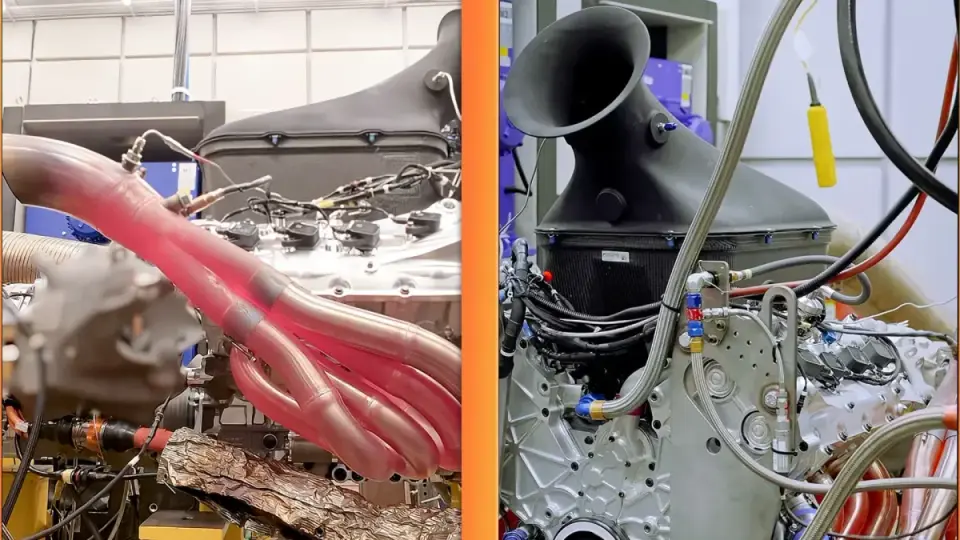
Ford Racing has released footage of its 5.4-liter Coyote-based V8 engine completing a full simulated lap of the Circuit de la Sarthe on a dyno in Dearborn. This 'virtual proving ground' uses real-time data from professional drivers on a simulator to test engine durability and performance before the car's physical debut. The program aims to return to the FIA World Endurance Championship Hypercar class in 2027, with initial track testing scheduled for later this year.
Key points
- Ford Racing is utilizing a 'virtual proving ground' to run a complete lap of the Le Mans circuit on an engine dyno in Dearborn, Michigan.
- The 5.4-liter naturally aspirated V8, derived from the Coyote engine, reaches 9,000 rpm during the simulation, replicating full-throttle zones like Mulsanne Straight.
- The simulation incorporates data from professional drivers using a multi-million-dollar simulator, accounting for individual driving styles and nuances rather than just idealized computer laps.
- Ford Racing is also testing driver ergonomics and visibility using a full-scale cockpit mock-up, or 'buck,' at its Technology Centre in North Carolina.
- The Hypercar program is scheduled to debut in the FIA World Endurance Championship in 2027, with the 24 Hours of Le Mans race set for June 12, 2027.
- The current dyno testing facility in Dearborn is located near the original test chamber used for the GT40 program in the 1960s.
Background
Ford Racing has been developing its Hypercar program since its inception, with the 5.4-liter V8 engine first firing in July 2026. The team is preparing for its return to the top class of the FIA World Endurance Championship in 2027, following a hiatus from the category. This latest development phase focuses on engine reliability and driver preparation ahead of the first physical track tests in France.
How outlets are covering it
The Drive emphasizes the human element of the simulation, noting that using professional drivers on a simulator allows Ford to account for individual driving styles and potential mistakes, which is crucial for a 24-hour race with multiple driver changes. Ford's official blog highlights the historical connection to the GT40 program, noting that the current test cell is located near the original 1960s GT40 development area. Road & Track focuses on the technical details, such as the engine reaching 9,000 rpm and the potential preview of the car's design through the driver-in-loop simulator. 24 Heures du Mans provides a comprehensive overview of the development process, including the use of a 'buck' for driver ergonomics and the focus on reliability for the 24-hour race.
Why it matters
This virtual testing phase is critical for Ford Racing to ensure the reliability and performance of its Hypercar engine before the car's physical debut. By simulating a full Le Mans lap with real driver data, Ford can identify potential issues and refine the engine and car design, reducing the risk of failures during the 2027 season. This approach also allows Ford to continue development work without waiting for track access, accelerating the program's progress.
What to watch
Ford Racing is scheduled to begin its first physical track tests in France in the coming months, ahead of the 2027 FIA World Endurance Championship season. The 24 Hours of Le Mans race is set for June 12, 2027. The car's design may be revealed soon, as the driver-in-loop simulator provides a preview of the final race car's appearance.
- Watch Ford’s Hypercar V8 Rev Through a Lap of Le Mans on the Dyno The Drive
- A Lap of Le Mans, Without Leaving Dearborn fromtheroad.ford.com
- Listen to Ford’s Le Mans Engine Roar Through a Simulated Lap Road & Track
- Ford Racing Recreates a Lap of the 24 Hours of Le Mans Circuit 24 Heures du Mans
- Ford Le Mans hypercar sounds amazing during simulated lap testing The Supercar Blog
Want the full story? Read the original reporting
Read on The Drive