
Dolby Vision 2 Launches on Hisense TVs, Introducing Advanced Motion and Light Controls
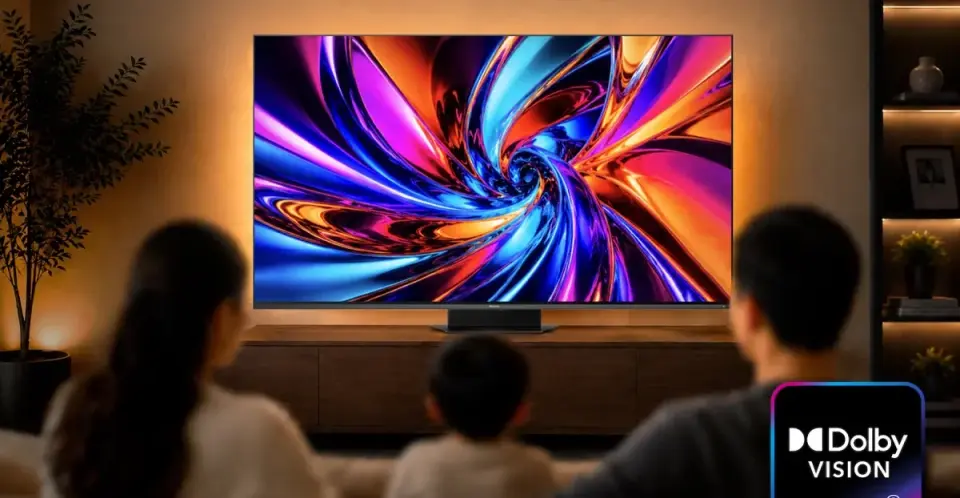
Dolby Vision 2 has officially launched on select 2026 Hisense television models, marking the first hardware rollout of the new high dynamic range standard. The update introduces a two-tier system, with the premium 'Max' tier offering advanced features like Authentic Motion and Light Sense 2. While the technology enhances existing content through a new image engine, full utilization requires new metadata from content creators, with only a few streaming platforms currently supporting the format.
Key points
- Dolby Vision 2 is now available via firmware updates on Hisense 2026 UX, UR9, UR8, and U7 series TVs, which support the premium 'Max' tier.
- The standard tier includes bidirectional tone mapping and an intensity slider, while the Max tier adds Authentic Motion and Light Sense 2 for ambient light adjustment.
- Content Intelligence uses metadata to optimize picture quality scene-by-scene, though it does not rely on artificial intelligence as initially misreported by some outlets.
- Peacock, Canal+, and iQiyi are the first streaming services to commit to encoding content with Dolby Vision 2 metadata, though no specific launch dates for titles have been announced.
- The technology requires new hardware, specifically the MediaTek Pentonic 800 SoC, meaning older TVs cannot be updated to support the new features despite being able to display the content.
Background
Dolby Vision 2 succeeds the original Dolby Vision standard, which has been in use for over a decade. The new format addresses the limitations of previous tone mapping by allowing TVs with higher brightness capabilities to proportionally increase content brightness rather than just compressing it. This development follows the announcement of HDR10+ Advanced, a competing royalty-free standard from Samsung and Panasonic, which offers similar features but lacks the production-level tools of Dolby Vision 2. The rollout coincides with the 2026 trend of RGB LED TVs, which offer higher brightness and color accuracy, making them ideal candidates for the new bidirectional tone mapping features.
How outlets are covering it
The Verge highlights the potential for Dolby Vision 2 to alter the intended brightness of films, noting that boosting brightness beyond the master level could deviate from the director's vision, particularly for dark films like Blade Runner 2049. Broadband TV News emphasizes the global firmware rollout and the immediate availability of the technology on Hisense models, quoting executives from Dolby and Hisense on the improved viewing experience. Engadget initially misreported that Content Intelligence used AI, but corrected this to state it relies solely on metadata, while also highlighting the utility of Authentic Motion for reducing judder. PCMag Australia provides a detailed breakdown of the technical differences between the standard and Max tiers, noting that while Dolby Vision 2 is promising, the lack of widespread content support means it is not yet a reason to upgrade a TV. All sources agree that Samsung will not support Dolby Vision 2 due to its investment in HDR10+.
Why it matters
Dolby Vision 2 represents a significant evolution in HDR technology, offering more granular control over picture quality and motion smoothing. However, its impact is currently limited to a few high-end TV models and a small number of streaming platforms. The competition with HDR10+ Advanced suggests a fragmented future for HDR standards, with consumers needing to choose between Dolby and Samsung's ecosystem. Until more content is encoded with Dolby Vision 2 metadata, the practical benefits of the new standard remain minimal for the average consumer.
What to watch
TCL and Philips are expected to add Dolby Vision 2 support to select TVs later in 2026, while LG and Sony may include it in their 2027 models. More streaming platforms are likely to adopt Dolby Vision 2 metadata in the coming months, but the full rollout will depend on the adoption of the new image engine and SoC by TV manufacturers. The competition with HDR10+ Advanced will likely continue, with both standards offering similar features but different licensing models.
- Dolby Vision 2 will be available first on some 2026 Hisense TVs The Verge
- Dolby Vision 2 debuts on Hisense TVs with global firmware rollout Broadband TV News
- Dolby Vision 2 Is Officially Available On Select Hisense TVs Engadget
- Hisense launches Dolby Vision 2 on 2026 RGB MiniLED range advanced-television.com
- Dolby Vision 2 Is Coming. Here's What to Know About This New HDR Format PCMag Australia
Want the full story? Read the original reporting
Read on The Verge