
Google's Motion Assist feature begins phased rollout on Android 17 Pixels
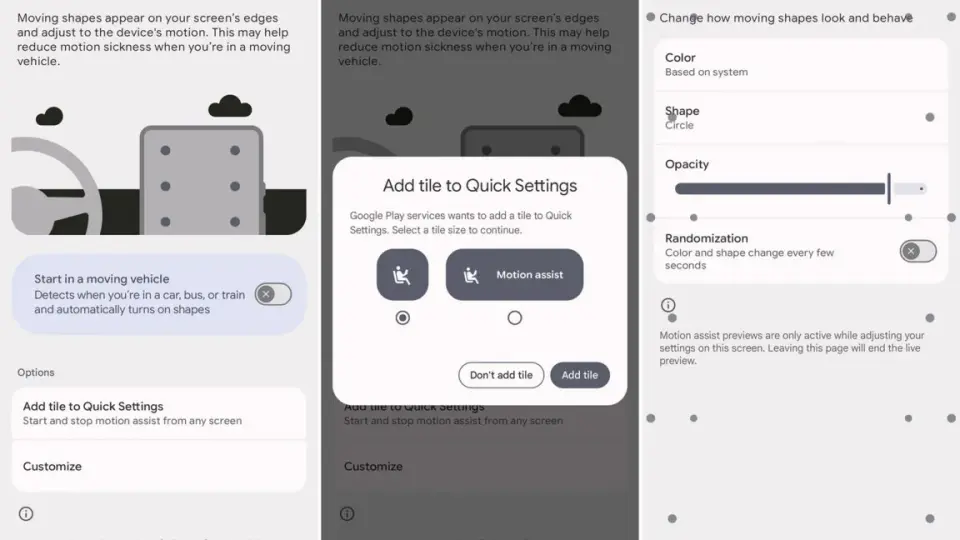
Google is gradually rolling out 'Motion Assist,' a feature designed to reduce motion sickness while using a phone in a moving vehicle. The update, delivered via Play Services, currently appears on some Pixel devices running Android 17. It uses moving dots on the screen edges to sync with vehicle motion, similar to Apple's 'Motion Cues.'
Key points
- Google's 'Motion Assist' feature is in a phased rollout, currently limited to some Pixel phones running Android 17.
- The feature is delivered through Play Services updates rather than a standalone app or OS update.
- Motion Assist displays moving dots around the screen edges that react to the device's accelerometer and gyroscope to match vehicle movement.
- Users can customize the dots' shape, size, color, and opacity, or enable a randomization option.
- The feature can be activated manually via a Quick Settings tile or automatically when the phone detects a moving vehicle.
- Android Authority notes that the current implementation resolves previous limitations, allowing dots to appear over system UI elements like the status bar and lock screen.
Background
Google began testing this feature, initially known as 'Motion Cues,' in December 2024. Apple introduced a similar feature called 'Motion Cues' with iOS 18 in 2024. Some Android manufacturers, such as OPPO and vivo, have already offered similar motion cue features on their devices.
How outlets are covering it
Ars Technica, Android Authority, Mashable, and The Verge all confirm the feature's rollout on Android 17 Pixels. Android Authority provides the most technical detail, noting that Google fixed previous issues where the dots could not overlay system UI elements. The Verge highlights the feature's effectiveness, with the author citing personal experience using similar anti-nausea features on Apple devices. All outlets agree that the rollout is gradual and not yet universal across all eligible devices.
Why it matters
Motion sickness is a common issue for users who need to read or interact with their phones while traveling. This feature offers a software-based solution that could make smartphone use more comfortable and practical in moving vehicles, potentially improving user experience for a significant portion of the population.
What to watch
Google has not confirmed if Motion Assist will be exclusive to Pixel phones or Android 17. Ars Technica has reached out to Google for clarification. The feature may expand to other Android devices and older OS versions in the future, but no timeline has been announced.
- Google’s anti-nausea Motion Assist dots finally rolling out on Android Ars Technica
- Google's clever Android 17 motion sickness feature is finally rolling out Android Authority
- Get car sick while you're on the phone? Motion Assist is coming to Android to help Mashable
- Android is getting its own weird dots to cure car sickness The Verge
- Android's motion sickness feature is rolling out - how to see if you have it ZDNET
Want the full story? Read the original reporting
Read on Ars Technica