
Japanese Researchers Trial AI Brain Scans to Gauge Mental State via 'Maemuki' Effect
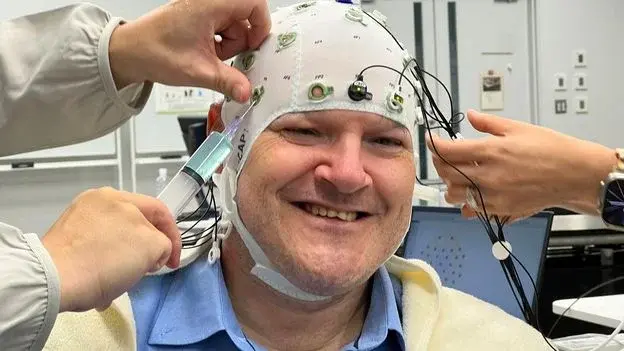
Researchers at Japan’s National Institutes for Quantum Science and Technology (QST) are trialling AI-driven tools to assess mental wellbeing through brain scans and physiological signals. The project, known as 'Maemuki,' aims to measure a 'forward-facing mentality' rather than relying solely on patient self-reporting. While early tests show promise in linking pupil tracking and brain activity to performance and mood, experts caution that the technology is still in early stages and lacks the precision for clinical diagnosis.
Key points
- QST’s Brain and Mind Research Group is using MRI scans and machine learning to estimate psychological traits, such as the 'superiority illusion,' which is linked to depressive symptoms.
- The 'Maemuki' concept refers to a forward-facing mentality that helps individuals overcome challenges, distinct from simply being happy or positive.
- A prototype AI platform called Body2Positive is being tested to estimate mental states using body signals, eye tracking, EEG, and heart rate data.
- In one trial, participants walked on a treadmill through a virtual forest, receiving audio feedback (birdsong or crow caws) based on their detected mood to encourage behavioral adjustments.
- The technology is not a medical diagnosis; it provides probabilistic estimates with margins of error, and researchers emphasize that no single method universally improves mental state for everyone.
Background
Japan faces high rates of loneliness, depression, and anxiety among adults, alongside a high suicide rate for a developed nation. Current methods for diagnosing depression, such as those used by the UK’s NHS, rely heavily on patient interviews rather than physical tests. QST, a key player in Japan’s Quantum Technology Innovation Strategy, is exploring these AI tools to potentially offer personalized support tailored to individual needs, moving beyond one-size-fits-all approaches.
Why it matters
If successful, this technology could lead to more precise, symptom-based interventions for mental health conditions, reducing reliance on subjective self-reporting. It could also help tailor support for diverse groups, from patients with illnesses to elite athletes, by identifying what specific behaviors or interventions help each individual in real-time.
What to watch
The QST team is continuing to refine the Body2Positive platform and determine which physiological signals are most reliable for measuring mental state. Researchers are also working to define soft concepts like 'wellbeing' and 'positivity' in measurable terms. External experts, including Szonya Durant of Royal Holloway, University of London, note that the technology is still in early stages and may not yet be reliable enough for clinical use.
Want the full story? Read the original reporting
Read on BBC