
Panasonic SHX1 Launches as Compact Cinema Camera with 6K Sensor and Dual RAW Support
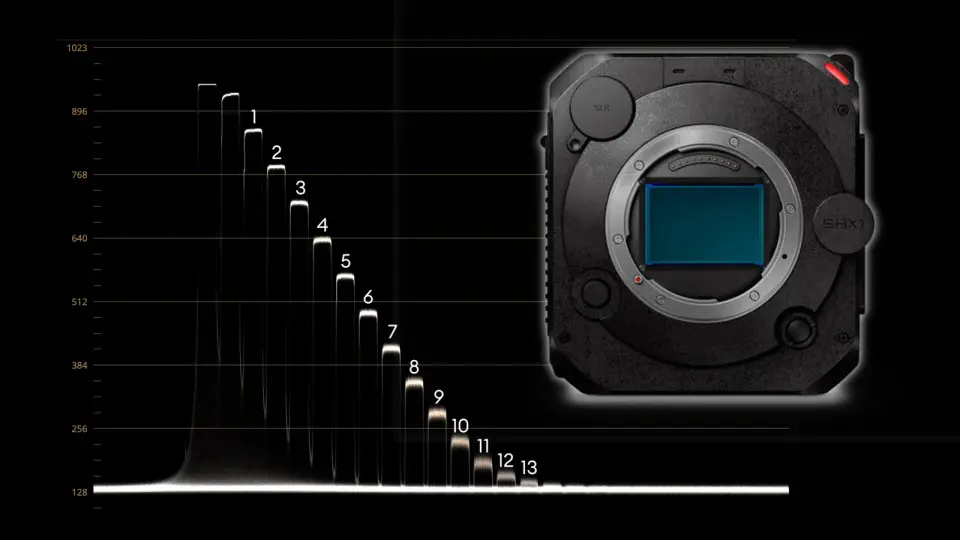
Panasonic has officially unveiled the LUMIX SHX1, its first dedicated compact cinema camera, priced at $4,699.99. The camera features a 6K full-frame partially stacked CMOS sensor with an optical low-pass filter, supporting both Apple ProRes RAW internally and Blackmagic RAW via external SSD. While it offers 15 stops of dynamic range with Dynamic Range Boost enabled, lab tests indicate significant rolling shutter issues in this mode. The device is designed for versatile professional workflows, including anamorphic shooting and live production, with availability starting in January 2027.
Key points
- The LUMIX SHX1 is priced at $4,699.99 for the body and $5,499.99 for a kit including an XLR handle and control grip, with availability scheduled for January 2027.
- It utilizes a 6K (24.1MP) full-frame partially stacked CMOS sensor with an optical low-pass filter to minimize moiré, sharing core imaging technology with the LUMIX S1II.
- The camera supports 15 stops of dynamic range in V-Log when Dynamic Range Boost is active, though this mode significantly increases rolling shutter to 26.2ms in 5.8K ProRes RAW.
- It is the first LUMIX camera to support Blackmagic RAW recording directly to an external USB SSD and includes ARRI LogC3 pre-installed for color matching with ARRI systems.
- The box-style design includes 5-axis body image stabilization, 779 phase hybrid autofocus points, and 32-bit float internal audio recording, with a weight of approximately 984 grams.
Background
The SHX1 follows the 2024 integration of Panasonic’s professional AV and consumer imaging divisions, a move that ended the separate VariCam cinema line. The camera builds upon the LUMIX S1II, which was tested earlier in 2026, and aims to fill a gap in the market for a compact, cinema-quality camera that can handle diverse production needs, from traditional filmmaking to vertical social media content.
How outlets are covering it
CineD’s lab tests highlight a mixed performance profile for the SHX1. While dynamic range and exposure latitude are competitive with high-end cinema cameras like the ARRI Alexa Mini LF, the rolling shutter performance is a significant drawback. In Dynamic Range Boost mode, the rolling shutter measures 26.2ms, which is slower than competitors like the Sony FX5 (13.3ms) and Sony a7R VI (15.6ms). CineD notes that the larger body of the SHX1 could have allowed for faster sensor readout but did not. Conversely, Newsshooter emphasizes the camera’s versatility and workflow improvements, such as the reduced internal noise reduction in ProRes HQ 4:2:2 mode compared to the S1II. Y.M.Cinema, in a pre-announcement editorial, expressed a desire for a more ambitious VistaVision VariCam, suggesting that the SHX1, while capable, is not a true flagship replacement for dedicated cinema platforms. Panasonic’s official announcement focuses on the camera’s modular design and its ability to serve as a PTZ camera via future accessories, highlighting its role in live production and multi-camera setups.
Why it matters
The SHX1 represents a strategic shift for Panasonic, moving away from hybrid mirrorless cameras toward a dedicated cinema tool that bridges the gap between consumer and professional cinema workflows. Its support for multiple RAW formats and color science standards (V-Log, ARRI LogC3, Blackmagic) makes it a flexible option for post-production pipelines. However, the rolling shutter limitations in high-dynamic-range modes may restrict its use in certain fast-action or high-frame-rate scenarios, forcing users to choose between dynamic range and motion fidelity.
What to watch
The LUMIX SHX1 is expected to be available in January 2027. Panasonic plans to release a Live Production Unit (AU-LPU1) in the first half of 2027, which will enable the camera to function as a cinema-quality PTZ camera. A firmware update in early 2027 will also add support for remote control of Tilta lenses and variable ND filters. The camera’s performance in real-world production environments, particularly regarding thermal management during extended 4K 120p recording, will be a key factor in its adoption by professional videographers.
- Panasonic LUMIX SHX1 Lab Test – Rolling Shutter, Dynamic Range and Exposure Latitude CineD
- Panasonic Unveils LUMIX SHX1, Its First Compact Cinema Camera Panasonic
- Panasonic SHX1 Review Newsshooter
- Panasonic Teases New LUMIX for Tomorrow. We Wish It Were a VistaVision VariCam. Y.M.Cinema Magazine
- Panasonic Goes 6K Open Gate With Its New LUMIX SHX1 Full-Frame Box Cinema Camera No Film School
Want the full story? Read the original reporting
Read on CineD