
Google's Pixel Tag Launches as a $29 AirTag Rival with UWB Precision
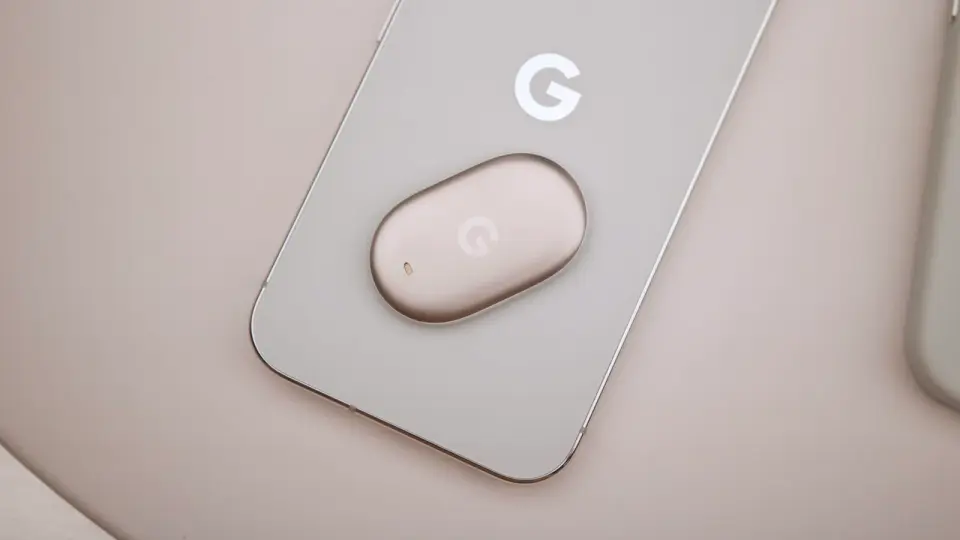
Google has officially launched the Pixel Tag, its first dedicated Bluetooth tracker, priced at $29 for a single unit or $99 for a four-pack. The device is designed to compete directly with Apple's AirTag, featuring Ultra-Wideband (UWB) for precise directional finding and integration with the Android Find Hub network. While it offers a replaceable CR2032 battery and IP67 water resistance, the Pixel Tag lacks a built-in attachment hole, requiring users to purchase separate accessories. The device is available for purchase starting November 11, 2026, following its announcement at the Made by Google event.
Key points
- The Pixel Tag costs $29 for a single unit and $99 for a four-pack, matching Apple's AirTag pricing.
- It supports Ultra-Wideband (UWB) for directional precision finding and Bluetooth 6.0 Channel Sounding for distance measurement.
- The device is IP67 rated for water and dust resistance and uses a replaceable CR2032 battery lasting up to one year.
- It lacks a built-in lanyard hole, requiring users to buy separate key rings or holders.
- The Pixel Tag is available for purchase starting November 11, 2026, and works with Android 9.0 or newer devices.
- It integrates with the Find Hub network, which includes over one billion Android devices for crowdsourced tracking.
Background
Google had been expected to release a tracker for years, with leaks in early August 2026 suggesting a price of $29 and a launch at the Made by Google event. Previous coverage highlighted the need for UWB support and a built-in attachment point to compete with Apple. The Pixel Tag was announced alongside the Pixel 11 series and Pixel Watch 5, marking Google's first entry into the dedicated tracker market.
How outlets are covering it
Android Authority emphasizes the Pixel Tag's UWB precision finding as a major advantage but criticizes the lack of a built-in attachment hole, calling it a baffling design choice. The Verge notes that while the Pixel Tag matches AirTag pricing, it requires newer hardware for full UWB support and highlights the addition of Bluetooth 6.0 Channel Sounding for distance measurement. CNET compares the Pixel Tag to the Motorola Moto Tag 2, noting that both cost $30 (with a $100 four-pack) and support UWB, but the Moto Tag 2 is available immediately and has a built-in key fob slot. Google's official blog highlights the Find Hub network's scale and the ease of setup via Fast Pair, while emphasizing the device's durability and battery life. All sources agree on the $29 price and November 11 release date, but differ on the perceived value of the missing attachment hole and the availability of competing products.
Why it matters
The Pixel Tag fills a long-standing gap in Google's ecosystem, offering Android users a first-party tracker with advanced UWB features. Its launch intensifies competition with Apple's AirTag and other third-party trackers, potentially driving down prices and improving features across the market. The integration with the Find Hub network could significantly improve the reliability of Android's tracking capabilities, making it a more viable alternative to Apple's ecosystem.
What to watch
The Pixel Tag will be available for purchase starting November 11, 2026. Users can expect to see more reviews and comparisons with the AirTag and Moto Tag 2 in the coming months. Google may also introduce additional accessories or features for the Pixel Tag in future updates, potentially addressing the lack of a built-in attachment hole.
- Google's new Pixel Tag is the AirTag rival Android users have been waiting for Android Authority
- Keep tabs on your valuables with Google Pixel Tag blog.google
- The Pixel Tag is Google’s answer to the AirTag The Verge
- Google Now Makes Its Own AirTags and I Couldn’t Be More Stoked CNET
- Google Finally Launches Its Own Bluetooth Tracker, the Pixel Tag PCMag
Want the full story? Read the original reporting
Read on Android Authority