
Duterte Defense Argues Drug War Rhetoric Was Cultural Humor, Not Orders to Kill
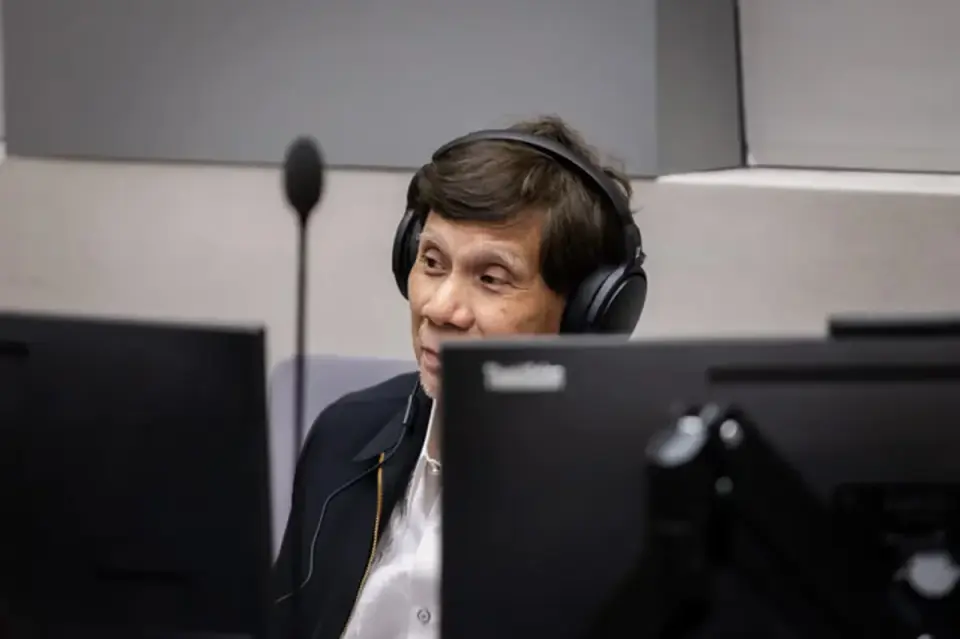
Former Philippine President Rodrigo Duterte faces trial at the International Criminal Court (ICC) on November 30, 2026, for alleged crimes against humanity linked to his anti-drug campaign. His defense team argues that his violent rhetoric was culturally contextual 'bugalbugal' (teasing) rather than literal orders, while prosecutors and human rights groups contend it facilitated thousands of extrajudicial killings. The trial opens amid stalled domestic justice efforts and US sanctions against the ICC.
Key points
- The ICC trial against Rodrigo Duterte is scheduled to begin on November 30, 2026, with the former president set to enter a plea. He faces three counts of crimes against humanity, including murder and attempted murder, allegedly committed between 2011 and 2019.
- Defense counsel Peter Haynes filed a pre-trial motion on November 25, 2026, arguing that Duterte's use of profanity and threats like 'I will kill you' were part of 'bugalbugal,' a Cebuano practice of verbal play and teasing, not literal intent to murder.
- Haynes also asserted that the term 'neutralization' used in police operations referred to lawful incapacitation, not execution, noting that fatalities represented a tiny fraction of millions of police operations. He argued this disproves an 'indiscriminate order to kill.'
- Prosecutors allege Duterte created a state policy to 'neutralize' drug suspects, focusing on 56 specific incidents and 87 victims as a sample of up to 30,000 killings. The defense denies the existence of a state or organizational policy to murder.
- Human Rights Watch reported that only four Duterte-era drug war cases have reached trial in the Philippines, despite President Ferdinand Marcos Jr.'s pledge to pursue accountability. Families of victims face barriers such as falsified death certificates and lack of witness protection.
- The trial is described as the highest-profile ICC case in over two decades, occurring amid US sanctions that threaten the court's functionality. Duterte's daughter, Vice President Sara Duterte, has called for his release, asserting foreign courts should not override national sovereignty.
Background
The ICC trial follows a 2023 ruling that the Philippine government failed to adequately investigate drug war killings. In March 2025, Duterte was arrested and transferred to The Hague. Domestic investigations have been hampered by falsified death certificates and lack of witness protection, with only five convictions secured for nine police officers. The ICC previously issued a sealed arrest warrant for former police chief Ronald Dela Rosa in November 2025, unsealed in May 2026.
How outlets are covering it
The defense, led by Peter Haynes, frames Duterte's rhetoric as culturally specific 'bugalbugal' (teasing) and argues 'neutralization' meant incapacitation, not killing. Prosecutors and Human Rights Watch counter that the language facilitated extrajudicial killings, with UN and domestic groups estimating 20,000 to 30,000 deaths. Reuters highlights the trial's significance as a test for the ICC amid US sanctions, while ABS-CBN focuses on the cultural defense strategy. Inquirer.net reports the defense's denial of crimes against humanity, though its text was largely obscured by cookie data in the source.
Why it matters
The trial represents a landmark moment for international justice, testing the ICC's ability to function under US pressure. It also highlights the gap between domestic accountability and international intervention in the Philippines, where families of victims have struggled to secure justice due to systemic barriers and falsified records.
What to watch
The ICC trial is scheduled to begin on November 30, 2026, with Duterte set to enter a plea. Prosecutors will present opening arguments, and the trial is expected to run well into 2027. More than 500 alleged victims will be represented in court. The outcome will determine if Duterte is convicted of crimes against humanity, potentially facing life in prison.
- Duterte’s defense: Use of ‘offensive, threatening’ speech in drug war is ‘regional way of speaking’ ABS-CBN
- Philippines: As ICC Tries Duterte, Stalled Justice at Home Human Rights Watch
- Families of Slain Filipinos Seek Justice as Duterte's ICC Trial Set to Start U.S. News & World Report
- Rodrigo Duterte camp tells ICC no crimes against humanity in PH Inquirer.net
- ‘Cognitive impairment’ hinders Rodrigo Duterte’s ability to join ICC proceedings, defense tells court ahead of trial ABS-CBN
Want the full story? Read the original reporting
Read on ABS-CBN