
Supreme Court Justice Kagan Denies Surrogate’s Emergency Appeal in High-Profile Custody Dispute
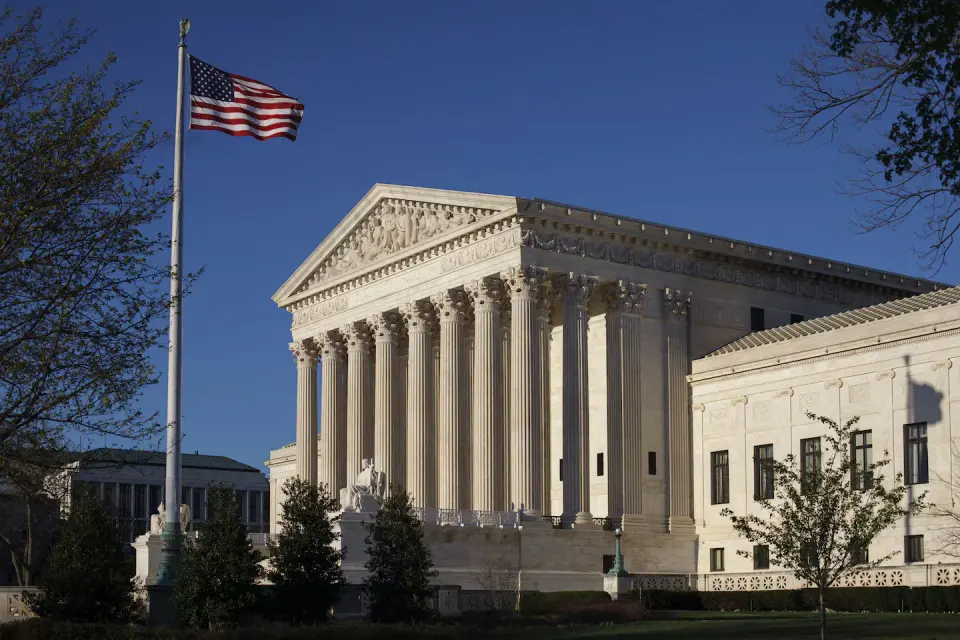
Justice Elena Kagan declined to intervene in a multistate custody battle involving a surrogate who refused an abortion after her fetus was diagnosed with a fatal heart defect. The decision leaves in place a California court order granting parental rights to the biological parents, Omar Ahmed and Nausheen Gilkar. The baby, born in Texas in August, has undergone heart surgery and remains in critical condition. The surrogate, McKenna West, argued that the California ruling violated her due process rights and that she was being excluded from the child’s medical care. The biological parents’ attorneys stated that the child’s survival is the priority and that West’s legal efforts have been rejected by lower courts. The case has sparked national debate over surrogacy contracts, abortion access, and parental rights.
Key points
- Justice Elena Kagan denied an emergency appeal from surrogate McKenna West, allowing a California court order granting parental rights to biological parents Omar Ahmed and Nausheen Gilkar to stand.
- West refused to have an abortion after the fetus was diagnosed with hypoplastic left heart syndrome, a rare and often fatal heart defect, despite a contract clause allowing termination for fetal abnormalities.
- West traveled from Alaska to Texas to give birth in August, where the baby underwent open-heart surgery and remains in a pediatric intensive care unit.
- West’s attorneys argued that the California ruling violated her 14th Amendment due process rights and that she was being excluded from the child’s medical decisions.
- The biological parents’ attorneys stated that the child’s survival is the priority and that West’s legal efforts have been rejected by lower courts.
- The case has sparked national debate over surrogacy contracts, abortion access, and parental rights, with Texas Attorney General Ken Paxton intervening to ensure the baby received life-saving care in Texas.
Background
This case began in spring 2026 when West, a cardiac nurse from Alaska, was around 20 weeks pregnant and the fetus was diagnosed with hypoplastic left heart syndrome. The biological parents, a Los Angeles couple, decided to terminate the pregnancy, but West initially agreed and then changed her mind. She traveled to Texas, where abortion is banned, to give birth. The custody battle has unfolded across three states, with West seeking control over the child’s medical care and the biological parents seeking to provide the child with the necessary treatment. The case has drawn national attention and sparked broader discussions about surrogacy and abortion.
How outlets are covering it
The Washington Post and The New York Times both reported that Justice Kagan declined to intervene, leaving the California court order in place. The Post emphasized the technical legal question of whether the California Superior Court had jurisdiction, while the Times focused on the high-profile nature of the custody battle and the questions surrounding surrogacy and abortion. NBC News highlighted the role of Texas Attorney General Ken Paxton in the case and the arguments made by West’s attorneys that the child’s life was at stake. The Guardian focused on the broader implications of the case for surrogacy and abortion rights, noting that West’s attorneys argued that the California ruling violated her due process rights. All four outlets agreed that the case has sparked national debate over surrogacy, abortion, and parental rights, but they differed in their emphasis on the legal, political, and ethical dimensions of the case.
Why it matters
This case highlights the complex legal and ethical issues surrounding surrogacy, abortion, and parental rights. It raises questions about the enforceability of surrogacy contracts, the rights of surrogate mothers, and the limits of family law in America. The case also underscores the tensions between different states’ laws on abortion and surrogacy, and the potential for multistate legal battles over custody and medical care. The decision by Justice Kagan to decline to intervene leaves the lower court rulings in place, but the case may continue to be litigated in lower courts. The case has also sparked broader discussions about the role of the Supreme Court in high-profile custody disputes and the limits of judicial intervention in cases involving abortion and surrogacy.
What to watch
The biological parents have stated that they are focused on the baby’s health and that West is engaged in 'political theater.' West’s attorneys have expressed disappointment with the Supreme Court’s ruling but have stated that the legal proceedings have prompted the contracting parents to commit to providing the baby with the necessary care. The case may continue to be litigated in lower courts, and the outcome may have implications for future surrogacy and abortion cases. The baby’s condition remains critical, and the parents have stated that they are seeking privacy in caring for their son on his long road to recovery.
- Kagan declines appeal from surrogate mother who refused to get abortion The Washington Post
- Supreme Court Order Gives Parents Custody of Baby in Surrogacy Fight The New York Times
- US Supreme Court won't intervene in custody dispute between California couple, surrogate 6abc Philadelphia
- Supreme Court declines to intervene in custody case involving newborn with heart condition NBC News
- US supreme court declines to intervene in custody fight over baby born via surrogate theguardian.com
Want the full story? Read the original reporting
Read on The Washington Post