
Hegseth Doubles Senior Military Cuts to 20% Amid Iran War Controversy
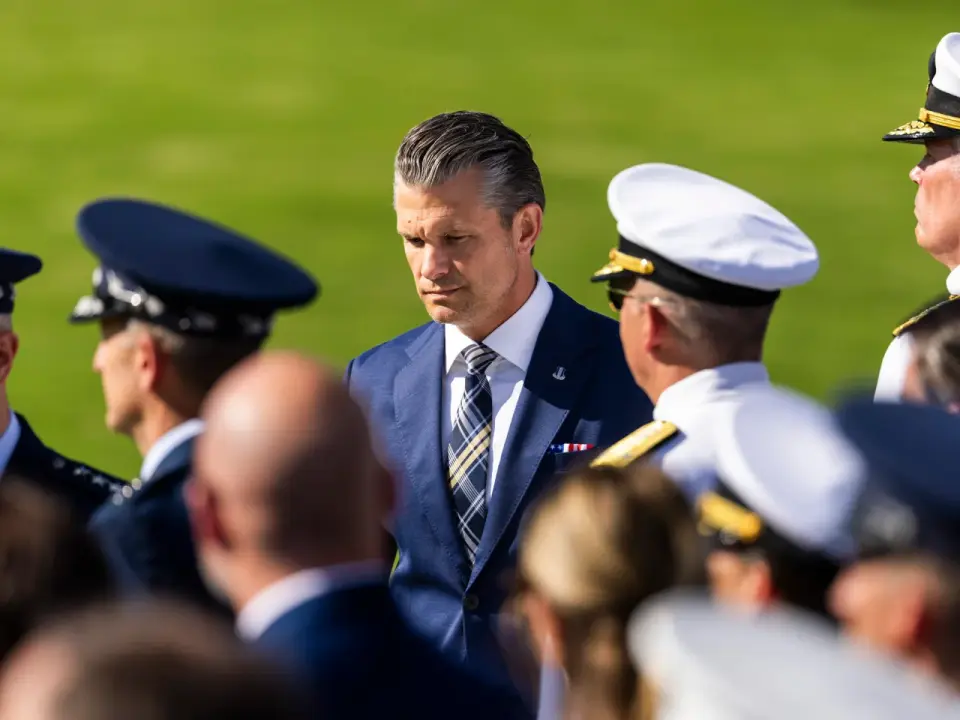
US Defense Secretary Pete Hegseth has confirmed a plan to reduce general and admiral positions by 20 percent by January 2027, doubling the previous year’s cuts. Announced at a 'State of the Force' address in Quantico, Virginia, the move affects roughly 800 senior officers. Hegseth framed the reductions as necessary to eliminate bureaucratic 'woke' culture and improve lethality, while critics argue the changes are politically motivated purges that threaten military professionalism and readiness during an ongoing conflict in Iran.
Key points
- The reduction targets approximately 800 general and admiral billets across one- to four-star ranks, with some roles eliminated and others reassigned to lower-ranking officers.
- Hegseth stated that 'no fatties, no trannies, no weirdos, no wimps, no radicals' would be tolerated, emphasizing a focus on training, readiness, and discipline.
- The administration has already removed more than two dozen senior military leaders since January 2025, including Army Chief Randy George and Navy Chief Lisa Franchetti.
- Hegseth unveiled six new initiatives, including a drone warfare headquarters called Autonomous Warfare Command and a partnership with tech figures Elon Musk and Palmer Luckey.
- The cuts come amid an unpopular war in Iran, which has resulted in over 800 wounded US troops and 19 deaths, with Hegseth facing scrutiny over supply chain issues and media leaks.
Background
This announcement follows a series of earlier reports in late September 2026 indicating that Hegseth intended to double the 10 percent cut ordered in 2025. Previous coverage highlighted concerns that the 'State of the Force' address marked a shift from addressing senior leadership to rank-and-file troops, raising questions about the military’s nonpartisan norms. The current move is part of a broader pattern of personnel changes and policy shifts within the Pentagon under the Trump administration.
How outlets are covering it
Al Jazeera and The Washington Post emphasize the political nature of the cuts, with analysts like Robert Ralston arguing that the reductions are driven by political loyalty rather than merit. They highlight the adversarial relationship between Hegseth and senior military leaders, noting that blocked promotions and dismissals have damaged morale. The Guardian focuses on Hegseth’s rhetoric against diversity and 'woke' culture, noting his dismissal of reports regarding low morale on the USS Abraham Lincoln. While all sources agree on the 20 percent figure, they differ in emphasis: Al Jazeera and The Washington Post stress the potential for congressional opposition and the impact on military advice, whereas The Guardian highlights the specific anti-diversity language and new partnerships with conservative institutions and tech billionaires.
Why it matters
The reduction of senior military leadership during an active conflict raises significant concerns about command continuity and strategic decision-making. If the cuts are perceived as politically motivated, they could undermine the professional military advice system, potentially leading to ineffective military operations. Additionally, the new initiatives involving private tech firms and the restructuring of officer training pipelines could have long-term implications for US defense capabilities and the relationship between the military and civilian leadership.
What to watch
The 20 percent reduction must be completed by January 1, 2027. Congress is expected to scrutinize the changes, with potential investigations and impeachments of Hegseth if Republicans lose control of either chamber in the November 2026 elections. The Pentagon will also proceed with evaluating locations for a new domestic military base and launching the Autonomous Warfare Command, with an aspirational launch date of October 2027.
- Why is Hegseth cutting 20 percent of US general and admiral positions? Al Jazeera
- In Speech, Hegseth Targets Diversity, Transgender People, Reporters and Iran The New York Times
- Hegseth confirms plan to cut 20% of US top military brass and rails at ‘beardos, weirdos and wimps’ theguardian.com
- 7 takeaways from Hegseth’s address to officers: Warfare’s future, faith and a new base The Hill
- Hegseth details new initiatives in partisan address to troops The Washington Post
Want the full story? Read the original reporting
Read on Al Jazeera