
Alaska Senate race likely for Peltola as Sullivan faces mathematical hurdle in ranked choice tabulation
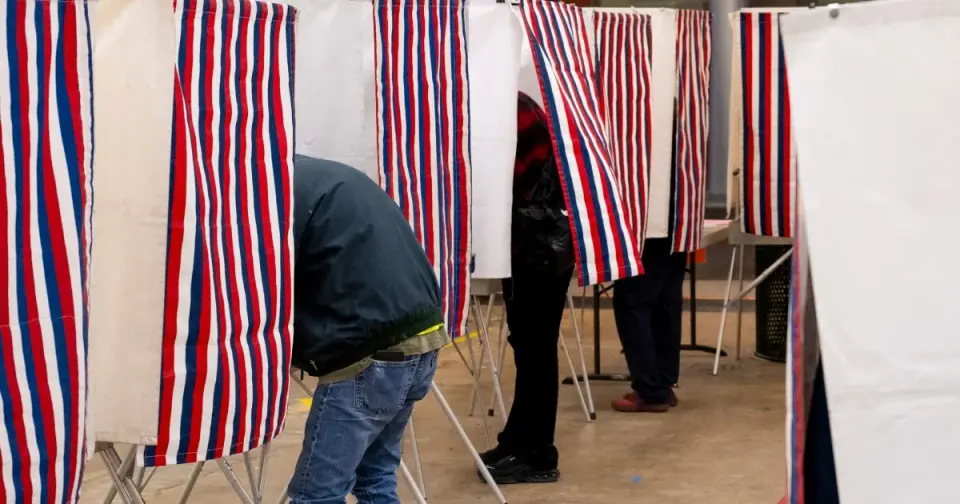
Democratic challenger Mary Peltola is on track to win the Alaska Senate seat despite a slow vote count. NBC News analysis indicates that incumbent Republican Dan S. Sullivan cannot close the gap via first-choice votes or ranked choice redistribution. The race may be officially decided by November 18, with Peltola holding a lead of over 10,000 votes.
Key points
- Peltola leads Sullivan by 3.7 percentage points, or approximately 10,000 votes, with 96% of expected votes counted.
- Sullivan would need to win 92% of the remaining 12,000 outstanding ballots to tie Peltola on first-choice votes, a scenario analysts deem highly improbable.
- Ranked choice voting is unlikely to help Sullivan because over 45% of ballots for other candidates are exhausted, meaning they do not transfer to the top two.
- The final result may not be known until November 18, the deadline for receiving mail absentee ballots and conducting any necessary tabulation.
- The race is the only uncalled Senate contest in the 2026 midterms, potentially marking the Democrats' ninth seat flip.
Background
Alaska’s unique geography complicates vote counting, as ballots from remote areas are transported by air and sea to Juneau. Previous reports indicated that Peltola’s lead had narrowed slightly after conservative Mat-Su borough results were tallied, but recent data shows her advantage widening. A separate controversy involves a third candidate, Dan S. Sullivan Jr., a retired teacher accused by Republicans of being a Democratic operative recruited to split the vote. The Trump administration attempted to block certification of the results, but a federal judge dismissed the lawsuit.
How outlets are covering it
NBC News and The New York Times both conclude that Peltola is likely to win, noting that Sullivan’s path to victory is mathematically closed. MS NOW emphasizes that Peltola’s lead has grown significantly, shifting its rating to 'likely Democratic' and highlighting her strength in absentee ballots. BBC focuses on the logistical challenges of counting votes in America’s largest state, explaining why results are delayed. While all outlets agree on the likely outcome, they differ in emphasis: NBC and NYT focus on the statistical impossibility of a Sullivan comeback, MS NOW highlights the political implications of the blue wave, and BBC explains the physical infrastructure behind the slow count. The sources also note that President Trump has claimed the race was rigged, a claim dismissed by courts, while Sullivan has stated he would accept the results if he loses.
Why it matters
This race determines the balance of power in the U.S. Senate following a significant Democratic shift in the 2026 midterms. The outcome will influence legislative priorities and potential vetoes. Additionally, the prolonged count and legal challenges highlight ongoing tensions regarding election integrity and the use of ranked choice voting in close contests.
What to watch
Election officials will finalize the count by November 18. If Peltola does not reach 50% of the vote, the state Division of Elections will conduct a ranked choice tabulation. Analysts expect Peltola to win even under this scenario, but the official certification may take until the end of the week.
- Why Mary Peltola is on track to win in Alaska, even if ranked choice ballots come into play NBC News
- Alaska Senate Race Between Dan Sullivan and Mary Peltola Still Counting Votes The New York Times
- Peltola widens lead in Alaska Senate race, now rated ‘likely Democratic’ MS NOW
- Why midterm vote-counting is taking so long in America's largest state BBC
- In Alaska’s legislative elections, a handful of races remain undecided nail-biters Alaska Beacon
Want the full story? Read the original reporting
Read on NBC News