
Brazil's October 4 Vote: Lula vs. Flávio Bolsonaro in a Region-Wide Power Struggle
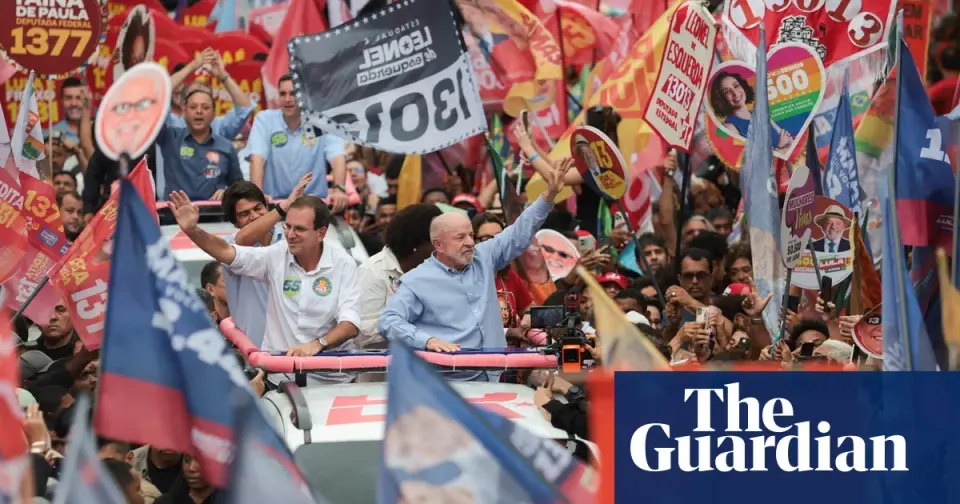
Brazilians vote on October 4 in a deadlocked presidential race between incumbent Lula da Silva and Flávio Bolsonaro. The outcome is viewed as a critical test for US influence in Latin America, where a Bolsonaro win would likely align Brazil with Washington's anti-drug and anti-China policies, while a Lula victory would preserve regional autonomy.
Key points
- The election is statistically tied, with polls showing no clear winner between the 80-year-old incumbent Lula and 45-year-old senator Flávio Bolsonaro.
- If no candidate secures 50% plus one vote, a runoff is scheduled for October 25.
- Flávio Bolsonaro is running because his father, Jair Bolsonaro, is under house arrest following a conviction for attempting a coup.
- Brazil is seen as the last major Latin American nation capable of resisting US foreign policy dictates, specifically regarding the 'Shield of the Americas' coalition.
- Brazil's attorney general has opened a criminal probe into alleged US interference, including the redirection of funds to support far-right causes.
Background
Recent months have seen escalating tensions between Washington and Brasília. In August, Lula attempted to leverage a cordial call with Trump to counter interference from Secretary of State Marco Rubio. By early October, Brazil launched a criminal investigation into US efforts to redirect $175 million from human rights funds to support far-right causes, including a $1 million grant targeting Brazil's Supreme Court. Prior coverage noted that while the race is a statistical dead heat, high voter rejection rates and distrust in electoral integrity have deepened polarization.
How outlets are covering it
The Guardian frames the election as a geopolitical pivot point, arguing that a Bolsonaro victory would complete a US-aligned bloc in the hemisphere, while a Lula win would maintain regional autonomy. AP News provides a factual overview of the candidates and the runoff mechanics but does not offer the same geopolitical analysis. Analysts cited by The Guardian, such as Pedro Telles and Michael Shifter, emphasize the 'backyard' dynamic, noting that Trump views Latin America as his domain. In contrast, the AP source focuses on the domestic mechanics of the vote, highlighting the lack of a clear frontrunner. The Guardian notes that Lula has criticized the 'inferiority complex' of leaders in Trump's coalition, while Bolsonaro has pledged to join it and offer Brazil's rare earths to the US to break dependence on China.
Why it matters
The result determines whether Brazil joins the US-led 'Shield of the Americas' or maintains its independent stance. A Bolsonaro victory would likely align Brazil with US policies on drug enforcement and resource extraction, potentially isolating the left-wing governments in Mexico and Uruguay. Conversely, a Lula victory would preserve Brazil's role as a counterweight to US hegemony in the region, impacting global alliances like BRICS and US-China trade dynamics.
What to watch
Voters will cast ballots on October 4. If neither candidate achieves a majority, a second round will take place on October 25. The outcome will immediately signal Brazil's future stance on the 'Shield of the Americas' coalition and its relationship with the US and China. The Brazilian attorney general's investigation into US interference will likely continue regardless of the result, potentially affecting diplomatic relations in the coming months.
- Brazil’s neck-and-neck election offers test for growing pro-Trump Latin American bloc The Guardian
- Lula's lead over Bolsonaro narrows ahead of Brazil vote, CNT/MDA poll shows Reuters
- Lula or Bolsonaro? Some Brazilian voters say they don’t want either NPR
- Brazilians will vote in a highly polarized presidential race on Sunday. Here’s what to know AP News
- Brazil’s Lula and Flávio Bolsonaro campaign in powerhouse state ahead of Sunday’s presidential vote The Hill
Want the full story? Read the original reporting
Read on The Guardian