
Democrats Face Strategic Split on Confronting Trump After Sweeping Midterm Victory
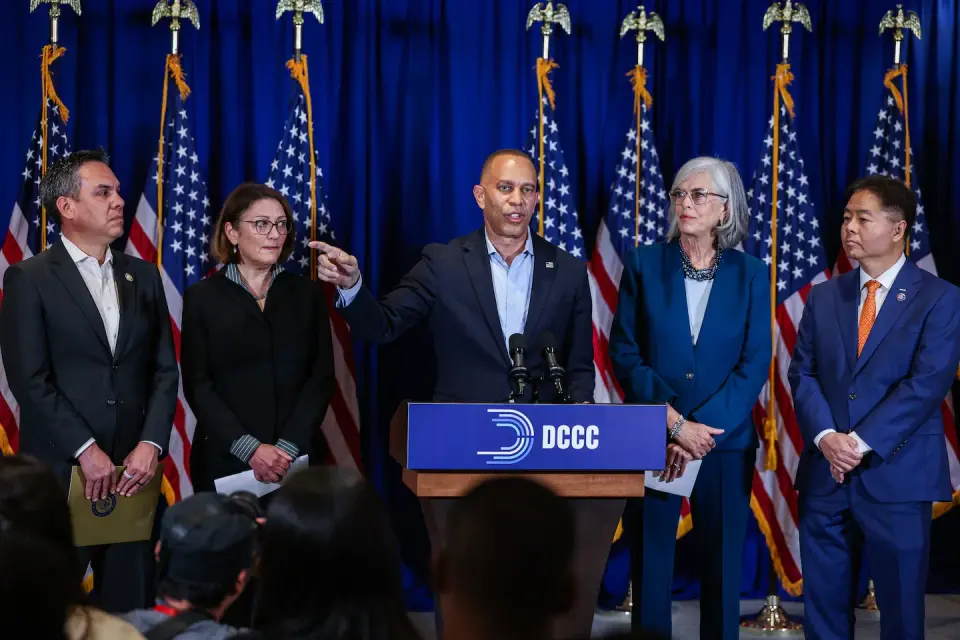
Democrats have secured control of both the House and Senate following a historic midterm victory, with the party’s national vote margin for House seats reaching approximately 13 percentage points, the largest in decades. As they prepare to take office in January, Democratic leaders are divided on how to wield their new power against President Donald Trump. While some factions prioritize aggressive investigations into alleged corruption and potential impeachment, others argue for pragmatic compromise to pass legislation on affordability and health care. Trump has signaled a willingness to collaborate, stating he does not want to spend two years vetoing everything, though his administration maintains a defensive posture regarding upcoming probes. The party must navigate internal tensions between progressive demands for retribution and moderate pushes for bipartisan deals to address economic pain and the Iran conflict.
Key points
- Democrats flipped seven Senate seats and captured the House, with two Senate races in Alaska and Mississippi still pending.
- Hakeem Jeffries is expected to become the first Black Speaker of the House, while Hakeem Jeffries and Chuck Schumer lead the new majorities.
- The party’s agenda includes reversing Trump’s tariff regime, restoring health care funding, and ending the war in Iran.
- Internal divisions exist between progressives demanding investigations and moderates seeking bipartisan compromises on cost of living.
- Trump told The New York Times he is willing to accept the results and work with Democrats, rejecting the idea of a total veto strategy.
Background
This election follows a period of significant political tension, including ongoing legal disputes such as the BBC defamation case against Trump and shifting alliances in swing states like Alaska, where Senator Lisa Murkowski endorsed a Democratic gubernatorial candidate. The current victory represents a dramatic shift from the 2024 landscape, where Trump won key states like Nevada and Michigan.
How outlets are covering it
The Washington Post highlights the internal ideological rift, noting that while Rep. Robert Garcia and Rep. Jason Crow support aggressive investigations and potential impeachment, Rep. Adam Gray and Sen. Mark Kelly advocate for pragmatic compromises to pass legislation. The New York Times emphasizes the scale of the Democratic victory, noting the 13-point national vote margin and the defeat of long-time Republican incumbents like Susan Collins. NPR focuses on the immediate policy agenda, including efforts to reverse Medicaid cuts and challenge the Iran war, while noting Trump’s insistence that he would make the same decisions again despite the electoral rebuke.
Why it matters
The outcome determines the balance of power in Washington for the final two years of Trump’s presidency. The ability of Democrats to pass legislation or force investigations will shape the economic and foreign policy landscape, particularly regarding the Iran conflict and domestic affordability. The internal cohesion of the Democratic party will be tested as they navigate the tension between retribution and governance.
What to watch
Democrats will begin forming committees and drafting legislation in January. Key decisions will be made on whether to pursue impeachment or focus on passing bills that require bipartisan support. The outcomes of the Alaska and Mississippi Senate races will finalize the party’s margins in the upper chamber.
- Democrats face a choice on Trump come January: Confrontation or compromise The Washington Post
- Midterm Elections Live Updates: Democrats Project Power as G.O.P. Reels in a Reordered Washington The New York Times
- Election 2026 results live updates: Vote counts in Alaska, Mississippi and Kansas continue after Democratic sweep NBC News
- The Democrats have won the biggest congressional landslide in 50 years The Economist
- Democrats' First 100 Hours, Outstanding Midterm Races, Trump Doubles Down On Policies NPR
Want the full story? Read the original reporting
Read on The Washington Post