
Democrats prepare to weaponize oversight and budget power against Trump's final term
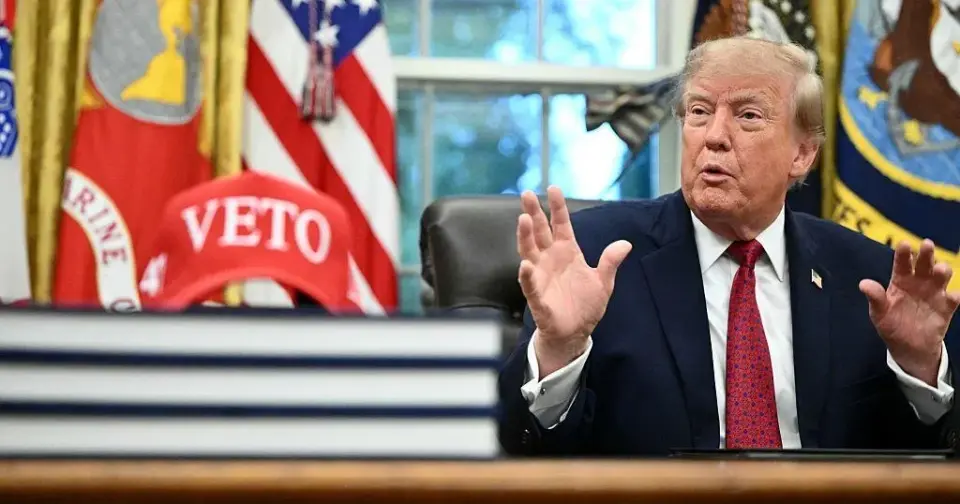
After losing control of both chambers of Congress in the 2026 midterms, President Trump faces a divided government where Democrats plan to use subpoena power and budget restrictions to investigate his administration. While Trump has signaled a willingness to cooperate, he has also threatened to use his veto power extensively. Democrats are not currently pursuing impeachment, focusing instead on legislative gridlock and oversight of the Iran war and family business dealings.
Key points
- Democrats will control the House and Senate, enabling them to issue subpoenas and conduct investigations into the Trump family, the Justice Department, and the Iran war.
- Incoming House Oversight Chairman Robert Garcia plans to probe the Trump family's business dealings, including crypto ventures and foreign investments, as well as actions by the Department of Homeland Security.
- Trump has stated he will work with Democrats but has also threatened to veto legislation, describing himself as 'Mr. Veto' and placing a red hat with that word on his desk.
- Democrats are not currently pursuing impeachment, with leaders like Hakeem Jeffries stating no members of the caucus have raised the issue, preferring to focus on legislation and oversight.
- Trump is expected to rely more heavily on executive orders to advance his agenda, as legislative cooperation will be difficult due to the Senate filibuster and Democratic control of the House.
- Republicans may begin to distance themselves from Trump as they consider their own political futures, potentially leading to internal party fractures in the final two years of his term.
Background
This development follows the 2026 midterm elections, where Democrats secured majorities in both the House and Senate, reversing the Republican control that had allowed Trump to bypass Congress for much of his second term. Prior to the election, Trump had enjoyed a unified government, using executive authority to implement policies on immigration, trade, and federal spending. The shift in power dynamics is expected to intensify conflicts between the executive and legislative branches, particularly over budgetary control and oversight investigations.
How outlets are covering it
CBS News emphasizes the potential for Democratic investigations and the use of subpoena power, highlighting the specific targets of these probes, such as the Trump family's business dealings and the Iran war. The New York Times, in an opinion piece, frames the midterm results as a significant reversal for Trump, suggesting that his administration had lost its political momentum and that the Democratic victory represents a check on his power. CNN focuses on Trump's strategy to use executive orders and veto power to maintain influence, noting that while he may appear conciliatory, his behavior will depend on how Democrats wield their power. CNN also highlights the potential for internal Republican fractures and the possibility of a Cabinet shakeup, particularly regarding Defense Secretary Pete Hegseth. The three outlets agree that the divided government will lead to increased conflict, but they differ in their emphasis: CBS focuses on the investigative agenda, The Times on the political reversal, and CNN on Trump's executive strategies and internal party dynamics.
Why it matters
The shift to a divided government will significantly impact the balance of power in the US, with Democrats using their new authority to hold the Trump administration accountable and Trump relying on executive orders to advance his agenda. This dynamic could lead to increased political polarization and gridlock, affecting policy areas such as immigration, foreign policy, and federal spending. The outcome of these conflicts will shape the political landscape leading up to the 2028 presidential election and test the durability of the MAGA movement.
What to watch
Democrats will likely begin issuing subpoenas and conducting investigations into the Trump administration, focusing on areas such as the Iran war, the Justice Department's handling of the Epstein probe, and the Trump family's business dealings. Trump is expected to use his veto power to block Democratic legislation and rely on executive orders to advance his agenda. The potential for a Cabinet shakeup, particularly regarding Defense Secretary Pete Hegseth, remains a possibility, as Republicans may begin to distance themselves from Trump as they consider their own political futures. The outcome of these conflicts will shape the political landscape leading up to the 2028 presidential election.
- What Trump's final 2 years in office will look like with Democrats in charge CBS News
- Donald Trump’s humiliation offers America an opportunity The Economist
- Opinion | These Midterms Show That Trump Blew It The New York Times
- How Trump is expected to handle being a lame-duck president CNN
- Trump Now Has to Govern Through a Midterm Meltdown of His Own Making Bloomberg.com
Want the full story? Read the original reporting
Read on CBS News