
Army Secretary Driscoll Resigns Amid Hegseth Leadership Purges
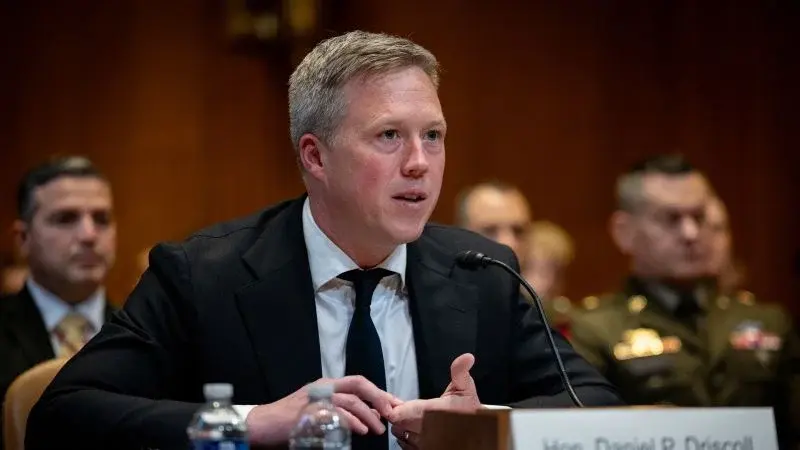
Army Secretary Dan Driscoll has submitted his resignation to President Donald Trump, a move driven by deepening tensions with Defense Secretary Pete Hegseth. The departure follows Hegseth’s removal of senior Army leaders, including Chief of Staff Gen. Randy George, which Driscoll opposed. While the White House has not yet accepted the resignation, Driscoll is expected to leave the Pentagon within days. The conflict centers on disagreements over Army transformation, readiness, and the firing of generals responsible for those efforts.
Key points
- Dan Driscoll submitted his resignation to President Trump, though the White House has not yet accepted it.
- Tensions arose from Hegseth’s removal of senior Army leaders, including Gen. Randy George.
- Driscoll raised concerns about Hegseth hindering Army transformation and readiness efforts.
- Driscoll is expected to leave the Pentagon in the coming days.
- The resignation follows a broader pattern of military leadership changes under Hegseth.
Background
This resignation follows recent tensions within the Pentagon, including a classified assessment where top generals warned Hegseth that expanding operations against Iran risks weakening US forces. Additionally, earlier reports linked the firing of Army Chief Gen. Randy George to a halt in a probe regarding an unauthorized flyover, reflecting Hegseth’s broader effort to reshape Army leadership. Driscoll, a close ally of Vice President JD Vance, had previously worked with Silicon Valley companies to expand the Army’s drone capabilities.
How outlets are covering it
Fox News emphasizes the personal and institutional conflict, highlighting Driscoll’s direct opposition to Hegseth’s firing of generals and his emotional defense of Gen. Randy George. CNN focuses on the procedural aspect, noting that the resignation is pending and that Driscoll is expected to leave soon. Both outlets agree on the core facts but differ in emphasis: Fox frames the resignation as a result of Hegseth’s obstruction of Army readiness, while CNN presents it as a formal administrative step following a period of tension.
Why it matters
The resignation of a senior defense official signals significant internal friction within the Trump administration’s military leadership. It raises questions about the stability of Army transformation efforts and the potential impact on readiness, particularly amid ongoing concerns about operations in Iran. The departure of Driscoll, a key ally of Vice President Vance, may also influence future defense policy and military appointments.
What to watch
The White House must decide whether to accept Driscoll’s resignation. If accepted, a search for a new Army Secretary will likely begin. The departure may also prompt further scrutiny of Hegseth’s leadership decisions and their impact on Army readiness and transformation efforts.
- Army Secretary Dan Driscoll submits resignation after tension with Hegseth CNN
- Exclusive | Army Secretary Resigns After Months of Friction With Hegseth WSJ
- Army Secretary Dan Driscoll submits resignation to Trump Fox News
- Army Secretary Dan Driscoll resigns from post Axios
- Army Secretary Dan Driscoll is stepping down after 18 months on the job, White House says WRIC ABC 8News
Want the full story? Read the original reporting
Read on CNN