
El-Sayed Wins Michigan Senate, Becomes First Muslim U.S. Senator
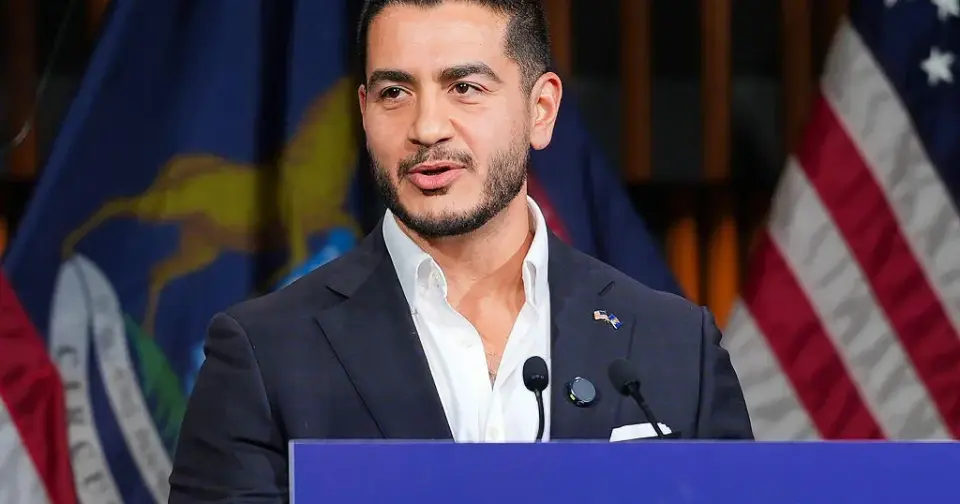
Abdul El-Sayed has won the Michigan U.S. Senate race, becoming the first Muslim American elected to the chamber. In a victory speech delivered in Detroit, El-Sayed declared that 'the bad guys lost' and mocked President Donald Trump and Vice President JD Vance, who had attacked his faith and name during the campaign. He defeated Republican Mike Rogers in a contest marked by record spending and intense Islamophobic rhetoric. El-Sayed emphasized that his opponents targeted his identity to distract from economic issues, while Arab American communities celebrated the win as a historic milestone against bigotry.
Key points
- El-Sayed, 42, defeated Republican Mike Rogers to become the first Muslim U.S. senator, securing Democratic control of the Senate.
- The campaign featured over $350 million in spending, a record for Michigan, including $70 million in the primary and $42 million from AIPAC against El-Sayed.
- El-Sayed won Dearborn by 65 percentage points, with the city recording its highest-ever voter turnout of 45,464 residents.
- El-Sayed criticized Trump and Cruz for calling him a 'jihadist' and member of the Muslim Brotherhood, claims he denies, and mocked Vance for being constitutionally obligated to swear him in.
- Arab American voters, estimated at 400,000 in Michigan, played a pivotal role, with many reporting increased support due to backlash against the campaign’s hate-based messaging.
Background
This victory follows a contentious 2026 midterm cycle where El-Sayed’s progressive platform, including Medicare for All and opposition to U.S. military aid for Israel, resonated with voters despite significant opposition spending. Earlier coverage noted that his win secured a decisive Democratic majority in the Senate, marking a breakthrough for progressive Democrats in swing states. The race was also defined by a late endorsement of Rogers by El-Sayed’s primary rival, Haley Stevens, which ultimately failed to derail his momentum.
How outlets are covering it
CBS News focused on El-Sayed’s combative victory speech, highlighting his direct confrontations with Trump, Vance, and AIPAC, as well as his framing of the campaign as a choice between 'hate' and 'hope.' ClickOnDetroit emphasized the broader impact on Arab American communities, noting that the open bigotry in the campaign likely activated higher turnout among a diverse electorate. While CBS highlighted the financial disparity and El-Sayed’s rhetorical victories, ClickOnDetroit underscored the demographic significance of the win, noting that Arab American voters in Michigan are split roughly equally among Democrats, Republicans, and independents, making their support crucial for statewide races. Both sources agreed that the campaign’s Islamophobic attacks were unprecedented in their intensity, but ClickOnDetroit placed greater weight on the long-term political influence of Arab American voters, whereas CBS focused on the immediate political fallout and El-Sayed’s future legislative agenda.
Why it matters
El-Sayed’s victory marks a historic first for Muslim representation in the U.S. Senate and signals a shift in the political landscape for swing states. The win, achieved despite record opposition spending and intense Islamophobic attacks, suggests that voters in Michigan rejected divisive rhetoric in favor of economic populism. It also highlights the growing political influence of Arab American communities, which may become a key demographic for future campaigns. The result secures Democratic control of the Senate, strengthening the party’s position for the 2028 presidential cycle and potentially influencing national debates on healthcare, foreign policy, and immigration.
What to watch
El-Sayed is set to be sworn in by Vice President JD Vance in January, a moment he mocked as 'delicious irony.' He has pledged to push for Medicare for All, reduce the influence of money in politics, and redirect federal spending away from foreign wars. His victory may also prompt a broader reassessment of how political campaigns address religious and ethnic identity in swing states, as well as increased scrutiny of outside spending by groups like AIPAC.
- From "inshallah" to "alhamdulillah": Abdul El-Sayed celebrates historic Michigan Senate win in victory speech CBS News
- El-Sayed Calls Out JD Vance in Victory Speech WSJ
- Arab Americans, Muslims celebrate historic win for El-Sayed as History and triumph over bigotry ClickOnDetroit | WDIV Local 4
- Abdul El-Sayed’s Senate Win Is Big to Muslim Americans, but Not Because of Faith The New York Times
- Politics of fear failed to stop El-Sayed's historic US Senate win Reuters
Want the full story? Read the original reporting
Read on CBS News