
Flávio Bolsonaro leads Brazil runoff after right-wing surge
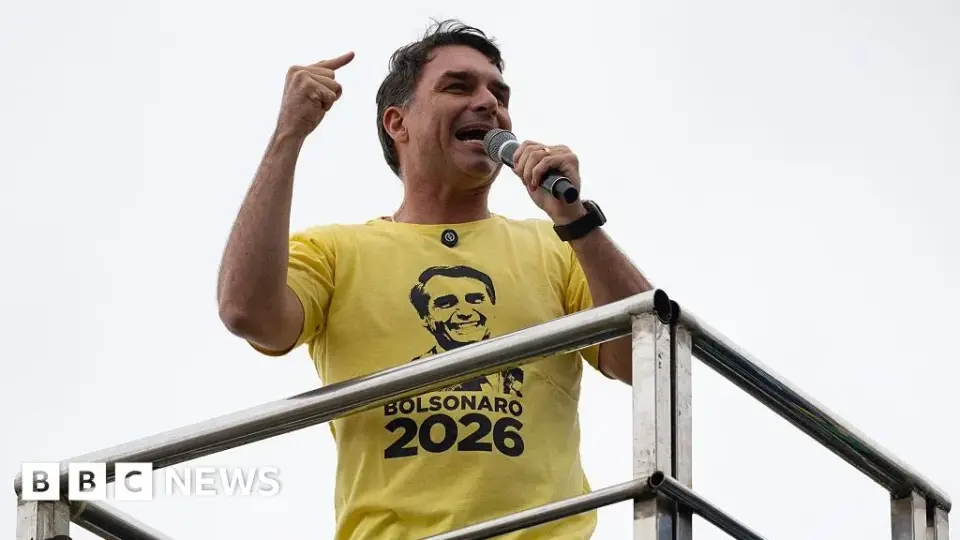
Flávio Bolsonaro has won the first round of Brazil's presidential election, securing 56.1 million votes against incumbent Luiz Inácio Lula da Silva's 53.8 million. This result forces a runoff on October 25, where Bolsonaro is the favorite. The victory is attributed to a right-wing surge, high voter rejection of Lula, and a strong performance in key southeastern states. The outcome has emboldened calls for the release of Jair Bolsonaro, who is serving a 27-year sentence for an attempted coup, and has intensified debates over US influence and regional political shifts.
Key points
- Flávio Bolsonaro won the first round with 56.1 million votes, narrowly ahead of Lula's 53.8 million, setting up an October 25 runoff.
- The result defied polls that predicted a tie or Lula victory, driven by high voter rejection of the incumbent and concerns over crime.
- The Liberal Party (PL) gained significant Senate seats, rising from 15 to 28, strengthening the Bolsonaro family's political influence.
- Calls for amnesty for Jair Bolsonaro and other convicted coup plotters have intensified following the right-wing electoral success.
- The election outcome is seen as part of a broader right-wing trend in Latin America, though analysts debate whether it reflects ideological shift or anti-incumbent sentiment.
Background
Brazil's presidential race has been defined by deep polarization, with Lula seeking a fourth non-consecutive term and Flávio Bolsonaro positioning himself as a dynamic alternative. The campaign was marked by debates over crime, corruption scandals, and US interference. Jair Bolsonaro, Flávio's father, is currently serving a 27-year sentence for an attempted coup, a case that has become a central issue in the election. The region has seen a series of right-wing victories, leading to discussions about a potential 'blue wave' in Latin America.
How outlets are covering it
BBC emphasizes the 'blue wave' narrative and the unprecedented high disapproval rate of Lula, despite strong economic indicators. Financial Times focuses on the potential for amnesty for Jair Bolsonaro and the political implications of the PL's Senate gains. The Atlantic highlights the anti-incumbent sentiment and the 'curse of the incumbent' in global politics. CNN analyzes the US perspective, noting Trump's interest in a Bolsonaro victory to counter China's influence, while also questioning whether the right-wing surge is a durable ideological shift or a reaction to voter fatigue. All sources agree on the narrow first-round result and the significance of the October 25 runoff, but differ in their emphasis on the causes and consequences of the right-wing surge.
Why it matters
The outcome of the October 25 runoff will determine whether Brazil's largest economy aligns more closely with US-led right-wing policies or maintains its current left-wing stance. A Bolsonaro victory could lead to significant political changes, including potential amnesty for convicted coup plotters and increased tensions with the Supreme Court. The result also has implications for regional politics, potentially strengthening right-wing movements in Latin America and affecting US-China relations in the hemisphere.
What to watch
The runoff election is scheduled for October 25. Both candidates will focus on mobilizing independent voters and those who abstained in the first round. The outcome will determine the next president of Brazil and the future of the Bolsonaro political dynasty. If Flávio Bolsonaro wins, there will be increased pressure for amnesty for Jair Bolsonaro and other convicted individuals. The result will also influence Brazil's foreign policy, particularly its relationship with the US and China.
- Flávio Bolsonaro rides right-wing wave to win first round of Brazil election BBC
- Opinion | Brazil’s Problem Is Bigger Than Bolsonaro The New York Times
- Brazil’s rightwing surge boosts Flávio Bolsonaro’s push to free his father Financial Times
- The Curse of the Incumbent The Atlantic
- Key takeaways as Brazil heads to presidential runoff that could reshape Latin America CNN
Want the full story? Read the original reporting
Read on BBC