
Arizona Governor Vetoes Kirk Honors as Movement Fractures
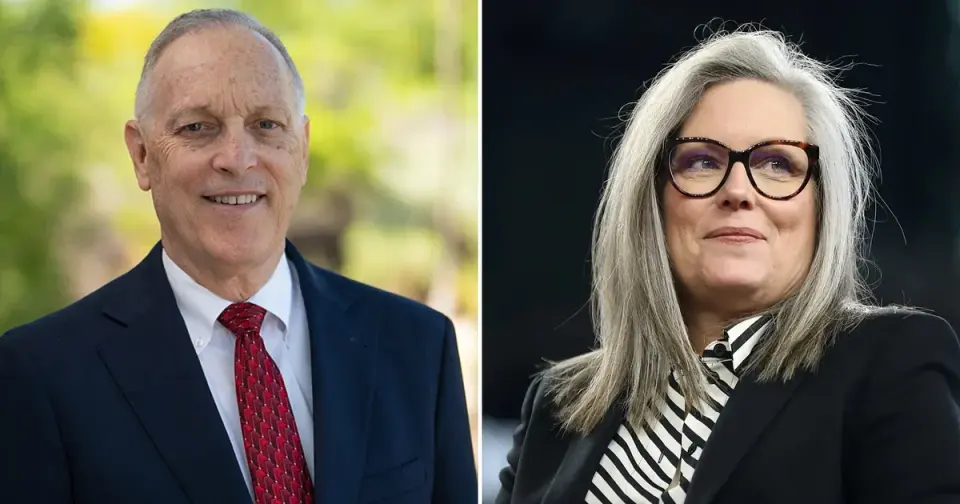
Arizona Governor Katie Hobbs vetoed two bills honoring Charlie Kirk, citing concerns about political violence and nonpartisan government functions. While Republicans in the legislature and gubernatorial race praised Kirk, the broader MAGA movement faces internal divisions and challenges in sustaining momentum without its founder.
Key points
- Hobbs vetoed SB 1439 (Kirk license plate) and SB 1010 (Loop 202 renaming) in March 2026, stating political violence damages democratic institutions and that such honors should not be partisan.
- The Arizona Legislature, controlled by Republicans, passed the bills, but the governor’s vetoes reflect a stance against politicizing government symbols.
- Republican gubernatorial candidate Andy Biggs, who received Kirk’s endorsement, praised Kirk as a 'generational historical figure' and emphasized his role in campus debates.
- The Arizona House held a special session in January 2026 to honor Kirk, with his wife Erika Kirk leading the opening prayer and a proclamation read on his contributions to civic education.
- Local efforts to honor Kirk, such as renaming a Phoenix bridge or creating a Scottsdale memorial, faced mixed results, with some councils rejecting or deferring decisions.
Background
Charlie Kirk, founder of Turning Point USA, was assassinated on September 10, 2025, at Utah Valley University. His death sparked national debate and led to both memorials and controversies. In the months following, Turning Point USA expanded its chapters and operations, but internal tensions within the MAGA movement emerged, as noted in earlier coverage of the organization’s post-Kirk challenges.
How outlets are covering it
The Center Square highlights the legislative and gubernatorial conflict over Kirk memorials in Arizona, emphasizing Hobbs’s veto rationale and Republican support for honoring Kirk. The Atlantic focuses on the broader MAGA movement’s fragmentation after Kirk’s death, noting feuds among figures like Ben Shapiro and Tucker Carlson and the movement’s reliance on Kirk as a unifying figure. The Washington Post provides personal accounts of how Kirk’s death affected individuals, including a lawyer who converted to Christianity and a Turning Point USA chapter president who saw increased membership, illustrating the polarized reactions to his legacy.
Why it matters
The vetoes and subsequent legislative actions reflect the ongoing tension between political commemoration and nonpartisan governance. The broader MAGA movement’s struggles to maintain cohesion without Kirk underscore the challenges of sustaining a movement built around a single charismatic figure, with implications for upcoming elections and political dynamics.
What to watch
The trial for Tyler Robinson, accused of Kirk’s murder, is set for a hearing on October 23, 2026, to determine the trial date. The November 3 gubernatorial race in Arizona will likely feature continued debate over Kirk’s legacy and the role of political violence in public discourse.
- Arizona Gov. Hobbs vetoes bills celebrating Charlie Kirk’s life The Center Square
- The MAGA Movement Is Splintering Without Charlie Kirk The Atlantic
- Man who debated Charlie Kirk right before assassination details ‘year of harassment’ The Hill
- A Year After Charlie Kirk’s Killing, a Divided Utah Campus Honors Him The New York Times
- Charlie Kirk’s killing a year ago reshaped their lives. Six people tell how. The Washington Post
Want the full story? Read the original reporting
Read on The Center Square