
Icelanders Reject EU Accession Talks in 52.8% to 47.2% Referendum
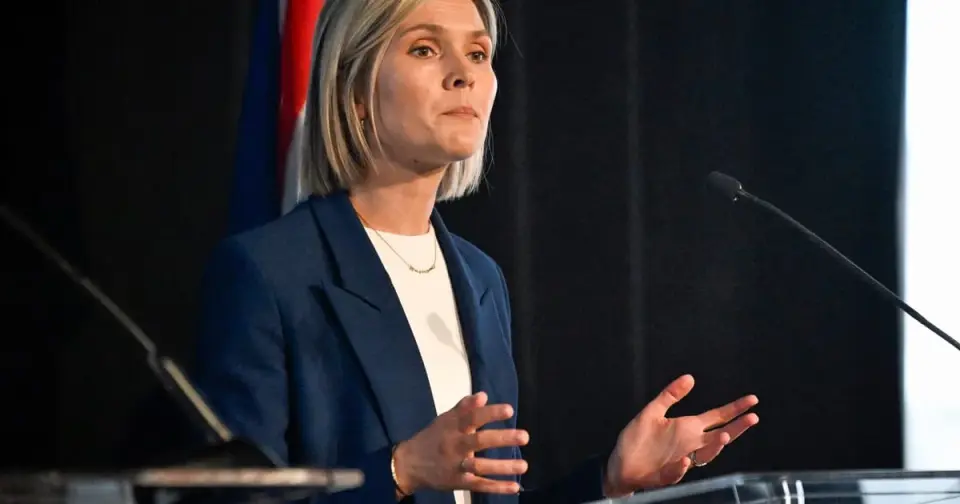
Icelanders voted to halt European Union accession talks in a narrow referendum, with 52.8% rejecting the government's proposal to resume negotiations. Prime Minister Kristrún Frostadóttir confirmed the current coalition will not pursue membership, though parliament will debate formally withdrawing the 2009 application. The result, driven by concerns over fishing rights and sovereignty, leaves Iceland within the European Economic Area but outside the EU, despite security anxieties regarding U.S. pressure on Greenland.
Key points
- Icelandic voters rejected resuming EU accession talks by a margin of 52.8% to 47.2%, with 82.5% turnout.
- Prime Minister Kristrún Frostadóttir stated the government will not pursue negotiations but will discuss formally withdrawing the application in parliament.
- The 'no' campaign emphasized preserving sovereignty and control over fishing waters, which account for 15% of GDP and 40% of exports.
- Only central Reykjavik voted in favor of the EU; rural areas and suburbs opposed the move, highlighting a geographic divide.
- The European Commission respected the result, noting Iceland remains a close partner through the European Economic Area.
Background
Iceland first applied to join the EU in 2009 following a financial crisis but suspended talks in 2013 without formally withdrawing its application. The current referendum was brought forward by the government amid heightened Arctic security concerns, including U.S. President Donald Trump's repeated threats to acquire Greenland. Previous coverage indicated the vote was expected to be razor-thin, with early polling showing a tight race between pro-EU and sovereignty-focused voters.
How outlets are covering it
Outlets highlighted different drivers of the result. CNN and The Guardian emphasized the 'no' campaign's success in leveraging fears over fishing rights and sovereignty, noting that the 'yes' campaign was perceived as technical and underfunded. Fox News focused on the security dimension, linking the vote to U.S. pressure on Greenland and Iceland's reliance on NATO. POLITICO and The Guardian noted the geographic divide, with only central Reykjavik supporting the EU, while rural areas opposed it. All sources agreed that Prime Minister Frostadóttir's government would respect the result but face domestic political weakness.
Why it matters
The result signals a rejection of deeper EU integration by a wealthy, strategic Arctic nation, potentially affecting EU enlargement momentum. It underscores the tension between economic security and sovereignty in small states. For the EU, it highlights the limits of its appeal in regions prioritizing national control over resources and defense, while for Iceland, it confirms the sufficiency of the European Economic Area for its current economic and security needs.
What to watch
Iceland's parliament will debate whether to formally withdraw its EU membership application, a process Frostadóttir said would not happen immediately. The government plans to strengthen ties with the EU through the European Economic Area and may contact Norway's prime minister to discuss implications for the EEA. The issue is expected to remain a topic in the next general election, as Frostadóttir noted the referendum was not a party political matter but a national debate.
- Iceland’s parliament will ‘discuss’ withdrawing EU bid after failed referendum politico.eu
- Iceland rejects EU membership plan in referendum held under the shadow of Trump’s Greenland threats CNN
- Icelanders vote no to restarting negotiations to join the European Union The Times of Israel
- Iceland rejects EU accession talks after divisive referendum campaign The Guardian
- Iceland votes on resuming EU membership talks as Trump's push for neighboring Greenland looms over debate Fox News
Want the full story? Read the original reporting
Read on politico.eu