
Mississippi and Alaska Senate Races Remain Uncalled as Democrats Secure Congressional Majorities
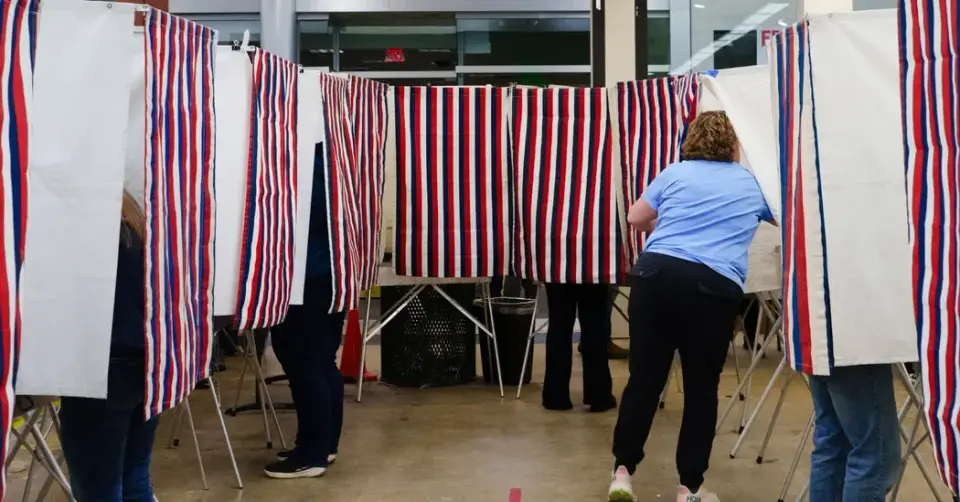
As of November 5, 2026, the U.S. Senate races in Mississippi and Alaska remain too close to call, with Democratic nominees Scott Colom and Mary Peltola holding narrow leads over Republican incumbents. While Democrats have secured majorities in both chambers of Congress, these two contests could determine the final balance of power. The delayed results stem from outstanding mail-in and provisional ballots in Mississippi and a complex ranked-choice voting process in Alaska, where a spoiler candidate complicates the count. Republicans are grappling with a historic defeat, blaming the Iran war and economic conditions, while Democrats celebrate a sweeping victory that includes flipping seats in traditionally conservative states.
Key points
- In Mississippi, Democrat Scott Colom leads incumbent Cindy Hyde-Smith by 1,138 votes, with approximately 3,600 absentee ballots and an unknown number of affidavit ballots still to be counted by November 13.
- In Alaska, Democrat Mary Peltola leads incumbent Dan Sullivan by fewer than 1,000 votes; the race may proceed to a ranked-choice tabulation on November 18 if no candidate reaches 50 percent, complicated by a third candidate sharing Sullivan's name.
- Democrats have secured at least a 50-seat majority in the House and 54 seats in the Senate, flipping seven Senate seats and gaining control of state legislatures in previously red states like Texas and Pennsylvania.
- Republican leadership is fractured, with Speaker Mike Johnson declining to run for minority leader, setting up a battle between Steve Scalise and Jim Jordan; Vice President JD Vance blamed the Iran war for the losses, a view President Trump partially endorsed.
- High-profile Democratic surrogates, including Barack Obama, Pete Buttigieg, and Alexandria Ocasio-Cortez, successfully campaigned for winning candidates, while Trump-backed Republicans in South Carolina, Texas, and North Carolina suffered significant defeats.
Background
Recent archive coverage from November 4 highlighted the extreme closeness of the Mississippi race, with margins as small as 28 votes at one point, and noted the lack of automatic recount mechanisms in the state. Earlier reports also confirmed that Democrats had already secured control of Congress despite the pending results in Alaska and Mississippi, signaling a broader national shift in voter sentiment.
How outlets are covering it
The New York Times emphasizes the strategic success of Democratic surrogates and the specific mechanics of the delayed counts, noting that Mississippi lacks a recount mechanism while Alaska faces a ranked-choice complication. The Guardian highlights the internal Republican blame game, citing Newt Gingrich and Ted Cruz as attributing the loss to economic anxiety and the Iran war, while also noting the Democratic gains in state legislatures. Yahoo provides a concise snapshot of the Mississippi vote share, confirming Colom’s 49 percent lead. NBC News offers detailed demographic breakdowns of the Mississippi electorate, showing Colom’s strong performance among Black voters and independents, which contrasts with the Republican incumbent’s support among white and conservative voters.
Why it matters
The outcome of these two Senate races will determine whether Democrats can expand their majority beyond the 54 seats already secured, potentially altering the balance of power in Washington. The Republican defeat marks a significant shift in American politics, with voters rejecting the party’s leadership and policies, particularly regarding the Iran war and economic management. The delayed results in Mississippi and Alaska highlight the fragility of the current political landscape and the potential for legal challenges or recounts to influence the final outcome.
What to watch
The Mississippi race will be decided by November 13, when all mail-in and affidavit ballots must be counted, while Alaska’s race may proceed to a ranked-choice tabulation on November 18 if no candidate reaches 50 percent. Republicans will face a leadership battle for the House minority leader position, and Democrats will likely use their new majority to scrutinize the Trump administration and its policies. The delayed results may also lead to legal challenges or recounts, depending on the final vote counts.
- Midterm Elections Live Updates: Mississippi and Alaska Senate Races Remain Too Close to Call The New York Times
- US midterm elections 2026 live: Democrats eye historic upset in Mississippi Senate race as Republican blame game begins The Guardian
- Democrat Scott Colom leads Mississippi's Senate race by just 1,138 votes Yahoo
- Mississippi U.S. Senate Midterm Election 2026: Live Results NBC News
- Cindy Hyde-Smith Blocked Scott Colom From Becoming a Judge for Being Pro-Trans. Now, He Might Take Her Senate Seat Them
Want the full story? Read the original reporting
Read on The New York Times