
Pastor Adam Hamilton ends 94-year Republican Senate streak in Kansas
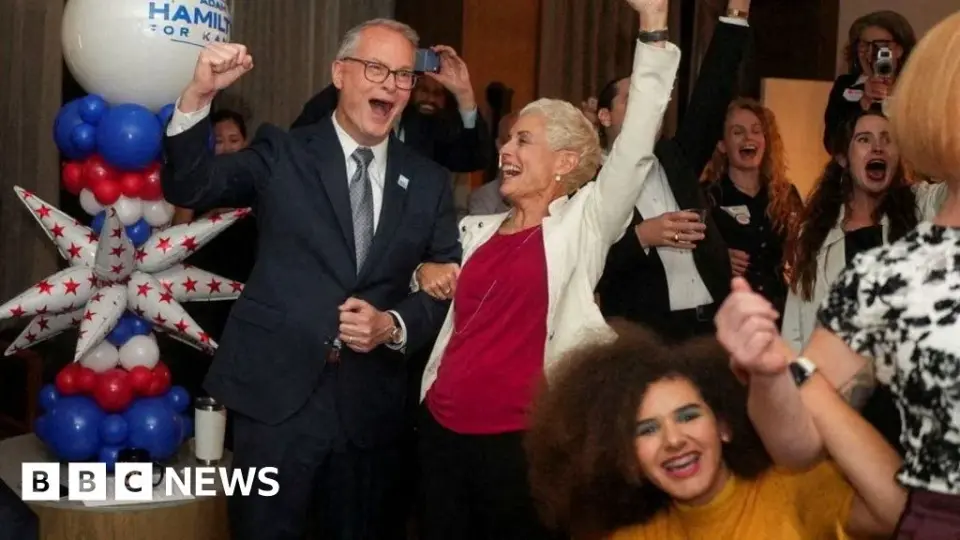
Adam Hamilton, a United Methodist pastor, defeated incumbent Republican Senator Roger Marshall in Kansas, ending a 94-year Democratic drought in the state's Senate seat. The victory, part of a broader Democratic surge in the 2026 midterms, was driven by voter frustration with Trump-aligned policies and Marshall's perceived detachment from local concerns. Hamilton campaigned on moderate, faith-based positions, appealing to cross-partisan voters in the deep-red state.
Key points
- Adam Hamilton won the Kansas Senate seat, the first Democratic victory there since 1932.
- Hamilton, founder of the US's largest United Methodist church, campaigned on affordability and civility.
- Incumbent Roger Marshall, a staunch Trump supporter, conceded after losing rural and independent voters.
- The race was part of a national 'blue tsunami' where Democrats won seats in other red states like Texas and Mississippi.
- Voters cited frustration with Trump's policies, including tariffs and the Iran conflict, as key motivators.
Background
Kansas had not sent a Democrat to the US Senate since 1932, a period spanning nearly a century. Prior to the 2026 midterms, the state was a reliable Republican stronghold, with the Pew Research Center ranking it as the 10th most religious state in the US. Recent polling indicated the Kansas race had become a historic toss-up, with Democrats leading in seven key Senate battlegrounds, including Kansas and Texas, due to growing dissatisfaction with President Trump's economic and foreign policy decisions. Earlier coverage noted that Hamilton had drawn endorsements from former Republican governors, signaling a shift in the state's political landscape.
How outlets are covering it
BBC emphasized the cultural and emotional significance of the win, highlighting Hamilton's use of the 'Wizard of Oz' metaphor and the relief felt by long-time Democratic voters. Fox News framed the result as a 'stunning upset' and a 'bruising blow' to Senate Republicans, noting that Marshall's campaign suffered from scandals regarding his medical practice and aggressive ads against Hamilton. KMBC provided a neutral breakdown of the candidates, noting Hamilton's moderate stance and his distance from national Democratic leaders like Chuck Schumer. The Kansas City Star offered a lighter perspective, noting that CNN anchor Jake Tapper mistakenly identified Hamilton's headquarters in Overland Park as the home of actor Paul Rudd, a local celebrity who had previously hosted a get-out-the-vote event. While all sources agree on the outcome, they differ in emphasis: BBC and KMBC focus on the historic nature and voter sentiment, while Fox News highlights the strategic implications for the Republican Party and the role of negative campaigning.
Why it matters
Hamilton's victory signals a potential shift in the political map of the American heartland, suggesting that moderate, faith-based candidates can win in traditionally conservative states. The loss of Kansas, along with other red states, threatens to flip the US Senate to Democratic control, which could impact legislative agendas and oversight of the Trump administration. The result also reflects broader voter dissatisfaction with the current administration's policies, including tariffs and foreign conflicts, which have contributed to rising costs of living. For Kansas, the win marks a significant change in representation, potentially leading to a more moderate approach to issues like healthcare, education, and agriculture in the Senate.
What to watch
With Democrats projected to gain control of the Senate, the focus will shift to legislative battles and potential confirmations. Hamilton, who has stated he would not support Chuck Schumer for Senate majority leader, may face internal party negotiations. In Kansas, the new leadership will likely address local concerns such as affordability and healthcare, while Republicans may regroup to address the 'reckoning' mentioned by local party chairs. The broader national implications include potential changes in immigration policy, tariffs, and foreign affairs, as Democrats seek to reverse or modify Trump's second-term agenda. The outcome in Kansas may also influence future strategies for Democratic campaigns in other red states, emphasizing moderate, faith-based appeals to cross-partisan voters.
- The last time a Kansas Democrat was in the Senate, the Wizard of Oz was in cinemas BBC
- Opinion: US Sen. Roger Marshall lost his seat long before Kansans kicked him out. He just didn't realize it. Kansas Reflector
- November 3, 2026 Election Results: Adam Hamilton defeats U.S. Sen. Roger Marshall KMBC
- Paul Rudd, Overland Park get a shout-out when CNN announces Adam Hamilton victory Kansas City Star
- Republicans suffer historic Senate upset as Dem flips deep-red state for first time in nearly a century Fox News
Want the full story? Read the original reporting
Read on BBC