
Saxony town Heidenau bans Holocaust memorial stones, sparking national outcry
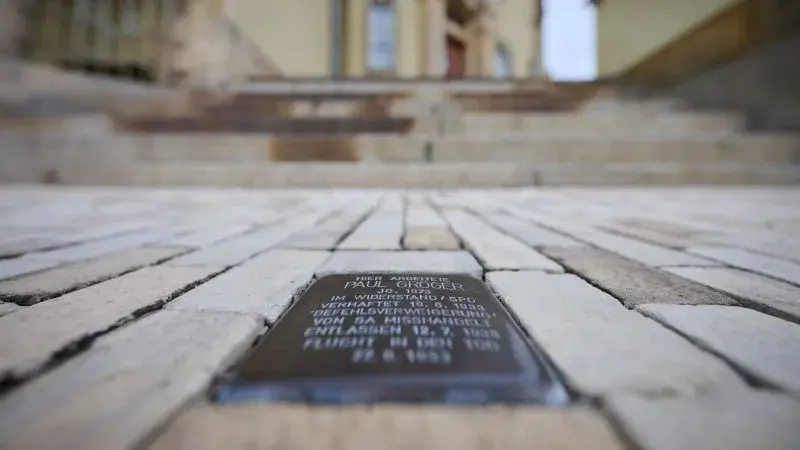
The town council of Heidenau, Saxony, has voted to ban the installation of 'stumbling stone' memorials for Nazi victims in public spaces, a decision that has triggered widespread condemnation from German officials and Jewish community leaders. The move, supported by local branches of the far-right AfD and the conservative CDU, aims to relocate future commemorations to a cemetery to prevent passersby from stepping on the plaques. Critics argue this erases Jewish history from the public landscape and reflects a dangerous erosion of the political firewall against extremist parties.
Key points
- Heidenau council voted to ban 'stumbling stone' memorials in public spaces, citing citizen objections to the form of commemoration.
- The ban was supported by local branches of the far-right AfD and the conservative CDU, with the AfD in Saxony classified as extreme-right by German intelligence.
- German Education Minister Karin Prien called the ban a 'scandal' and criticized the decision to prioritize death over life by moving memorials to a cemetery.
- Charlotte Knobloch, a Holocaust survivor and president of the Jewish Community in Munich, condemned the move as 'completely the wrong approach' and 'appalled' that a democratic party would support it.
- Gunter Demnig, the artist who initiated the Stolperstein project, stated that the ban was expected given the recent electoral successes of the AfD in eastern Germany.
Background
This controversy follows the AfD's recent electoral victories in Saxony-Anhalt and Mecklenburg-Vorpommern, where the party leveraged Ostalgie to rally voters. The ban in Heidenau, near Dresden, highlights ongoing tensions in eastern Germany regarding the political 'firewall' against extremist parties and the role of conservative parties in supporting far-right agendas. The Stolperstein project, initiated in the 1990s, has embedded small brass plaques in streets across Europe to remember Jews and other victims of Nazi atrocities, often funded by donations and placed outside victims' former homes or workplaces.
How outlets are covering it
CNN and BBC both report on the widespread outrage following the Heidenau ban, but emphasize different aspects. CNN focuses on the political implications, highlighting the support from the CDU and the classification of the AfD as extreme-right by German intelligence. BBC provides more detail on the specific arguments of critics, including Education Minister Karin Prien's statement that the ban 'prioritises death over life' and Charlotte Knobloch's condemnation of the move as a 'transparent manoeuvre by the extremists of the AfD'. Both outlets note the historical context of the Stolperstein project and the recent electoral successes of the AfD in eastern Germany, but BBC offers more insight into the local political dynamics and the specific wording of the council's motion, which stated that memorials should be placed at the Nordfriedhof cemetery to make it 'impossible to step directly onto the memorial elements'.
Why it matters
The Heidenau ban signals a potential shift in the political landscape of eastern Germany, where the AfD's growing influence is challenging the traditional 'firewall' against extremist parties. The decision to remove Holocaust memorials from public spaces could set a precedent for other towns and cities, potentially erasing Jewish history from the public landscape and undermining the culture of remembrance. The controversy also highlights the ongoing tensions between conservative and far-right parties in Germany, with the CDU's support for the ban raising questions about the party's commitment to protecting minority rights and historical memory.
What to watch
The ban in Heidenau is likely to spark further debate and controversy across Germany, with other towns and cities potentially considering similar measures. The AfD's recent electoral successes in eastern Germany suggest that the party may continue to push for changes to historical memorials and public spaces, potentially leading to more confrontations with Jewish community leaders and other critics. The decision may also influence the broader political discourse in Germany, with the CDU's support for the ban potentially affecting its standing with voters who are concerned about the rise of far-right extremism.
- Outrage as East German town bans Holocaust ‘stumbling blocks’ CNN
- German town bans 'stumbling stone' memorials to Nazi victims BBC
- AfD, CDU ban new Holocaust 'stumbling stones' in Heidenau DW.com
- AfD, CPU Join Up to Halt New Holocaust Plaques in Town Newser
- Backlash as German council decides to ban memorials to Nazi victims The Seattle Times
Want the full story? Read the original reporting
Read on CNN