
Seven Tight Races Decide 2026 Senate Control Amid Heavy Democratic Poll Leads
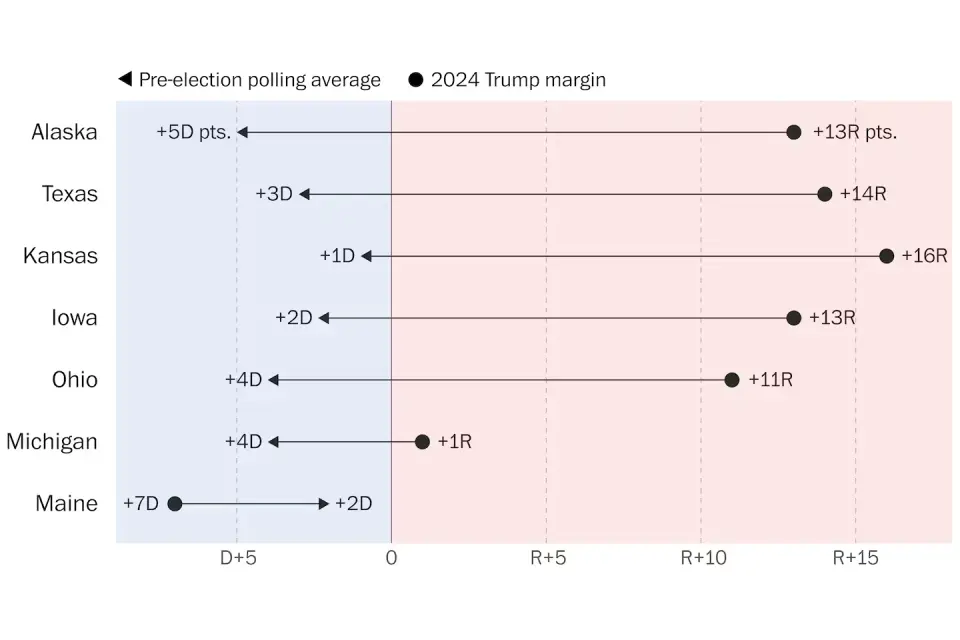
With six days left until the November 3 US midterm elections, Democrats lead national polls by nine points, but control of the Senate hinges on seven closely contested races. Key battlegrounds include Texas, Ohio, Kansas, and Georgia, where heavy spending and third-party votes are creating uncertainty despite Democratic momentum.
Key points
- A Reuters/Ipsos poll shows Democrats leading Republicans 47% to 36% nationally, with a 50% to 41% lead when undecided voters are factored in.
- President Trump’s approval rating stands at 32%, with 73% of adults believing the cost of living is worsening.
- Texas remains a critical race where Democrat James Talarico and Republican Ken Paxton are virtually tied, despite Trump’s four visits in seven weeks.
- Kansas is the most expensive Senate contest in its history, with approximately $71 million spent on advertising for the race between Roger Marshall and Adam Hamilton.
- Ohio’s Senate race between Sherrod Brown and Jon Husted has seen over $400 million in advertising spending, with Trump campaigning in the state multiple times this month.
Background
Prior coverage indicated Democrats were eyeing a historic Senate flip due to declining Trump approval ratings. Republicans currently hold a 53-47 majority, meaning Democrats need a net gain of four seats to take control. Recent concerns have also focused on Libertarian candidates potentially siphoning votes in tight red-state races, which could swing outcomes in Texas, Ohio, Kansas, and Iowa.
How outlets are covering it
The Washington Post emphasizes that Senate control is determined by a handful of close races, making the outcome difficult to predict despite Democratic leads in the House. Al Jazeera highlights the intensity of the campaign, noting Trump’s frequent visits to Texas and the significant advertising spend in Kansas and Ohio. While both outlets agree on the tightness of the races, Al Jazeera provides more detail on specific candidate matchups and the impact of third-party voting, whereas The Washington Post focuses on the broader uncertainty of the Senate majority.
Why it matters
The outcome of these seven races will determine which party controls the Senate, directly impacting the ability of the Trump administration to pass legislation and the potential for Democratic obstruction. The tight margins in traditionally red states like Texas and Kansas suggest a shift in voter sentiment, driven by economic dissatisfaction and opposition to the Iran war. The heavy spending and high-profile campaigning indicate that both parties view these races as decisive for the balance of power in Congress.
What to watch
Campaigning continues through October 30, with early voting ending in Georgia. Trump is scheduled to hold rallies in Ohio and Iowa, while Vice President Vance campaigns in North Carolina. Former President Obama and former Vice President Harris are campaigning in Georgia. Polls from Marquette Law School in Wisconsin will be released on October 28, providing further insight into voter sentiment on inflation, tariffs, and the Iran war.
- The seven races that will decide control of the Senate The Washington Post
- A Democratic Senate? Yahoo
- Who’s Winning the Race for Congress? The New York Times
- Senate What If: How the fight for Senate control could play out NBC News
- US midterms: Six days left – who leads in the polls as Trump, Obama rally Al Jazeera
Want the full story? Read the original reporting
Read on The Washington Post