
Trump Endorses Vance’s Iran Blame but Demands He Defend the War
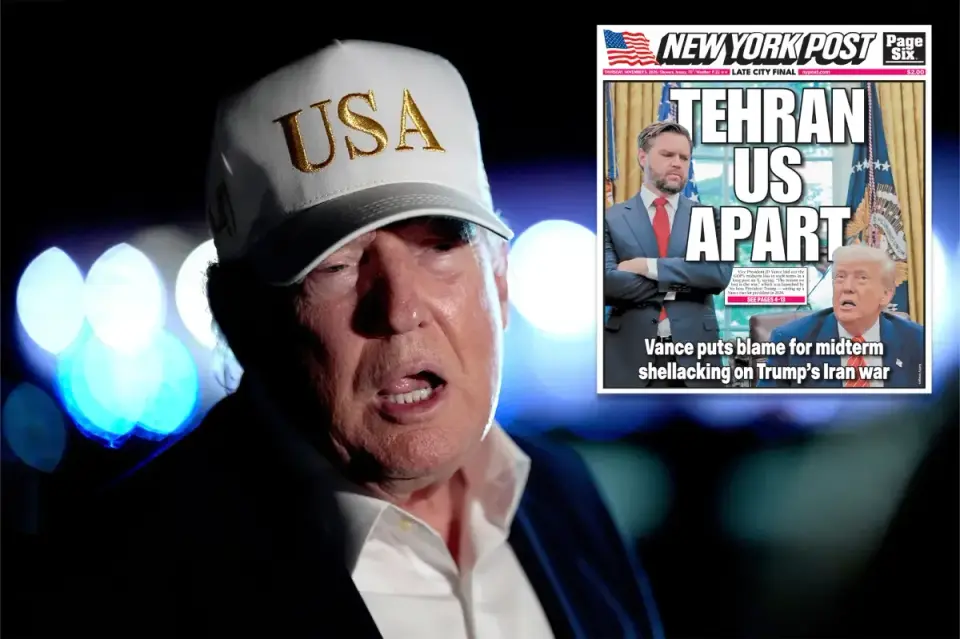
President Trump acknowledged Vice President JD Vance’s post-midterm critique blaming the Iran war for Republican losses, but criticized Vance for not explicitly defending the conflict. Vance’s public distancing from the administration has intensified speculation about a competitive 2028 presidential primary, with figures like Ron DeSantis and Ted Cruz positioning themselves as alternatives.
Key points
- Vance posted a 618-word statement on X blaming the Iran war for the Democratic sweep of Congress and governorships.
- Trump told reporters in West Palm Beach that Vance was 'right' but should have added that the war was a necessary success.
- Trump stated in a '60 Minutes' interview that he would repeat the Iran decision, calling it historically significant.
- Vance’s communications director accused media of using 'dishonest out of context clips' to suggest a rift.
- The Washington Post reports that potential 2028 challengers, including DeSantis and Kemp, are gaining momentum after the GOP losses.
Background
The 2026 midterms resulted in a historic Democratic victory, with Democrats seizing control of both chambers of Congress and a majority of state governorships. This followed a period of declining support for the administration, including reports of shrinking rally crowds in Alabama and cultural clashes over White House renovations. The election outcome has been described by some as a 'damning referendum' on the current administration's policies.
How outlets are covering it
The New York Post and The Daily Beast focus on the immediate tension between Trump and Vance, highlighting Trump’s demand that Vance defend the Iran war. The Daily Beast frames this as a 'double whammy' where Trump undermined Vance twice in one night, while the White House denied any division. The Washington Post shifts focus to the broader political implications, noting that the losses have emboldened potential 2028 presidential challengers like Ron DeSantis, Brian Kemp, and Ted Cruz. While the Post and Beast emphasize the interpersonal dynamic, the Washington Post highlights the strategic reassessment within the GOP, with some strategists arguing that the electorate has rejected traditional GOP pillars like foreign wars and corporate tax cuts.
Why it matters
The conflict between the president and vice president over the Iran war signals a potential fracture within the Republican base. As Vance attempts to distance himself from unpopular policies, the 2028 presidential race may become a genuine contest rather than a coronation, forcing the party to decide whether to maintain its current populist direction or pivot toward traditional conservative principles.
What to watch
Vance has not yet decided whether to run for president in 2028, though his allies are laying the groundwork for a campaign. Potential challengers are expected to enter the race between January and April 2027. The White House and Vance’s office are expected to continue coordinating their messaging to minimize the appearance of a rift, while the party faces internal debates over its future direction.
- Trump reacts to JD Vance's scathing midterms critique — but says he should have gone further New York Post
- Election Drubbing Complicates Vance’s Calculation on Whether to Run in 2028 WSJ
- Republicans blame Israel for their defeat The Economist
- Potential Vance challengers smell blood in the water after brutal GOP losses The Washington Post
- Trump Throws Vance Under the Bus Twice in One Night The Daily Beast
Want the full story? Read the original reporting
Read on New York Post