
Trump escalates Michigan Senate attack, comparing El-Sayed to 9/11 hijackers
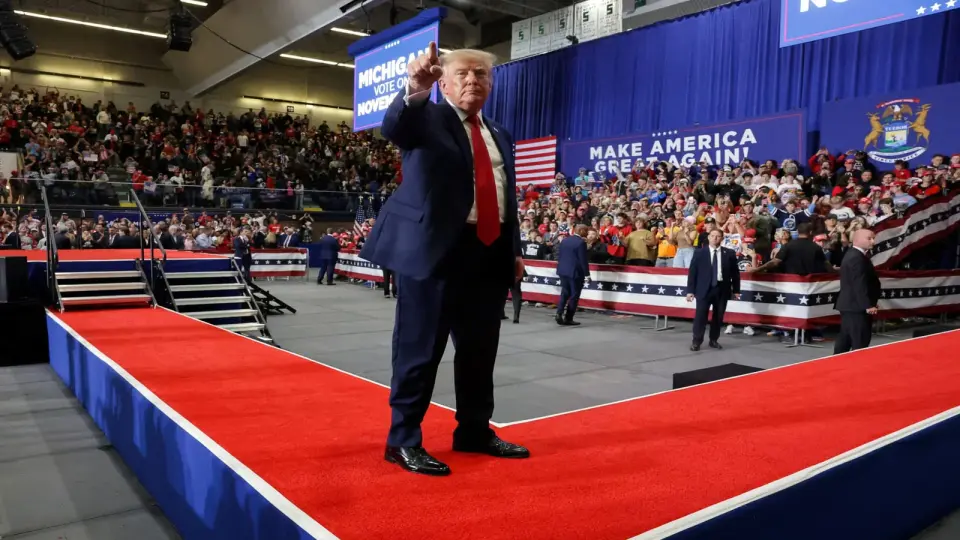
President Donald Trump intensified his campaign against Michigan Democratic Senate nominee Abdul El-Sayed on Sunday, comparing him to 9/11 attackers and labeling him a 'jihadist.' El-Sayed, who would be the first Muslim U.S. senator if elected, denied allegations of ties to the Muslim Brotherhood. The race against Republican Mike Rogers remains highly competitive, with former President Barack Obama campaigning for Democrats to counter Trump's rhetoric.
Key points
- Trump called El-Sayed a 'jihadist' and 'Muslim Brotherhood member' at a rally in Port Huron, Michigan, on October 25.
- Trump compared voting against El-Sayed to the actions of Todd Beamer, a Michigan native who fought hijackers on United Flight 93 in 2001.
- El-Sayed has repeatedly denied affiliation with the Muslim Brotherhood, calling the accusations 'shameful' and a distraction from cost-of-living issues.
- Former President Barack Obama campaigned for El-Sayed in Detroit on October 24, comparing the attacks to false claims about his own birthplace.
- The Michigan Senate race is critical for determining control of the U.S. Senate, with Democrats needing to win a net four seats to regain the majority.
Background
The Michigan Senate race has been a focal point of the 2026 midterms, with previous coverage highlighting concerns over Black voter turnout and the impact of Trump's rhetoric on Arab and Muslim voters. Former Senator Joe Manchin had previously urged Republican candidate Mike Rogers to distance himself from Trump's trade policies to win the seat. Recent polling indicates the race remains too close to call, with significant spending on television advertisements.
How outlets are covering it
CNBC and NBC News emphasized Trump's use of Islamophobic rhetoric, including his comparison of El-Sayed to 9/11 attackers and his claim that El-Sayed would need to pass through a metal detector to enter the Senate. The Washington Post highlighted the lack of evidence for Trump's claims and noted that Democrats framed the rhetoric as a distraction from economic concerns. CNN focused on the broader midterm context, including polling in Pennsylvania and Texas, and noted that El-Sayed's support among Black voters has dipped, prompting Obama's intervention. All sources agreed on the high stakes of the Michigan race for Senate control.
Why it matters
The Michigan Senate race is pivotal for determining control of the U.S. Senate, with Democrats needing to win a net four seats to regain the majority. Trump's aggressive rhetoric against El-Sayed has polarized voters, potentially alienating moderate and minority groups while energizing his base. The outcome will influence the balance of power in Congress and the ability of the winning party to check or support the executive branch.
What to watch
The U.S. Senate election in Michigan will take place on November 3, 2026. Campaigns for both El-Sayed and Rogers are expected to intensify in the final days, with continued focus on voter turnout and economic issues. The results will determine whether Democrats can regain control of the Senate and shape the legislative agenda for the next two years.
- Trump invokes 9/11 in urging Michigan voters to oppose Muslim Senate candidate El-Sayed CNBC
- Trump calls El-Sayed a ‘jihadist’ as he escalates campaign rhetoric The Washington Post
- Midterm election latest: Trump in Michigan; hearing on California voter rolls CNN
- Trump leans into Islamophobic rhetoric at Michigan rally NBC News
- Trump escalates anti-Muslim attacks against El-Sayed in Michigan, drawing Arab American rebuke AP News
Want the full story? Read the original reporting
Read on CNBC