
Trump’s 9/11 Invocation in Michigan Rally Sparks Backlash from Former Arab American Allies
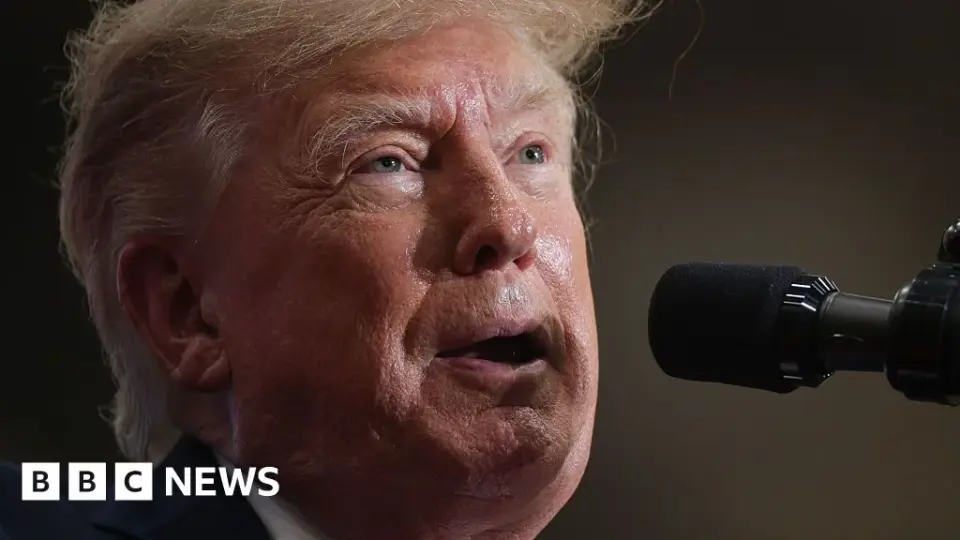
President Donald Trump faced significant backlash after invoking the 9/11 attacks and labeling Democratic Senate candidate Abdul El-Sayed a 'jihadist' at a rally in Port Huron, Michigan. Critics, including former Arab American allies, condemned the remarks as racist and Islamophobic. El-Sayed responded by mocking the attacks, while the race against Republican Mike Rogers remains a pivotal contest for congressional control.
Key points
- Trump accused El-Sayed of being a 'jihadist' and 'Muslim Brotherhood member' at a Sunday rally, comparing him to 9/11 hijackers.
- Bishara Bahbah, founder of Arab Americans for Trump, called the remarks 'racist' and 'out of line,' marking a notable break from the president.
- El-Sayed responded at a Grand Rapids rally, stating, 'I will be Senator Muhammad to you, bro,' and dismissed the attacks as distractions from economic issues.
- The Michigan Senate race is considered one of the most critical contests for determining control of the US Senate in the November 3 midterms.
- Trump’s rhetoric contrasts with his 2024 strategy of courting Arab American voters in Michigan, particularly in Dearborn.
Background
This incident follows a series of escalating attacks by Trump on El-Sayed in the final weeks of the 2026 midterm campaign. Previous coverage noted that Trump’s rhetoric has alienated Arab and Muslim voters who supported him in 2024. El-Sayed, a US-born former public health official, has consistently denied ties to extremist groups, while Republicans have focused on his family’s past writings and associations to question his loyalty.
How outlets are covering it
The New York Times characterized Trump’s speech as an 'Islamophobic rant' aimed at stirring the Republican base, noting the baseless nature of the claims. NPR emphasized the sharp rebuke from Bishara Bahbah, highlighting the alienation of a key demographic that helped Trump win Michigan in 2024. The BBC detailed the specific 9/11 comparisons and the involvement of Todd Beamer’s father, while The Guardian focused on El-Sayed’s defiant response and the broader context of anti-Muslim rhetoric in the midterms. All sources agree on the severity of the backlash but differ in emphasis: The Times and NPR focus on the political fallout and alienation, while the BBC and Guardian highlight the specific inflammatory language and El-Sayed’s counter-narrative.
Why it matters
The Michigan Senate race is a bellwether for the 2026 midterms, potentially determining control of the US Senate. Trump’s use of Islamophobic rhetoric risks alienating moderate and Arab American voters, potentially undermining Republican efforts to retain power. The backlash from former allies signals a potential shift in the political landscape, where personal attacks may backfire in swing states with diverse populations.
What to watch
The November 3 midterm elections will determine the outcome of the Michigan Senate race and the balance of power in Congress. El-Sayed and Rogers will continue their campaign efforts, with El-Sayed focusing on economic issues and Rogers emphasizing national security. The broader impact of Trump’s rhetoric on voter turnout and coalition-building will be assessed in the days leading up to the election.
- Backlash after Trump invokes 9/11 in attack on El-Sayed BBC
- In Islamophobic Rant, Trump Seeks to Stir Republican Base in Michigan The New York Times
- Republican and Democratic ex-governors issue rare joint endorsement for South Carolina Senate candidate – US politics live The Guardian
- Trump escalates anti-Muslim attacks against El-Sayed in Michigan NPR
- Trump invokes 9/11 in urging Michigan voters to oppose Muslim Senate candidate El-Sayed Reuters
Want the full story? Read the original reporting
Read on BBC