
Trump's Kansas Rally: Slur Controversy, Farm Aid, and a Toss-Up Senate Race
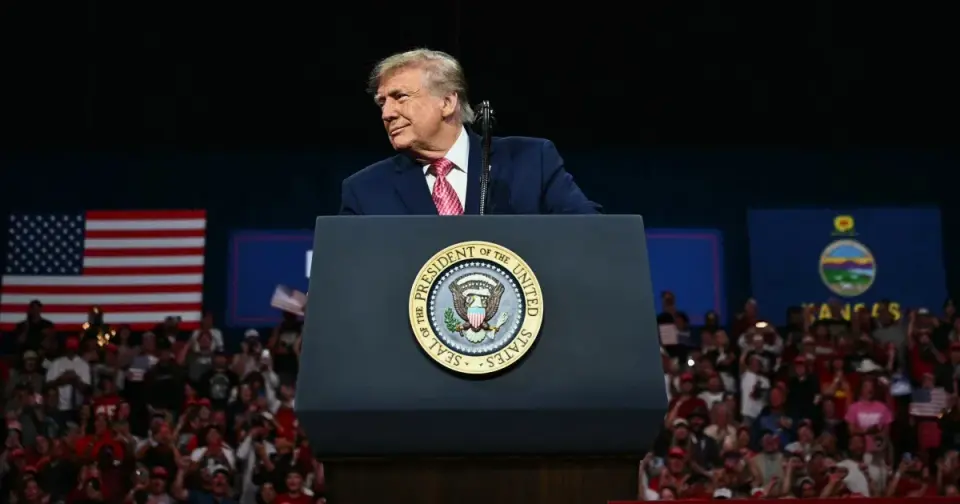
President Donald Trump used an antisemitic slur to defend Senator Roger Marshall at a Kansas rally, marking his first visit to the state in eight years. The event highlighted the unexpectedly tight Senate race between Marshall and Democrat Adam Hamilton, with Trump announcing an $8 billion agricultural aid package to counter economic grievances. While supporters rallied behind the president, protesters and critics framed the visit as a sign of Republican desperation ahead of the November 3 midterms.
Key points
- Trump used the term 'shylock' to describe Senator Roger Marshall, a slur with antisemitic connotations, defending him against reports of suing over 700 patients for unpaid medical debts.
- The rally took place at Heartland Credit Union Arena in Park City, Kansas, Trump's first campaign event in the state since 2018, drawing approximately 5,000 attendees and 80 protesters.
- Trump announced an $8 billion program to help Kansas farmers offset rising diesel costs, a key issue in the agricultural state.
- The Senate race between Marshall and Democrat Adam Hamilton is a toss-up, with Hamilton raising significantly more money than Marshall in the third quarter.
- Trump's speech included attacks on Muslim politicians and claims about immigration, while Marshall criticized Hamilton as 'too woke' for Kansas.
Background
This rally follows a series of controversies surrounding Senator Roger Marshall, including reports of his aggressive debt collection practices as a former physician. Previous coverage noted that Vice President JD Vance had also campaigned for Marshall in Kansas in September, facing similar challenges from a strong Democratic challenger. The broader context includes a national trend of Republican struggles in the 2026 midterms, with polls showing a majority of Americans believing the nation is on the wrong track.
How outlets are covering it
NBC News focused on the antisemitic slur incident, noting Trump's previous use of the term and the backlash from Jewish groups. The Guardian emphasized the electoral implications, describing the rally as a sign of Republican desperation in a state that has not elected a Democrat to the Senate since 1932. The Wichita Eagle highlighted the protest activity, with roughly 80 demonstrators calling the rally an act of political fear. KWCH provided logistical details, noting the large turnout and early arrival of supporters. Outlets differed in their framing of the race's competitiveness, with NBC and The Guardian noting the tight polls, while some rally attendees expressed confidence in a Republican victory.
Why it matters
The incident underscores the volatile political climate in the 2026 midterms, where traditional Republican strongholds like Kansas are becoming competitive. Trump's use of a slur and his direct intervention in a state race highlight the risks and strategies of the GOP as they face potential losses in both the Senate and House. The economic issues, such as diesel costs and medical debt, are central to voter concerns, influencing the outcome of the election.
What to watch
The November 3 midterms will determine the outcome of the Kansas Senate race and the broader control of Congress. Trump's continued campaign tour across multiple states will be closely watched for its impact on voter turnout and Republican performance. The $8 billion agricultural aid program may influence farmers' votes, while the slur incident could have long-term implications for Trump's relationship with Jewish communities and other groups.
- Trump uses antisemitic slur in defending Sen. Roger Marshall at rally in Kansas NBC News
- LIVE COVERAGE: President Trump visiting Wichita area today for midterm rally KWCH
- In ruby-red Kansas, Trump contemplates the possibility of a Democratic win in the state The Guardian
- ‘Very, very, very afraid’: Protesters cast Trump rally as an act of desperation Wichita Eagle
- Trump Uses Slur to Defend GOP Senator in Combative Speech Bloomberg.com
Want the full story? Read the original reporting
Read on NBC News