
Venezuela’s Rodríguez defends 25-year oil pact as critics warn of neocolonialism
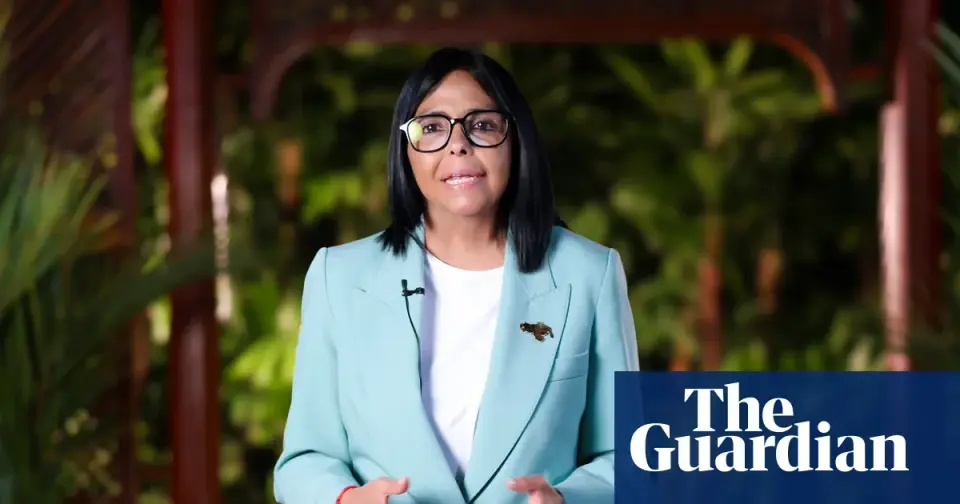
Venezuela’s interim president Delcy Rodríguez defended a controversial 25-year energy agreement with the United States, asserting that the deal preserves Venezuelan sovereignty while unlocking billions in revenue. The pact, announced by President Donald Trump, grants Washington majority control over 65 billion barrels of Venezuelan oil reserves, with a production target of 1.5 million barrels per day. While Rodríguez claims the deal will generate $209 billion in revenue and revitalize the economy, critics label it a neocolonial land grab. Analysts remain skeptical that the deal will lower US gas prices in the near term due to Venezuela’s deteriorating infrastructure and the massive investment required to boost output.
Key points
- Rodríguez stated the 25-year agreement involves 17 strategic oilfields and eight greenfield blocks, targeting 1.5 million barrels per day.
- The deal is projected to generate $209 billion in revenue for Venezuela, with approximately $19 per barrel flowing to the state.
- Trump claimed the deal more than doubles US oil reserves and will refill the Strategic Petroleum Reserve.
- Critics, including former PDVSA head Rafael Ramírez, condemned the deal as a neocolonial surrender of resources.
- Analysts argue that Venezuela’s current production of 1.2 million barrels per day cannot be significantly increased without years of investment.
Background
This deal follows the January 2026 US military raid that captured President Nicolás Maduro, leading to Rodríguez’s ascension to power. Previous coverage noted concerns over the deal’s legitimacy and the involvement of UK-based tycoon Alejandro Betancourt as a key intermediary. The agreement represents a sharp reversal from Rodríguez’s previous anti-imperialist stance, which had denounced US attempts to seize Venezuelan resources.
How outlets are covering it
The Guardian and CNBC highlight Rodríguez’s defense of the deal as a sovereign economic necessity, emphasizing the $209 billion revenue projection and the 25-year timeline. Fox News focuses on the potential for the deal to refill the US Strategic Petroleum Reserve and benefit Gulf Coast refineries, noting the strategic value of Venezuelan heavy crude. Business Insider presents a skeptical view, with analysts like Patrick De Haan and Tracy Shuchart arguing that the 65 billion barrel figure is a 'red herring' and that actual production increases are 5 to 15 years away. Opposition figures and former officials, as reported by The Guardian, describe the deal as a 'massive land grab' and a 'neocolonial' transaction that undermines Venezuelan democracy and sovereignty.
Why it matters
The deal represents a significant shift in US-Venezuela relations and global energy dynamics, potentially altering oil supply chains and geopolitical power balances. It raises questions about the long-term stability of the agreement, the role of foreign capital in resource-rich nations, and the impact on US domestic energy prices and strategic reserves.
What to watch
Venezuelan officials are preparing to sign agreements next week granting new oil exploration and production rights to several companies, including Chevron. The 'topping out' process for the US Strategic Petroleum Reserve is expected to begin shortly, according to Trump. The long-term success of the deal depends on the ability to attract investment and increase production, which analysts suggest will take years.
- Venezuela’s Delcy Rodríguez defends ‘endless’ benefits of her oil deal with Trump The Guardian
- Trump just brokered a deal with the country sitting atop the world’s largest oil reserves Fox News
- What smart people are saying about Trump's acquisition of Venezuelan oil Business Insider
- Venezuela's interim president says U.S. energy deal will last 25 years CNBC
- Exclusive | Inside Trump’s Plan to Give the Pentagon a Stake in Venezuela’s Oil Riches WSJ
Want the full story? Read the original reporting
Read on The Guardian