
White House Construction Costs Surge to $900M, Defying Court Injunctions
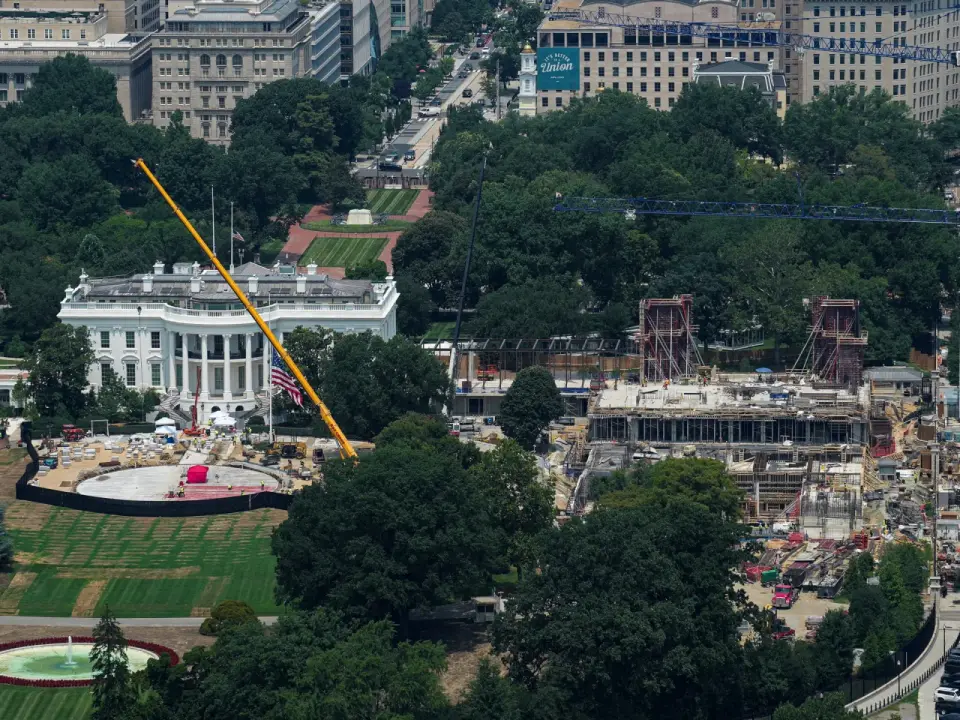
The Trump administration is spending approximately $900 million on White House renovations, including a new East Wing ballroom, despite a federal court injunction. The White House claims the work is necessary for security, while critics argue it bypasses congressional approval and relies on taxpayer funds rather than private donations.
Key points
- The White House Repair and Restoration account has received $875 million, a massive increase from the typical $2.5 million annual appropriation.
- A federal judge recently halted construction of the East Wing ballroom, ruling that Congress must approve such expenditures under the Property Clause.
- The administration has filed an emergency appeal to the Supreme Court to overturn the injunction and allow construction to continue.
- Critics note that corporate donors who contributed to the project have received over $50 billion in government contracts, raising concerns about pay-to-play schemes.
Background
This controversy follows earlier reports in June 2026 about a secret $500 million no-bid contract awarded to Clark Construction for the ballroom. In July, Trump’s administration also launched a fundraising drive that reportedly raised $800 million from corporate donors for various private projects, including the White House renovations. These developments occurred amid broader scrutiny of the administration’s spending priorities and its handling of public spaces, such as the National Mall.
How outlets are covering it
The White House, via spokesman Davis Ingle, defends the spending as 'long-overdue and necessary' for security, citing recent attacks and the 250th anniversary of US independence. They claim $400 million comes from private donors. The Washington Post and Rolling Stone counter that the majority of the $900 million cost is funded by taxpayer money, specifically from the Secret Service and National Parks Service, and that the project lacks congressional approval. Public Citizen highlights the potential conflict of interest, noting that corporate donors to the project have secured massive government contracts.
Why it matters
The case tests the limits of executive power over federal property and public funds. It raises significant questions about transparency, the role of Congress in approving major expenditures, and the potential for corruption through private donations tied to government contracts. The Supreme Court’s potential intervention could set a precedent for future presidential construction projects and the use of federal funds for non-essential renovations.
What to watch
The Supreme Court is expected to rule on the administration’s emergency appeal to overturn the federal judge’s injunction. If the court upholds the injunction, construction on the ballroom may halt. If it overturns it, the administration may proceed with the $900 million project, potentially facing further legal challenges from lawmakers and advocacy groups.
- White House construction project to cost almost $1bn Al Jazeera
- Trump administration set to spend at least $900 million on White House construction The Washington Post
- Trump Is Spending Nearly $1 Billion in Taxpayer Money on Gaudy White House Renovations: Report Rolling Stone
- Trump administration to spend at least $900 million on White House construction projects: Report thehill.com
- Trump administration set to spend at least $900 million on White House construction, Washington Post reports Reuters
Want the full story? Read the original reporting
Read on Al Jazeera