
Kyrgios suspended after cocaine test, faces backlash for past anti-doping stance
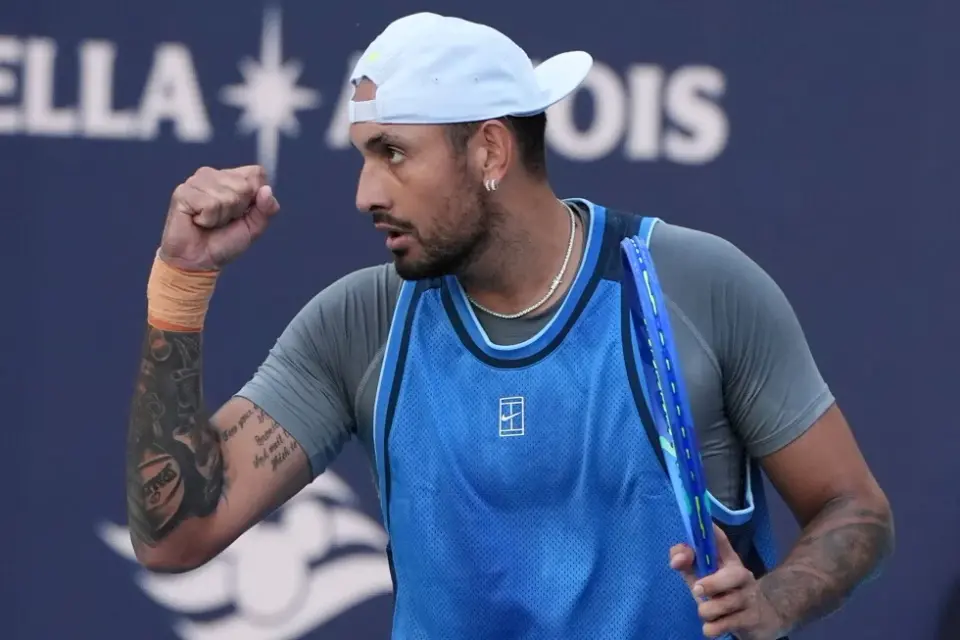
Australian tennis star Nick Kyrgios has been provisionally suspended by the International Tennis Integrity Agency (ITIA) after testing positive for cocaine. The 31-year-old former Wimbledon finalist admitted to a 'huge mistake' in an Instagram statement, citing severe injuries and mental strain as context. While he requested privacy, the tennis world has criticized him for hypocrisy, noting his previous harsh judgments of other players who failed drug tests. Kyrgios faces a potential ban of up to four years, though the duration may be reduced if he proves the use was out of competition.
Key points
- Kyrgios tested positive for benzoylecgonine, a cocaine metabolite, from a sample taken at an ATP 250 event in Mallorca on June 22, 2026.
- The ITIA confirmed a mandatory provisional suspension, which began on August 4, 2026, pending the resolution of his case.
- Kyrgios apologized on Instagram, stating he would step away from social media for 28 days to focus on rehabilitation and privacy.
- The suspension length depends on whether the substance was taken in or out of competition; out-of-competition offenses carry a maximum three-month ban under current WADA rules.
- Kyrgios has dropped to world ranking No. 919 and has not played a Grand Slam since the 2025 Australian Open due to injuries.
Background
This incident follows earlier coverage from August 2026, which reported the initial provisional ban and Kyrgios's public apology. At that time, the focus was on the mandatory nature of the suspension and his stated intent to step away from public life. The current developments highlight the broader reaction from the tennis community and the specific legal implications of the out-of-competition classification.
How outlets are covering it
The New York Post emphasizes the perceived hypocrisy of Kyrgios, noting that he previously criticized Jannik Sinner and Iga Swiatek for their failed tests and dismissed their explanations as 'ridiculous.' The outlet highlights viral posts where Kyrgios boasted about playing only with 'clean' players, contrasting this with his current request for privacy. The Guardian focuses on the procedural aspects, detailing the ITIA's confirmation of the suspension and the specific metabolite detected. It notes that while cocaine is banned in competition, out-of-competition offenses have lighter penalties, citing the case of Dan Evans in 2017. AP News provides the core facts of the suspension and the athlete's statement, serving as the primary source for the timeline of events from the June sample to the August confirmation.
Why it matters
This case highlights the strict anti-doping standards in professional tennis and the public scrutiny faced by high-profile athletes. It also illustrates the consequences of public statements made by athletes regarding the integrity of the sport, as Kyrgios's previous criticisms of other players have now been used to question his own credibility. The outcome will determine the precedent for out-of-competition cocaine offenses in tennis, potentially influencing future suspensions for similar substances.
What to watch
Kyrgios must now determine whether the cocaine use was in or out of competition to finalize his suspension length. If he can prove it was out of competition, the ban could be reduced to a maximum of three months, or one month if he completes a rehabilitation program. He has requested privacy for 28 days and will not play until his case is resolved. The tennis community is expected to continue debating the fairness of the anti-doping system in light of his past comments.
- Former Wimbledon finalist Nick Kyrgios suspended after positive test for cocaine AP News
- Ex-Wimbledon finalist Kyrgios says he tested positive for cocaine ESPN
- Tennis world quickly turns on Nick Kyrgios after cocaine reveal — with former No. 1 leading charge New York Post
- Nick Kyrgios suspended from tennis after testing positive for cocaine The Guardian
- Nick Kyrgios tests positive for cocaine at ATP event: ‘A huge mistake’ - The Athletic The New York Times
Want the full story? Read the original reporting
Read on AP News