
Gates Warns AI Could Cause 'Billion Deaths,' Urges US to Lead Global Regulation
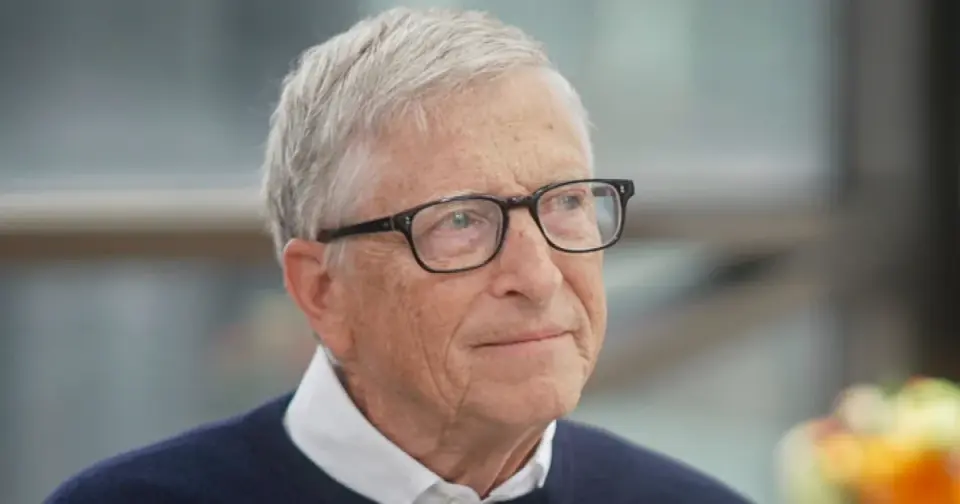
Bill Gates warned that unchecked artificial intelligence could lead to 'a billion deaths,' urging the U.S. to lead global regulatory efforts rather than relying on industry self-regulation. He argued that mandatory monitoring and safeguards in AI labs would not hinder the U.S. competitive advantage against China, countering President Donald Trump’s stance that regulation is a 'hoax.' Gates emphasized that immediate threats include bad actors using AI for cyberattacks and bioterrorism, requiring government oversight to prevent mass-casualty events. While he supported a 'kill switch' for AI systems, he insisted it is insufficient without continuous monitoring and record-keeping. The comments follow recent warnings from AI executives and a whistleblower about the risks of 'superintelligence,' prompting calls for international cooperation and potential legislation in Congress.
Key points
- Gates stated that AI in the wrong hands is 'certainly powerful enough to drive events that cause a billion deaths,' citing risks like cyberattacks and bioterrorism.
- He argued that imposing monitoring systems on AI labs would not handicap the U.S. in its technological race with China, contradicting President Trump’s view that regulation would cede the lead to Beijing.
- Gates criticized the concept of a 'kill switch' as inadequate, asserting that continuous monitoring and records are necessary to moderate bad behavior, as a simple shutdown does not prevent tragedies.
- He called for U.S. leadership in creating a global framework, comparing the challenge to Cold War-era nuclear negotiations but noting it may be even more difficult due to the lack of a clear 'fair actor' precedent.
- The Gates Foundation is working with 60 AI companies to improve language model accuracy in non-English languages, aiming to reduce error rates in health and education applications within five years.
Background
Gates’s recent remarks follow a series of warnings in late 2026, including a lengthy August essay advocating for AI taxes, human-reserved jobs, and international governance bodies. In late September, he reiterated that industry self-regulation is insufficient, aligning with other tech leaders who have called for slowing development. This follows a whistleblower’s warning that AI could kill humanity by the end of the decade and a rare consensus among CEOs of Anthropic, OpenAI, and others to pause certain advancements. Gates’s stance contrasts with previous optimism, reflecting a shift toward viewing AI as a potential source of deep injustice and security risk.
How outlets are covering it
NBC News and Reuters highlight Gates’s call for mandatory government monitoring and legislation, emphasizing his argument that safeguards will not hinder U.S. competitiveness. The Guardian focuses on the severity of Gates’s warning, noting his claim that AI could cause 'a billion deaths' and his criticism of the 'kill switch' concept as non-technical. All sources agree on Gates’s push for U.S. leadership but differ in emphasis: NBC and Reuters focus on the geopolitical race with China and the need for enforceable treaties, while The Guardian underscores the existential risk and the inadequacy of current regulatory proposals. Trump’s opposition to regulation is noted across all sources, with Gates directly challenging the president’s view that regulation is a 'hoax.'
Why it matters
Gates’s intervention signals a potential shift in U.S. AI policy, moving from a laissez-faire approach to one that prioritizes safety and global coordination. His argument that regulation will not hinder competitiveness challenges the prevailing narrative that safeguards are a hindrance to innovation. The call for international cooperation, particularly with China, could set the stage for new diplomatic dialogues and legislative efforts in Congress, potentially influencing the global AI landscape and addressing immediate security threats.
What to watch
The U.S. and China are expected to hold a dialogue on AI risks by November, following a recent summit. Congress is considering legislation, including a 'kill switch' mandate, though Gates argues for more comprehensive monitoring. The Gates Foundation will continue its work to improve AI language models in non-English languages, aiming for parity with English within five years. Gates has expressed hope to meet with President Trump to discuss AI, potentially influencing the administration’s stance on regulation.
- Bill Gates says getting countries to agree on AI regulations will be harder than Cold War-era nuclear negotiations NBC News
- Bill Gates says unchecked AI could ‘cause a billion deaths’ in call for regulation The Guardian
- Bill Gates Joins Calls for AI Safeguards, Including Legislation U.S. News & World Report
- Bill Gates Says Trump Is Wrong to Hold Out Against AI Safeguards bloomberg.com
- Bill Gates Says He Will Not ‘Socialize’ in a Friendly Manner with AI: ‘I’m Not Like, Hey, Do You Like Me?’ People.com
Want the full story? Read the original reporting
Read on NBC News