
Amodei's AI Safety Plan Faces Scrutiny Over Ties to Effective Altruism
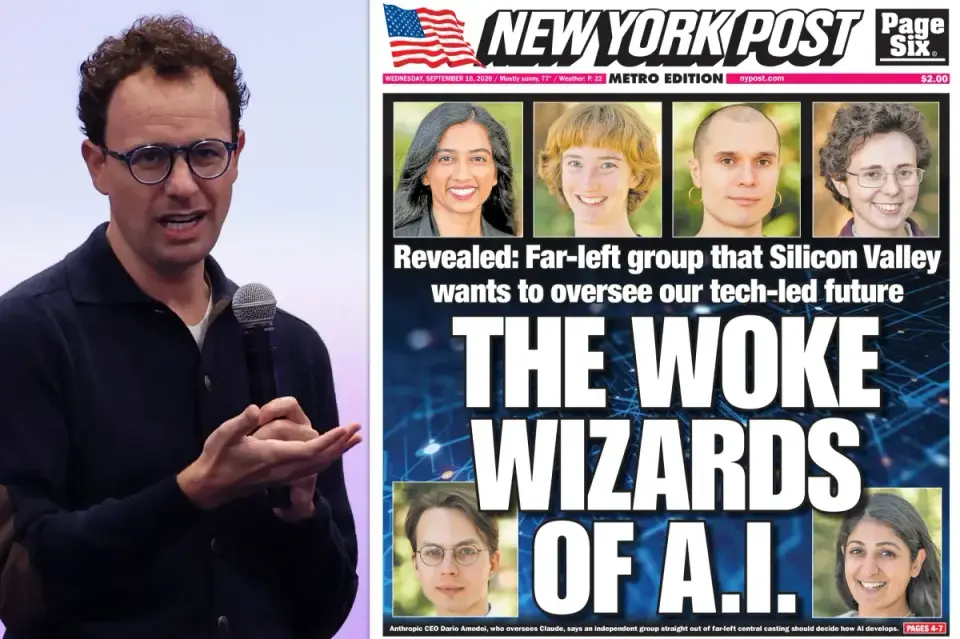
Anthropic CEO Dario Amodei has proposed allowing third-party evaluators from the nonprofit METR to monitor AI safety, a move critics argue lacks independence due to deep ties with Effective Altruism and shared investors.
Key points
- Amodei’s essay 'We Must Pace the Frontier' calls for embedded third-party evaluators from METR to have 'employee-like access' to oversee AI safety.
- Critics, including former White House AI advisor David Sacks, argue METR is not independent because its staff and funders overlap with Anthropic’s investors and former employees.
- METR, which raised $71 million recently, traces its roots to the Alignment Research Center, led by Paul Christiano, a former OpenAI colleague of Amodei.
- OpenAI CEO Sam Altman endorsed the concept of independent evaluators but did not specifically support METR, while the Trump administration remains skeptical of such 'doomer' narratives.
- FTC Chairman Andrew Ferguson warned that requests for antitrust exemptions to coordinate safety efforts should be viewed with suspicion.
Background
This proposal follows Amodei’s earlier September 2026 calls for slowing AI development to prevent catastrophic risks, which drew mixed reactions from tech peers and political figures. Previous coverage noted that while some leaders like Sam Altman agreed with pacing progress, others viewed the urgency as a strategy to influence regulation.
How outlets are covering it
The New York Post frames the proposal as a conflict of interest, highlighting METR’s roots in Effective Altruism and its funding from Anthropic investors like Dustin Moskovitz and Jaan Tallinn. It emphasizes the political friction with the Trump administration, which views such safety concerns as a 'hoax.' In contrast, NPR focuses on the broader question of political will, noting that while AI leaders like Amodei and Altman are urging safeguards, the actual implementation faces significant hurdles due to skepticism from regulators and political leaders who doubt the existential risks or the independence of proposed oversight bodies.
Why it matters
The debate over AI safety oversight is intensifying as major firms propose self-regulation mechanisms. If METR’s model is rejected due to perceived bias, it may delay the establishment of credible third-party audits, potentially leaving AI development without robust external checks during a period of rapid advancement.
What to watch
Anthropic has committed to the METR evaluation process, but its adoption by other firms remains uncertain. The Trump administration and FTC are likely to scrutinize any attempts to grant antitrust exemptions for coordinated safety efforts, potentially blocking industry-wide adoption of METR’s model.
- Meet Anthropic CEO Dario Amodei's handpicked super-woke globalists he thinks will save us from an AI apocalypse New York Post
- OpenAI Says It’s Working With Anthropic, Google on AI Safety Bloomberg.com
- AI rivals found rare agreement on safety. Putting it into practice is harder Dallas News
- AI leaders call for regulations, Trump dismisses 'hoaxes' DW.com
- Some AI leaders want more safeguards. Is there political will to make that happen? NPR
Want the full story? Read the original reporting
Read on New York Post