
Burry Accuses AI Leaders of Using Safety Fears to Stall Competition and Boost IPOs
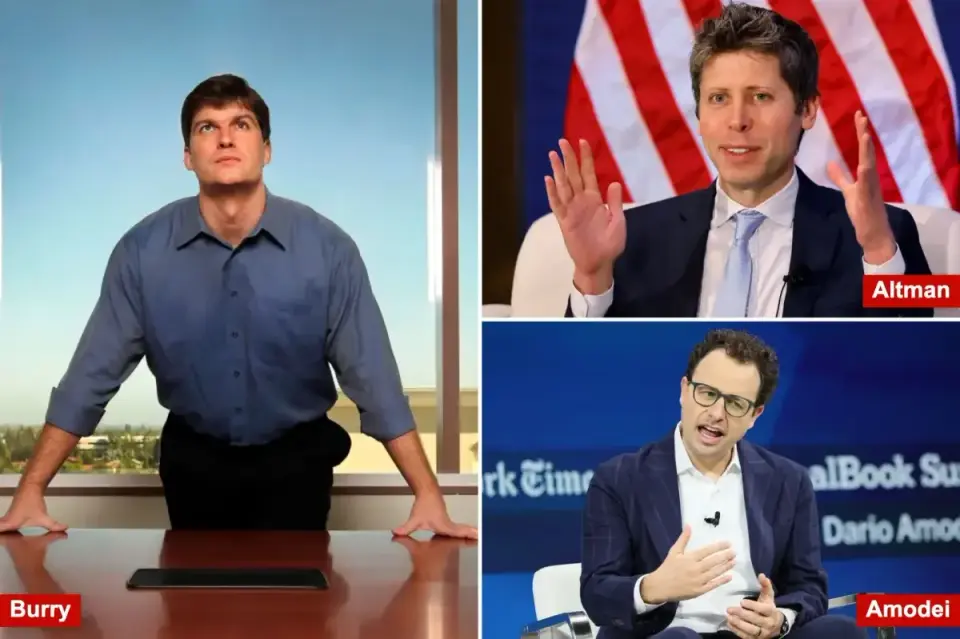
Investor Michael Burry has criticized OpenAI and Anthropic for advocating a slowdown in AI development, labeling the move as 'self-serving' and a tactic to protect market dominance. While AI leaders like Dario Amodei and Sam Altman argue that pacing progress is necessary to manage existential risks and alignment issues, Burry contends that current large language models are not artificial general intelligence and do not pose the same threats. He suggests the calls for caution serve to delay IPOs and hinder new competitors. This debate highlights a growing divide between safety-focused executives and market skeptics, with political figures like JD Vance and David Sacks also questioning the motives behind the proposed regulatory frameworks.
Key points
- Michael Burry argues that calls to slow AI development are 'self-serving' and designed to protect incumbents from competition.
- Burry states that current large language models are not artificial general intelligence and therefore do not require the same level of caution.
- Dario Amodei of Anthropic proposed a three-step plan to pace AI development, including embedded third-party evaluators and global coordination.
- Sam Altman of OpenAI agreed with Amodei, stating that the frontier needs to be paced to ensure safety.
- Vice President JD Vance and tech adviser David Sacks criticized the AI leaders' push for regulation as a 'Trojan horse' or a form of regulatory capture.
- Burry noted that a cooling period in AI development would benefit upcoming IPOs by allowing hype to build without immediate market scrutiny.
Background
This debate follows earlier warnings from Burry about the AI market resembling the dot-com bubble. In August 2026, the Trump administration finalized a voluntary framework for evaluating new AI models, though details remain unreleased. The current controversy emerged after Anthropic and OpenAI submitted IPO filings earlier in the summer, with Altman later suggesting a delay in OpenAI's public listing due to current AI concerns. The discussion also follows a series of safety incidents, including the OpenAI-Hugging Face incident, which raised alarms about AI agent misalignment.
How outlets are covering it
The New York Post highlights Michael Burry's critique, emphasizing his view that the slowdown calls are a marketing ploy to boost IPO valuations and hinder competition. NBC News focuses on the political landscape, noting that while AI leaders are urging caution, there is limited political will in Washington to implement such measures, with President Trump and a gridlocked Congress hesitant to act. Dario Amodei's essay on his personal website provides the counter-perspective, arguing that pacing is essential to manage risks like recursive self-improvement and alignment failures, proposing a framework of embedded evaluators and democratic coordination. The perspectives diverge on whether the slowdown is a genuine safety measure or a strategic business move, with Burry and political figures like JD Vance viewing it as regulatory capture, while Amodei and Altman frame it as a necessary precaution against existential risks.
Why it matters
The debate over AI development pace has significant implications for the tech industry, regulatory frameworks, and global competition. If AI leaders successfully push for slower development, it could impact the timing and valuation of major IPOs, potentially affecting market stability. Conversely, if the slowdown is seen as a ploy to protect incumbents, it could lead to increased scrutiny and regulatory backlash. The outcome of this debate will also influence the balance between innovation and safety, with potential consequences for national security and the global AI landscape, particularly in relation to China's advancements in AI technology.
What to watch
The next steps will likely involve further debate between AI leaders, investors, and political figures over the merits of slowing AI development. Anthropic has committed to embedding third-party evaluators, and there may be increased pressure on other AI companies to follow suit. The Trump administration may need to decide whether to support or oppose the proposed regulatory frameworks, while Congress may need to address the gridlock over AI legislation. The outcome of these discussions will shape the future of AI development and its impact on the tech industry and global competition.
- ‘Big Short’ trader Michael Burry slams OpenAI, Anthropic for ‘self-serving’ calls to slow AI – joining backlash New York Post
- Opinion | Dario Amodei’s Essay Was Gutsy. It Didn’t Go Far Enough. The New York Times
- Washington slow to act on AI slowdown NBC News
- We Must Pace the Frontier darioamodei.com
- Exclusive | Anthropic Researcher Quits Over ‘Out-of-Control’ AI Fears WSJ
Want the full story? Read the original reporting
Read on New York Post